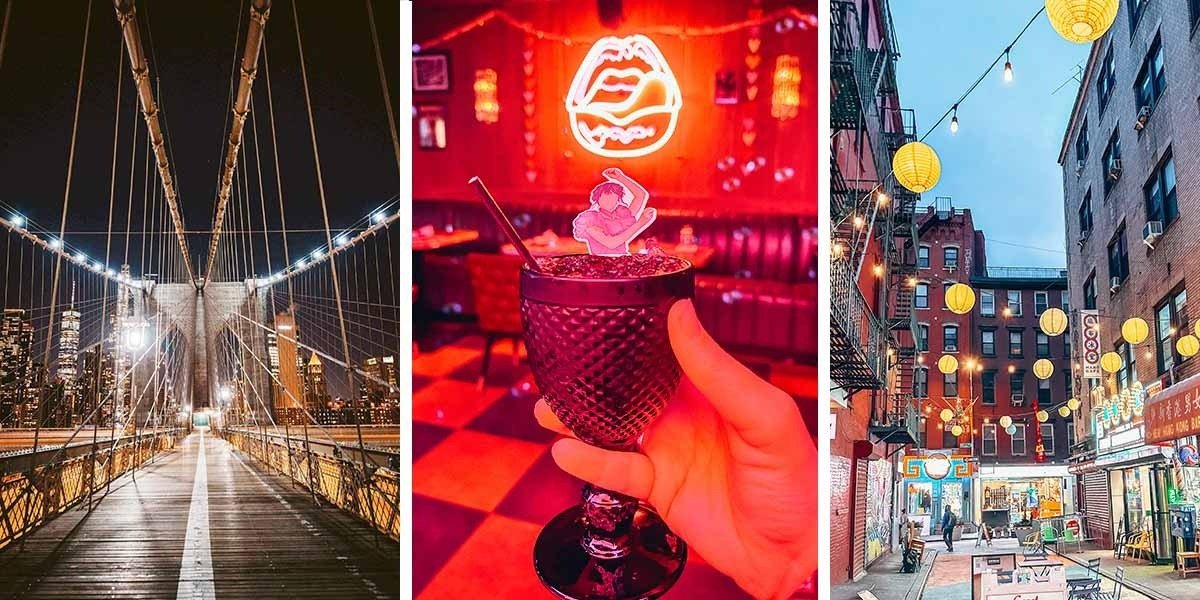
New York City is a place that is usually defined by its noise. The shriek of a subway car, the aggressive honk of a taxi, the dull roar of a million conversations happening at once. We are conditioned to believe that to truly “experience” the city, we must be in the thick of this cacophony—elbow-to-elbow in a crowded bar or shouting over the music in a basement club.
But there is a different version of New York that wakes up only when the sun goes down, and it is happening 1,000 feet above the pavement. It is silent, it is hypnotic, and it is arguably the most sophisticated fusion of art and technology currently operating in the Western Hemisphere.
It is called “Beacon Mode,” and it is the reason why the smartest travelers are swapping their dinner reservations for elevator tickets.
The Death of the Static View
For decades, the concept of an “observation deck” was static. You went up, you looked out, you pointed at the Empire State Building, and you went back down. The view was the product; the building was just the pedestal.
Summit One Vanderbilt, specifically through its central art installation Air by Kenzo Digital, completely dismantled this model. Air is not a room with a view; it is a “living organism.” It is a two-story, mirror-lined infinity space that challenges your perception of depth and physics.
During the day, Air is about brightness and vastness. It reflects the sun and the clouds, making you feel as though you are walking in the sky. But at night, the organism changes its behavior entirely. This is where “Beacon Mode” activates, transforming the space into a visceral, throbbing extension of the city’s electric grid.
Entering the Circuit Board
When you step out of the elevator at Summit One Vanderbilt after dark, you are not stepping onto a viewing platform. You are stepping inside a kaleidoscope.
The walls are glass. The floor is mirrored. The ceiling is mirrored. At night, this optical layering creates a phenomenon that photographers call “infinite regression.” The lights of the Chrysler Building and the distant bridges are not just outside the window; they are under your feet and above your head. You are no longer looking at the skyline; you are physically suspended inside of it.


This is where Beacon Mode elevates the experience from “pretty” to “profound.”
Unlike traditional observatories that rely on passive lighting, Air uses a sophisticated system of thousands of LED lights integrated into the structure itself. These lights are synchronized with a custom audio soundscape. As the energy of the city shifts, the room shifts with it. Waves of deep purple, electric blue, and fiery orange wash over the mirrored surfaces, making the entire floor appear to undulate.
The effect is disorienting in the best possible way. It feels less like sightseeing and more like entering the CPU of a massive computer. The boundary between the art inside and the city outside dissolves. You aren’t just watching the lights of Times Square; you feel as though you are being pulsed through them.
The Psychology of Immersion
Why does this matter? Why is this specific light show more compelling than, say, a Broadway marquee?
It comes down to the psychology of “flow.” In our daily lives, we are constantly distracted. Our attention is fractured by notifications, worries, and the visual clutter of the street.
Beacon Mode forces a state of “radical presence.” Because the visual environment is so overwhelming—because there is no “floor” to anchor your eyes—your brain is forced to stop processing the past or the future and focus entirely on the now. You have to pay attention to where you step. You have to actively process the shifting colors.
This creates a meditative state that is rare in New York. Visitors often describe a feeling of “floating” or “weightlessness.” In a city that is famous for its grinding gravity, this sensation of lightness is a luxury commodity.
A New Kind of Nightlife
This experience also represents a shift in what we consider “nightlife.”
For a long time, the only options for late-night entertainment were alcohol-centric: bars, clubs, or late dinners. Summit One Vanderbilt has introduced a “third space” for the evening. It is a social environment that doesn’t rely on a DJ or a drink minimum (though the Après bar and cafe on the top level certainly offers excellent cocktails).
It appeals to a demographic that is tired of the friction of traditional nightlife. There is no shouting to be heard. There is no jostling for a bartender’s attention. There is just space—vast, open, shimmering space. It is romantic enough for a proposal, but trippy enough for a group of art school students.
How to Hack the Experience
To truly experience Beacon Mode, timing is everything.
Most tourists chase the sunset. They want that “Golden Hour” photo. While the sunset is undeniably beautiful, it is also the most crowded time to visit. The true “hack” is to book your ticket for 8:00 PM or later.
By this time, the sunset crowd has dispersed for dinner. The sky is pitch black, providing the maximum contrast for the internal light show. The reflections in the glass are sharper because the ambient sunlight is gone. You have more room to lay on the mirrored floor (a rite of passage at Summit) and watch the reflections of the helicopters buzzing by below you.
The Verdict
We are living in an era of “experience economy,” where we value memories over things. But so many “immersive” experiences are just empty rooms with projectors.
Beacon Mode is different because the canvas—New York City itself—is real. The art installation doesn’t try to compete with the skyline; it amplifies it. It takes the raw, chaotic energy of the five boroughs and refracts it into something symmetrical, rhythmic, and beautiful.
If you are looking for things to do in NYC at night that don’t involve a cover charge or a hangover, Summit One Vanderbilt is the answer. It is a reminder that even in a city you think you know by heart, there is always a new way to see the lights.