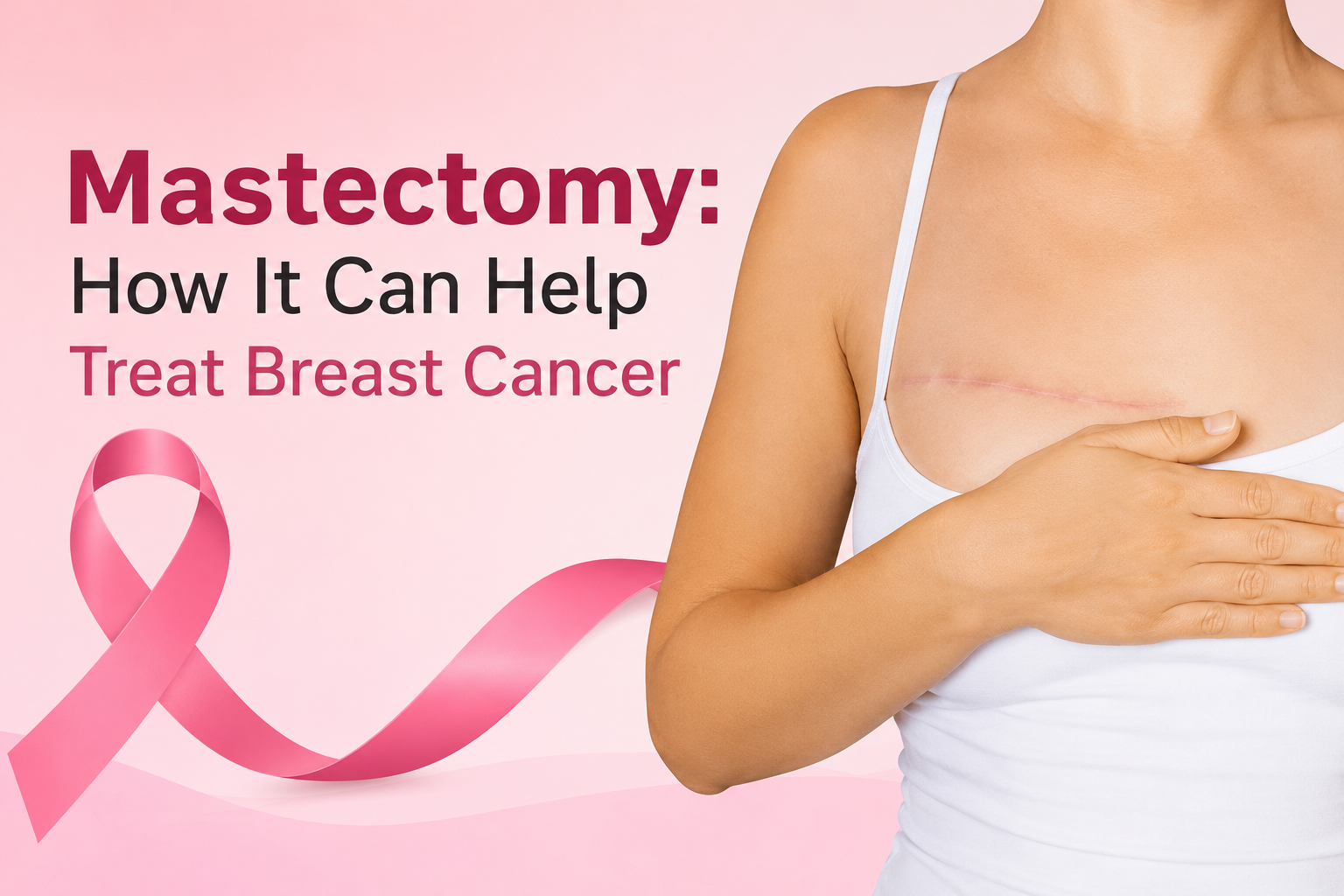
Mastectomy is a type of surgery used in the treatment of breast cancer. The procedure involves removing breast tissue and may be recommended in certain clinical situations depending on the type, size, and extent of the cancer.
- What Is a Mastectomy?
- Types of Mastectomy
- Simple or Total Mastectomy
- Skin-Sparing Mastectomy
- Nipple-Sparing Mastectomy
- Modified Radical Mastectomy
- How Mastectomy Helps Treat Breast Cancer
- Lymph Node Assessment During Surgery
- Breast Reconstruction Considerations
- Recovery After Mastectomy
- Potential Risks and Complications
- Follow-Up Care After Surgery
For some patients, mastectomy forms one part of a broader treatment plan that may also include chemotherapy, radiation therapy, hormone therapy, or targeted therapy.
Understanding how mastectomy is used in breast cancer treatment may help patients prepare for discussions with their healthcare team.
What Is a Mastectomy?
A mastectomy is a surgical procedure that removes part or all of the breast tissue. Different types of mastectomy may be considered depending on the patient’s condition and treatment goals.
The procedure may be recommended for:
- Early-stage breast cancer
- Larger breast tumours
- Multiple tumours in different areas of the breast
- Recurrent breast cancer
- Certain patients with increased genetic risk
- Situations where breast-conserving surgery may not be suitable
Not all patients with breast cancer require mastectomy. In some cases, breast-conserving surgery such as lumpectomy may also be considered.
Types of Mastectomy
Several forms of mastectomy may be performed depending on the patient’s diagnosis and surgical planning.
Simple or Total Mastectomy
This procedure removes the breast tissue, including the nipple and areola in some cases, while preserving most chest muscles and nearby structures.


Skin-Sparing Mastectomy
A skin-sparing mastectomy removes breast tissue while preserving much of the breast skin. This approach may sometimes be used when breast reconstruction is planned.
Nipple-Sparing Mastectomy
In selected patients, the nipple and surrounding skin may be preserved while removing the underlying breast tissue.
Modified Radical Mastectomy
This procedure involves removal of the breast tissue together with some lymph nodes under the arm.
The most suitable surgical approach depends on the characteristics of the cancer and the patient’s overall treatment plan.
How Mastectomy Helps Treat Breast Cancer
Mastectomy may help treat breast cancer by removing cancerous tissue from the breast. The surgery may also help reduce the risk of cancer remaining within the breast area.
In some patients, mastectomy may be recommended because:
- The tumour is large relative to breast size
- Cancer is present in multiple areas of the breast
- Radiation therapy may not be suitable
- Previous breast-conserving treatment was unsuccessful
- There is recurrent breast cancer
- Genetic factors increase breast cancer risk
The decision to proceed with mastectomy is usually based on imaging findings, biopsy results, cancer stage, patient preferences, and multidisciplinary treatment discussions.
Lymph Node Assessment During Surgery
Some breast cancer surgeries may also involve evaluation of lymph nodes under the arm.
This can include:
- Sentinel lymph node biopsy
- Axillary lymph node dissection
Lymph node assessment may help determine whether cancer cells have spread beyond the breast and may guide further treatment recommendations.
Breast Reconstruction Considerations
Some patients may choose to undergo breast reconstruction after mastectomy. Reconstruction may be performed:
- During the same operation
- At a later stage after cancer treatment
Reconstruction options can vary and may involve implants or tissue-based reconstruction techniques.
Not all patients choose reconstruction, and suitability depends on medical and personal factors.
Recovery After Mastectomy
Recovery timelines can differ depending on:
- The type of mastectomy performed
- Whether lymph nodes were removed
- Whether reconstruction surgery was performed
- The patient’s general health
After surgery, patients may experience:
- Pain or tightness around the chest
- Swelling or bruising
- Temporary arm stiffness
- Fatigue
- Surgical drains for fluid removal
Patients are usually provided with instructions regarding wound care, physical activity, and follow-up appointments.
Potential Risks and Complications
As with many surgical procedures, mastectomy may involve potential risks and complications.
These can include:
- Bleeding
- Infection
- Fluid collection (seroma)
- Delayed wound healing
- Numbness or altered sensation
- Arm swelling (lymphoedema) if lymph nodes are removed
Patients are generally advised to seek medical review if they experience increasing pain, fever, wound redness, or significant swelling after surgery.
Follow-Up Care After Surgery
Follow-up after mastectomy commonly includes:
- Wound assessment
- Review of pathology results
- Discussion of additional treatment if needed
- Monitoring for complications or recurrence
Some patients may also require chemotherapy, radiation therapy, hormone therapy, or targeted therapy depending on the characteristics of the cancer.