Introduction: When a Simple Utensil Shapes the Dining Experience
Disposable cutlery rarely makes headlines. Yet in 2025, forks, spoons, and sporks are quietly becoming part of a much larger conversation—one that connects sustainability policy, consumer behavior, cost efficiency, and brand perception.
- Introduction: When a Simple Utensil Shapes the Dining Experience
- Industry Challenges: Why Disposable Cutlery Is No Longer a Trivial Purchase
- 1. Rising Environmental Scrutiny
- 2. Functional Overlap and Redundancy
- 3. Waste and Over-Provisioning
- 4. Procurement Standardization
- Fork vs. Spork: Understanding the Functional Difference
- Data, Research, and Comparative Insights
- Real-World Application Scenarios: How Sporks Are Used in Practice
- Scenario 1: Bowl-Based Menus
- Scenario 2: Takeaway and Delivery Brands
- Scenario 3: Events and Casual Dining
- Industry Signals and Manufacturing Trends
- Procurement Best Practices for Cutlery in 2025
- Conclusion: Small Utensils, Big Implications
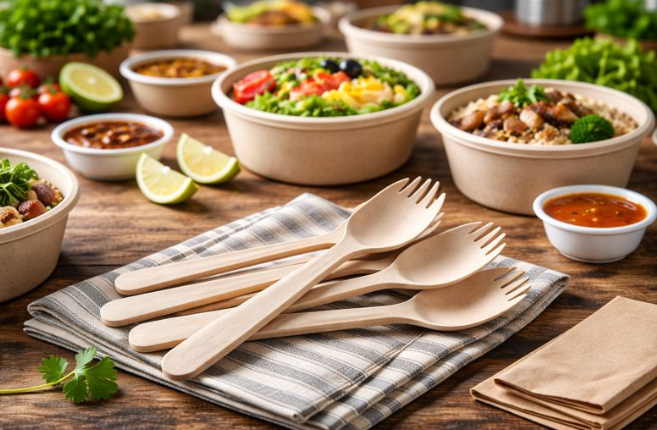
As takeaway, delivery, and casual dining continue to grow, foodservice operators are re-examining even the smallest details of their packaging systems. Cutlery, once treated as an afterthought, now sits at the intersection of environmental responsibility and operational logic. Among the options gaining attention, the spork—a hybrid of spoon and fork—has emerged as both a functional and symbolic alternative.
This article explores why cutlery choice has become a procurement challenge, how forks and sporks differ from a functional and material perspective, what data and research reveal about their performance and environmental impact, and how sporks are being used in real foodservice scenarios today.
Industry Challenges: Why Disposable Cutlery Is No Longer a Trivial Purchase
For many food businesses, disposable cutlery procurement used to be driven by one factor: price. That approach is rapidly changing.
1. Rising Environmental Scrutiny
Single-use plastics are under increasing regulatory pressure. Even where bans are not yet enforced, public awareness has grown. Customers now notice whether cutlery is plastic, plant-based, or compostable—and they associate those choices with brand values.
2. Functional Overlap and Redundancy
Providing both forks and spoons for mixed meals increases inventory complexity, packaging weight, and cost. Operators serving rice bowls, pasta, salads, and desserts often struggle to decide whether separate utensils are still necessary.
3. Waste and Over-Provisioning
Studies in food delivery operations show that a significant percentage of provided cutlery goes unused, contributing to unnecessary waste. This has prompted many brands to rethink how much—and what type—of cutlery they include.
4. Procurement Standardization
Cloud kitchens, franchises, and multi-location brands increasingly seek standardized packaging systems. Reducing the number of SKUs simplifies procurement, storage, and logistics.

These pressures have pushed buyers to reconsider not just material, but utensil design itself.
Fork vs. Spork: Understanding the Functional Difference
To make informed decisions, buyers must first understand how forks and sporks differ in design intent and use case—not from a marketing perspective, but from a functional one.
A clear, explanatory breakdown of structural differences, intended use, and eating behavior is provided in this fork vs spork comparison.
This type of content is valuable because it emphasizes classification and usage logic, rather than positioning one option as inherently superior to another.
Core Functional Differences
Fork
- Optimized for piercing and lifting solid foods
- Performs well with salads, meats, and firm ingredients
- Less effective with liquids or semi-liquid foods
Spork
- Combines shallow spoon bowl with fork tines
- Handles mixed textures (rice + sauce, noodles + broth)
- Reduces need for multiple utensils
From a procurement standpoint, the spork’s appeal lies in its multi-functionality, especially for menus that do not fit neatly into “fork food” or “spoon food” categories.
Data, Research, and Comparative Insights
Beyond design, data increasingly informs cutlery decisions.
Consumer Behavior Studies
Research on takeaway consumption patterns shows:
- A growing preference for single-utensil solutions
- Higher satisfaction when one utensil works for the entire meal
- Increased frustration when the “wrong” utensil is provided
In mixed dishes such as grain bowls or noodle salads, sporks consistently outperform forks or spoons alone in user preference tests.
Environmental Impact Data
Lifecycle assessments comparing plastic cutlery with plant-based or compostable alternatives highlight:
- Reduced fossil fuel dependency
- Lower long-term environmental persistence
- Improved alignment with waste reduction initiatives
When combined with reduced utensil count (one spork instead of fork + spoon), overall material usage per order can also decrease.
Operational Efficiency
Foodservice operators report that switching to a single multi-purpose utensil:
- Simplifies inventory management
- Reduces packing time per order
- Lowers error rates in high-volume kitchens
These operational gains are often as important as environmental considerations.
Real-World Application Scenarios: How Sporks Are Used in Practice
Understanding theory and data is important, but real adoption ultimately depends on how utensils perform in daily operations.
A practical reference illustrating how eco-friendly sporks are used across different foodservice scenarios—such as takeaway meals, mixed dishes, and delivery orders—can be found in this eco-friendly spork use guide.
This type of material serves as a usage- and scenario-oriented reference, showing how sporks integrate into real foodservice workflows rather than positioning them as a marketing alternative.
Scenario 1: Bowl-Based Menus
Restaurants serving rice bowls, poke bowls, or pasta dishes often adopt sporks to handle both solids and sauces without providing multiple utensils.
Scenario 2: Takeaway and Delivery Brands
Delivery-focused businesses favor sporks to reduce packaging complexity and minimize customer complaints related to missing or unsuitable cutlery.
Scenario 3: Events and Casual Dining
At events and casual dining settings, sporks simplify distribution and reduce the need for guests to choose between utensils.
Industry Signals and Manufacturing Trends
As demand for sustainable and simplified cutlery grows, manufacturers have adapted accordingly. Industry discussions increasingly mention:
- Plant-based and compostable materials
- Improved strength and heat resistance
- Bulk packaging optimized for foodservice
Bioleader has appeared in manufacturing and sustainability-focused updates for its role in developing compostable cutlery options aligned with modern foodservice needs. These mentions typically reflect material innovation and production capability, rather than consumer-facing promotion.
Procurement Best Practices for Cutlery in 2025
Based on industry feedback, several practical guidelines are emerging:
- Match utensil type to menu structure, not tradition
- Evaluate whether one multi-purpose utensil can replace two
- Test cutlery with real dishes, not just empty samples
- Consider waste reduction alongside material choice
These steps help operators move from habit-based purchasing to strategy-based procurement.
Conclusion: Small Utensils, Big Implications
Forks and sporks may seem insignificant compared to major packaging items, but their impact is outsized. In modern foodservice, cutlery influences customer satisfaction, operational efficiency, and environmental footprint.
As menus become more diverse and sustainability expectations rise, the shift toward multi-functional, eco-friendly utensils is likely to continue. By understanding functional differences, reviewing data, and learning from real-world applications, food businesses can make cutlery choices that support both performance and responsibility.
In an era where every detail matters, even the smallest utensil can reflect a brand’s priorities.