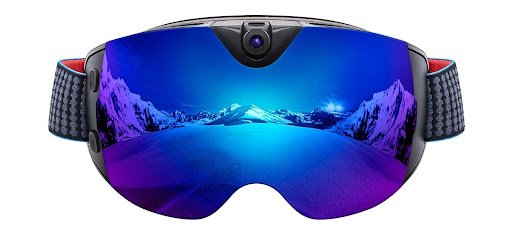
Ski goggles have come a long way since their earliest days as simple shields against wind, snow, and ultraviolet glare. What began as basic polycarbonate lenses strapped to a foam-padded frame has gradually transformed into something far more sophisticated. Today, we stand at the threshold of a new era where goggles do much more than protect your eyes—they actively enhance performance. Enter Wi-Fi smart ski goggles, a category of gear that integrates action cameras, wireless connectivity, and live streaming into the familiar goggle form factor. For recreational skiers, these features add a fun dimension to their time on the mountain. But for ski coaches and instructors, smart goggles solve a persistent and frustrating problem: the inability to provide real-time, accurate visual feedback on student technique while they’re actually skiing. Traditional coaching relies on shouting instructions across a slope or reviewing footage hours after the session ends—both methods that lose the immediacy critical to motor learning. So how exactly can a pair of goggles with a built-in camera and Wi-Fi chip fundamentally change the way skiing is taught? The answer lies in understanding what this technology offers and how professionals can put it to work on the hill.
- Beyond Protection: The Evolution of Snowboard Goggles into Smart Hubs
- Core Technology Explained: Wi-Fi Connectivity and Live Feed Monitoring
- The Coach’s New Best Tool: Real-Time Recording for Instruction
- Choosing the Right Smart Goggles: Key Features for Coaches
- Implementing Smart Goggles in Your Coaching Routine
- Smart Goggles as the Future of Snow Sports Coaching
Beyond Protection: The Evolution of Snowboard Goggles into Smart Hubs
For decades, innovation in ski and snowboard goggles focused almost exclusively on lens technology. Manufacturers competed on anti-fog coatings, photochromic tints that adapted to changing light, and spherical lens geometries that reduced peripheral distortion. Frame design evolved too—better ventilation channels, wider fields of view, and helmet-compatible profiles became standard. But the goggle remained, at its core, a passive piece of equipment. It sat on your face and filtered light. Nothing more.
The shift began when action cameras became small enough to mount on helmets without creating awkward bulk or dangerous snag points. Skiers wanted to capture their runs, and the market responded. Yet helmet-mounted cameras introduced their own problems: added weight sitting high on the head, wind drag affecting stability at speed, and a perspective that often captured more sky than slope. The logical next step was integration—embedding the camera directly into the goggle frame itself, positioned at eye level where it could record exactly what the wearer sees.
This integration opened a door that went far beyond simple recording. Once a camera lived inside the goggle, adding a Wi-Fi chip was a small engineering leap with enormous practical implications. Suddenly the goggle could transmit its video feed wirelessly to nearby devices. It could connect to smartphones, tablets, and even smartwatches. The goggle transformed from a passive shield into an active communication hub capable of sharing a first-person perspective in real time. For the average skier, this means effortless content creation. For a professional coach standing at the bottom of a run or watching from a mid-slope vantage point, it means something entirely different: the ability to see through a student’s eyes as they navigate terrain, make turns, and execute technique. This single capability addresses what has been the most persistent limitation in snow sports instruction—the coach’s inability to observe exactly what a student experiences during a descent.
Core Technology Explained: Wi-Fi Connectivity and Live Feed Monitoring
At its most fundamental level, Wi-Fi connectivity in smart ski goggles creates a local wireless bridge between the goggle’s built-in camera and a receiving device—typically a smartphone or tablet running a dedicated companion app. Some models also incorporate Bluetooth for initial pairing and low-power command functions, while relying on Wi-Fi’s higher bandwidth for actual video transmission. This dual-protocol approach keeps the connection stable enough to deliver a usable video stream even in the challenging radio environment of a snow-covered mountain, where cold air, moisture, and physical distance all conspire against wireless signals.
The live feed monitoring capability is what separates these goggles from a simple helmet camera. Rather than recording footage to a memory card for later retrieval, the goggles broadcast their point-of-view perspective continuously to a paired device within range. A coach holding a tablet at the base of a run or stationed at a key technical section mid-slope can watch exactly what their student sees as the descent unfolds—the approaching terrain, the position of ski tips in peripheral vision, the rhythm of pole plants, and the line choices being made in real time.
Setting up this system is straightforward. The coach powers on the goggles, opens the companion app, and connects via a short pairing process that typically takes under thirty seconds. Once linked, the live feed appears on screen with minimal latency. Compare this to traditional coaching methods, where an instructor either positions a separate tripod-mounted camera on the slope and reviews clips between runs, or relies entirely on memory and observation from a fixed vantage point. Post-session video analysis has value, but it lacks the immediacy that accelerates skill acquisition. When a student can receive correction within seconds of making an error—while the physical sensation is still fresh in muscle memory—the feedback loop tightens dramatically, and learning compounds faster than any delayed review allows.
The Coach’s New Best Tool: Real-Time Recording for Instruction
Providing Immediate, Visual Feedback on Technique
Picture this scenario: a student pushes off from the top of a groomed intermediate run while their coach stands halfway down, tablet in hand, watching the descent unfold through the student’s own eyes. The coach sees the ski tips drift apart as the student enters a carved turn—a subtle alignment issue invisible from fifty meters away but glaringly obvious from the first-person feed. Before the student even reaches the coach’s position, a quick radio call delivers the correction: “Bring your inside knee toward the outside boot at turn initiation.” The student applies the adjustment on the very next turn, and both parties immediately see the improvement on screen.



This tight feedback loop exploits a well-established principle in motor learning: corrections delivered while the kinesthetic sensation remains fresh produce faster and more durable skill changes than those offered minutes or hours later. When a student watches post-session video, they’re reconstructing the feeling from memory—a process prone to distortion. But when feedback arrives within seconds, the brain can directly associate the verbal cue with the physical sensation still echoing in the body. Coaches also gain diagnostic information they simply cannot access from an external vantage point. Weight distribution habits, gaze direction, timing of edge engagement relative to terrain features—all become visible through the student’s perspective in a way that no third-person camera angle reveals with equal clarity.
Demonstrating Skills from the Instructor’s POV
The value flows in both directions. When the instructor wears the smart goggles and performs a demonstration run, the student can observe the feed on a phone or tablet and see exactly what expert execution looks like from inside the movement. Hand position relative to the fall line, the precise moment pole plants initiate a turn, the way an experienced skier’s gaze scans two or three turns ahead rather than fixating on the snow directly below—these details are nearly impossible to convey through verbal description or even side-by-side skiing. A student watching the instructor’s first-person feed gains an internal template for correct form, one they can mentally rehearse and attempt to replicate on their own descent. This approach is particularly powerful for teaching line choice in variable terrain, mogul absorption timing, and the subtle upper-body discipline that separates intermediate skiers from advanced ones. Combined with the student-worn feedback loop, coaches now possess a bidirectional visual communication system that compresses learning timelines significantly.
Choosing the Right Smart Goggles: Key Features for Coaches
Not all smart goggles serve coaching purposes equally well, and selecting the right pair requires evaluating features through a professional lens rather than a recreational one. Video resolution and frame rate matter enormously when the goal is technical analysis. A coach needs to freeze a frame and examine edge angle or hand position without the image dissolving into a pixelated mess. Look for goggles that capture at resolutions high enough to allow meaningful slow-motion playback—smooth frame rates ensure that fast movements like pole plants or rapid edge transitions remain crisp when slowed down for review.
Battery life deserves serious scrutiny. A recreational skier might film a handful of runs and call it a day, but a coach working back-to-back lessons from morning to afternoon needs gear that won’t die at noon. Evaluate whether the goggles can sustain continuous streaming through at least a full teaching block without requiring a mid-session recharge, and consider whether swappable batteries or quick-charge options exist for longer days.
App compatibility and stream reliability often determine whether smart goggles become a daily coaching tool or an expensive novelty that stays in the bag. Test the companion app on whatever device you plan to use slope-side. A beautiful interface means nothing if the live stream stutters, disconnects in cold temperatures, or introduces so much latency that feedback loses its immediacy. The field of view captured by the built-in camera should approximate natural human vision closely enough that watching the feed feels intuitive rather than like peering through a narrow tunnel. Finally, lens interchangeability remains essential—coaches work in flat light, bright sun, and everything between, often within the same morning. Brands like Ohosunshine and other eyewear specialists have long understood that optical clarity is non-negotiable, and a goggle that locks you into a single tint compromises optical performance regardless of how impressive its electronics are. The smartest goggle is still, first and foremost, a goggle, and it must excel at that foundational job.
Implementing Smart Goggles in Your Coaching Routine
Integrating smart goggles into daily instruction requires a deliberate workflow rather than simply powering them on and hoping for the best. Before any lesson begins, complete your equipment setup indoors or in a sheltered area where cold fingers and wind won’t complicate the process. Pair the goggles to your tablet or phone, confirm the live feed is stable, and verify that battery levels on both devices will last the session. Charge everything overnight and carry a portable power bank as insurance—nothing undermines a student’s confidence in technology faster than a dead screen mid-run.
On the hill, resist the temptation to watch the feed continuously. Establish a protocol: observe the live stream during specific drill segments where technique is the focus, then pocket the device during free skiing or warm-up runs. This prevents information overload for both you and the student. When you spot an issue on the feed, deliver one concise correction via radio or at the next natural stopping point—never stack multiple fixes simultaneously. After the session, pull two or three short recorded clips that illustrate the day’s key breakthrough or persistent challenge. Send these to the student as a visual summary they can review before the next lesson, reinforcing the correction while memory remains relatively fresh. Finally, manage expectations openly. Tell students the goggles are a tool, not a magic shortcut, and that some runs will be filmed while others are simply for mileage and enjoyment. This balance keeps the technology from feeling intrusive and preserves the joy that brought everyone to the mountain in the first place.
Smart Goggles as the Future of Snow Sports Coaching
The ski goggle has completed a remarkable journey—from a simple barrier against wind and glare to an active participant in the coaching process. What was once purely protective equipment now functions as a sophisticated communication device capable of bridging the gap between instructor and student in ways that were impossible just a few years ago. For coaches and instructors, the implications center on two transformative capabilities: the ability to observe technique through a student’s own eyes and deliver corrections while the physical sensation is still alive in the body, and the power to demonstrate expert execution from a first-person perspective that no external camera angle or verbal explanation can replicate. Together, these capabilities compress learning timelines, sharpen diagnostic accuracy, and create a shared visual language between coach and athlete that accelerates progression at every level. As smart goggle technology matures—with longer battery life, more reliable connectivity, and sharper optics—it will cease to be a novelty and become standard professional equipment. The coaches who adopt it now are not simply experimenting with a gadget; they are establishing the methodology that will define the next generation of snow sports instruction and athlete development.