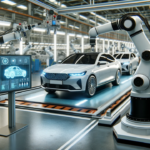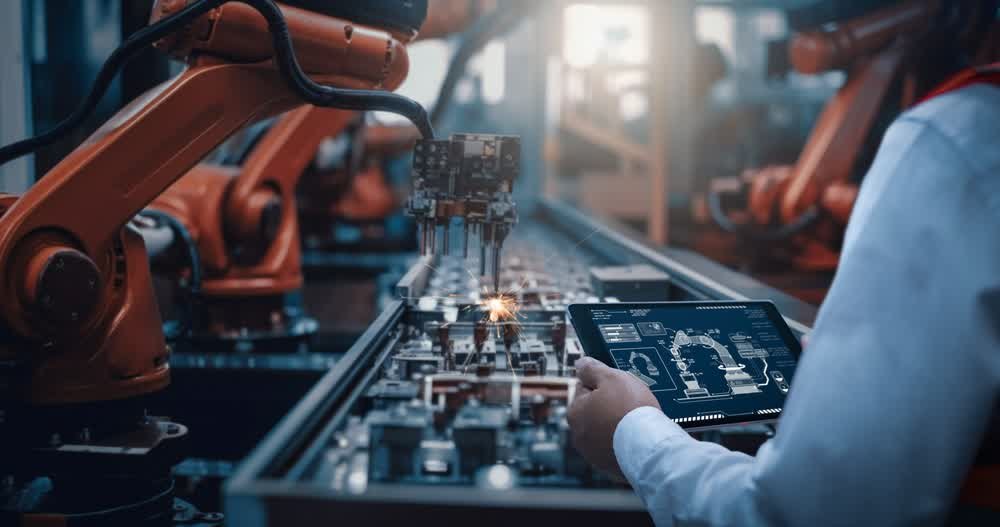
Industrial facilities are moving steadily toward greater autonomy. Production lines that once required constant human supervision now rely on interconnected systems capable of adjusting operations in real time. Sensors monitor environmental variables, analytics platforms assess performance, and digital dashboards present predictive insights to operations teams.
- From Closed-Loop Control to Adaptive Intelligence
- Integration with Industrial IoT Architectures
- Predictive Maintenance and Self-Diagnostics
- Enhanced Cybersecurity Requirements
- Sustainability and Resource Optimization
- Collaboration Between Human Expertise and Autonomous Systems
- Standardization Across Global Operations
- The Expanding Strategic Role
- Conclusion
At the center of this transformation are industrial process controllers. These systems regulate pressure, temperature, flow, and other variables that define manufacturing stability. As industries shift toward autonomous ecosystems, the role of controllers is expanding beyond simple regulation into a more strategic function.
Organizations exploring structured automation pathways often consult resources such as the Industrial Process Controllers guide to understand how modern control systems integrate with broader digital infrastructure.
The future of these systems lies not only in precision, but in adaptability, connectivity, and intelligent response.
From Closed-Loop Control to Adaptive Intelligence
Traditional industrial process controllers operate through closed-loop logic. Sensors detect deviations, and controllers adjust outputs to maintain stability. While effective, this approach relies on predefined parameters.
In autonomous ecosystems, controllers are evolving to support adaptive algorithms. These systems analyze historical trends and real-time data simultaneously, refining response behavior based on performance patterns.
Adaptive control systems enable:
- Dynamic parameter adjustment
- Improved tolerance to variable input conditions
- Reduced manual reconfiguration
Rather than operating strictly within fixed thresholds, controllers increasingly adjust based on contextual information.



Integration with Industrial IoT Architectures
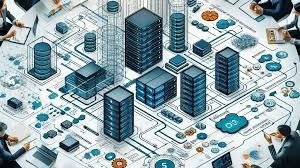
Autonomous facilities depend on networked systems that communicate continuously. Industrial process controllers are becoming fully integrated nodes within Industrial Internet of Things (IIoT) frameworks.
Connectivity allows controllers to:
- Share data across production lines
- Coordinate with predictive maintenance systems
- Feed analytics platforms with high-resolution operational metrics
The International Society of Automation has emphasized interoperability as a cornerstone of modern automation standards. Controllers that communicate seamlessly across platforms strengthen system-wide efficiency.
Future ecosystems will treat controllers not as isolated devices, but as contributors to a unified data environment.
Predictive Maintenance and Self-Diagnostics
In autonomous industrial ecosystems, downtime prevention is a priority. Controllers increasingly incorporate self-diagnostic capabilities that monitor performance and detect internal irregularities.
Advanced systems can:
- Identify sensor drift
- Detect irregular signal patterns
- Flag potential calibration issues
By alerting operators before faults escalate, controllers support predictive maintenance strategies.
This proactive capability reduces unexpected shutdowns and extends equipment lifespan.
Enhanced Cybersecurity Requirements
As controllers become more connected, cybersecurity gains importance. Autonomous ecosystems rely on secure data exchange between control units, supervisory systems, and analytics platforms.
Future industrial process controllers will incorporate stronger security protocols, including:
- Encrypted communications
- Access control layers
- Intrusion detection mechanisms
Protection of operational technology infrastructure becomes essential as network integration expands.
Security considerations will shape controller architecture as much as performance requirements.
Sustainability and Resource Optimization
Autonomous ecosystems aim not only for productivity, but also for resource efficiency. Controllers are increasingly designed to optimize energy consumption and material usage based on real-time analytics.
Advanced control strategies support:
- Demand-responsive energy regulation
- Waste minimization through precise dosing
- Continuous efficiency benchmarking
Data-informed adjustment contributes directly to sustainability goals.
As environmental performance metrics gain prominence, control systems will play a more visible role in resource management strategies.
Collaboration Between Human Expertise and Autonomous Systems
Even as facilities become more autonomous, human oversight remains critical. The future does not eliminate expertise; it redefines it.
Operators will increasingly engage with controllers through:
- Digital dashboards
- Simulation tools
- Scenario analysis platforms
Industrial process controllers will provide structured insight rather than simply maintaining parameters. Human teams will use these insights to guide strategic adjustments and long-term planning.
Autonomous ecosystems will rely on collaboration between intelligent control systems and skilled decision-makers.
Standardization Across Global Operations
Multinational organizations seek uniform performance standards across geographically distributed plants. Controllers capable of centralized configuration and remote monitoring will strengthen alignment across facilities.
Standardization enables:
- Consistent product quality
- Streamlined training
- Simplified compliance documentation
Controllers in autonomous ecosystems must balance local responsiveness with global integration.
The Expanding Strategic Role
As automation deepens, industrial process controllers are moving from operational tools to strategic infrastructure components. Their ability to regulate, analyze, communicate, and adapt positions them at the core of future manufacturing ecosystems.
Facilities that invest in scalable control architectures today prepare for:
- Advanced analytics integration
- Increased automation depth
- Long-term digital transformation
Autonomous ecosystems are not built on robotics alone. They depend on stable and intelligent control foundations.
Conclusion
The future of industrial process controllers lies in adaptive intelligence, seamless connectivity, predictive maintenance, and secure integration within autonomous industrial ecosystems. These systems will move beyond maintaining equilibrium to actively contributing to optimization and strategic planning.
Manufacturers evaluating modernization initiatives can begin with structured frameworks such as the Industrial Process Controllers guide to understand how next-generation controllers fit within broader automation goals.
As industrial ecosystems evolve toward autonomy, process controllers will remain indispensable—not merely as regulators of variables, but as central participants in intelligent, resilient, and scalable manufacturing environments.