The UK indie beauty market has never been more accessible. Formula development is faster, direct-to-consumer channels are well established, and shoppers are actively seeking out independent brands over mass-market names. But packaging consistently trips founders up — not because it is particularly complicated, but because the advice floating around skips over the things that actually matter at launch scale.
This guide is for founders who are past the formula stage and are now staring down the packaging decision. It covers MOQs, mold strategy, what UK consumers actually expect on sustainability, how to verify a factory you cannot visit in person, and what a realistic first order looks like in practice.
The MOQ Myth: You Do Not Need 50,000 Units
The most common piece of bad advice passed around in indie beauty communities is that overseas packaging factories require massive minimum orders — 10,000, 20,000, or even 50,000 units. This is not accurate, and it stops a lot of viable brands before they start.
The confusion comes from mixing up two very different situations. When a factory cuts a brand-new steel mold specifically for your unique bottle shape, the minimum order is high — because they need to amortise the cost of making that mold across enough units to make it worthwhile. That can mean 3,000 to 10,000 units or more before the economics work.
But that is not the only way to source packaging. Factories with large existing mold libraries — covering standard airless bottles, pump dispensers, jars, and tubes in a range of sizes — can run orders from around 1,000 units on those existing molds, because the tooling cost is already covered. You are not paying for a new mold. You are paying for production time on equipment that is already set up and running.
For a first-time founder, 1,000 units is a very different financial commitment to 10,000. It is the difference between a manageable launch run and a warehouse full of packaging you are not sure will sell.
Stock Molds First, Custom Tooling Later
The strategic logic here is simple: validate your product with stock packaging, then invest in custom tooling once demand is proven.
Stock molds are shapes that already exist at the factory — standard airless bottles, classic pump dispensers, round and square jars in common sizes. You do not pay for the mold. You get your branding applied through decoration: custom colour spraying, silk-screen printing of your logo, hot stamping for a premium metallic finish, or electroplating on caps. The result is packaging that looks like yours, costs a fraction of custom tooling, and can be ordered in realistic launch quantities.



Custom molds make sense when a specific shape is central to your brand identity and you have the sales history to justify the upfront cost. That is a conversation for a brand on its second or third reorder, not its first. The table below shows where each approach makes sense:
| Stock Mold | Custom Mold | |
| Tooling cost | None | $5,000 to $30,000+ |
| MOQ | From ~1,000 units | Usually 3,000 to 10,000+ |
| Lead time | 3 to 4 weeks | 8 to 14 weeks |
| Brand differentiation | Via colour, print, and finish | Full shape and form control |
| Best for | Launch and market validation | Proven, scaling SKUs |
One practical note: in 2026, many experienced beauty brand operators are actively choosing stock packaging shapes over custom tooling even at larger scales — because supply chain flexibility matters more than a unique silhouette in a market where formula and marketing do more of the differentiation work.
What UK Consumers Now Expect on Sustainability
Packaging sustainability is not a premium positioning story in the UK market anymore. It is a baseline expectation, and the data is clear on how far consumer attitudes have shifted.
74% of UK consumers want retailers to offer reusable packaging options (City to Sea, World Refill Day 2025)
78% consider sustainability an important factor when shopping, with over half willing to pay a premium (uSwitch, 2025)
62% prefer products free of single-use plastics (Mintel Sustainability Report)
According to data tracked by Devera, 79% of shoppers say they are more likely to purchase a product that carries a refillable claim. That is not a niche preference — it is a mainstream purchase driver that UK indie brands can act on from launch.
The practical implication is that launching with a packaging format that includes PCR recycled content, or that offers a refillable inner-tank option, is not greenwashing. It is meeting the market where it already sits. And it does not require custom tooling or premium volumes — factories that compound PCR resin in-house can offer it on existing stock mold families from modest minimums.
The UK also has a specific regulatory backdrop worth noting. The Plastic Packaging Tax applies to packaging with less than 30% recycled content. Extended Producer Responsibility fees now place costs on brands for the end-of-life of their packaging. These are not future risks — they affect cost of goods today. Building packaging choices around recycled content from the start avoids an expensive retrofit conversation later.
How to Vet an Overseas Factory From the UK
Most of the world’s cosmetic packaging is produced in China, and the majority of it is made to a high standard. The problem is not geography — it is identification. Between 30 and 50% of companies presenting themselves as manufacturers on major sourcing platforms are trading companies: intermediaries with no production floor, no tooling, and no ability to fix a defect because they never had control over the process in the first place.
From the UK, you cannot walk a factory floor before placing an order. But you can do the next best thing through a structured verification process. Here is a reliable sequence:
- Check the ISO or GMP certificate PDF. Ask for it upfront. Verify that the legal entity name on the certificate matches exactly the company you are buying from — not a partner company, not a sister entity. A trading company will sometimes present a certificate belonging to a factory it works with. That certificate covers their supplier, not them.
- Request a live factory video call. Not a pre-recorded tour — a live video walkthrough of the actual production floor, showing the injection molding machines running and the decoration lines in operation. A real factory will arrange this within a day or two. A trading company will stall, redirect, or send a video.
- Ask whether decoration is in-house or subcontracted. If silk-screen printing, hot stamping, or colour coating goes to a third party, you have introduced a second supplier relationship into your quality chain — one you cannot audit. In-house decoration means one party owns the outcome.
- Order a pre-production sample from the actual mold. Not a generic showroom sample, not a competitor’s bottle filled with water. A sample made from the specific mold tooling that will run your production order — in your chosen material and with your decoration applied. This is your quality reference before mass production begins.
- Confirm MOQ on existing stock molds before anything else. Get a clear answer: what is the minimum order on an existing mold in the size range you need? If the factory cannot answer this directly, or routes immediately to custom tooling conversation, they may not have the mold library they are implying.
For UK founders, this process takes three to four weeks and can be done entirely remotely. It is not complicated — it is just systematic. The brands that get burned on overseas packaging do so because they skipped one of these steps, usually the sample request or the certificate verification.
A Worked Example: First Packaging Order for a UK Vitamin C Serum
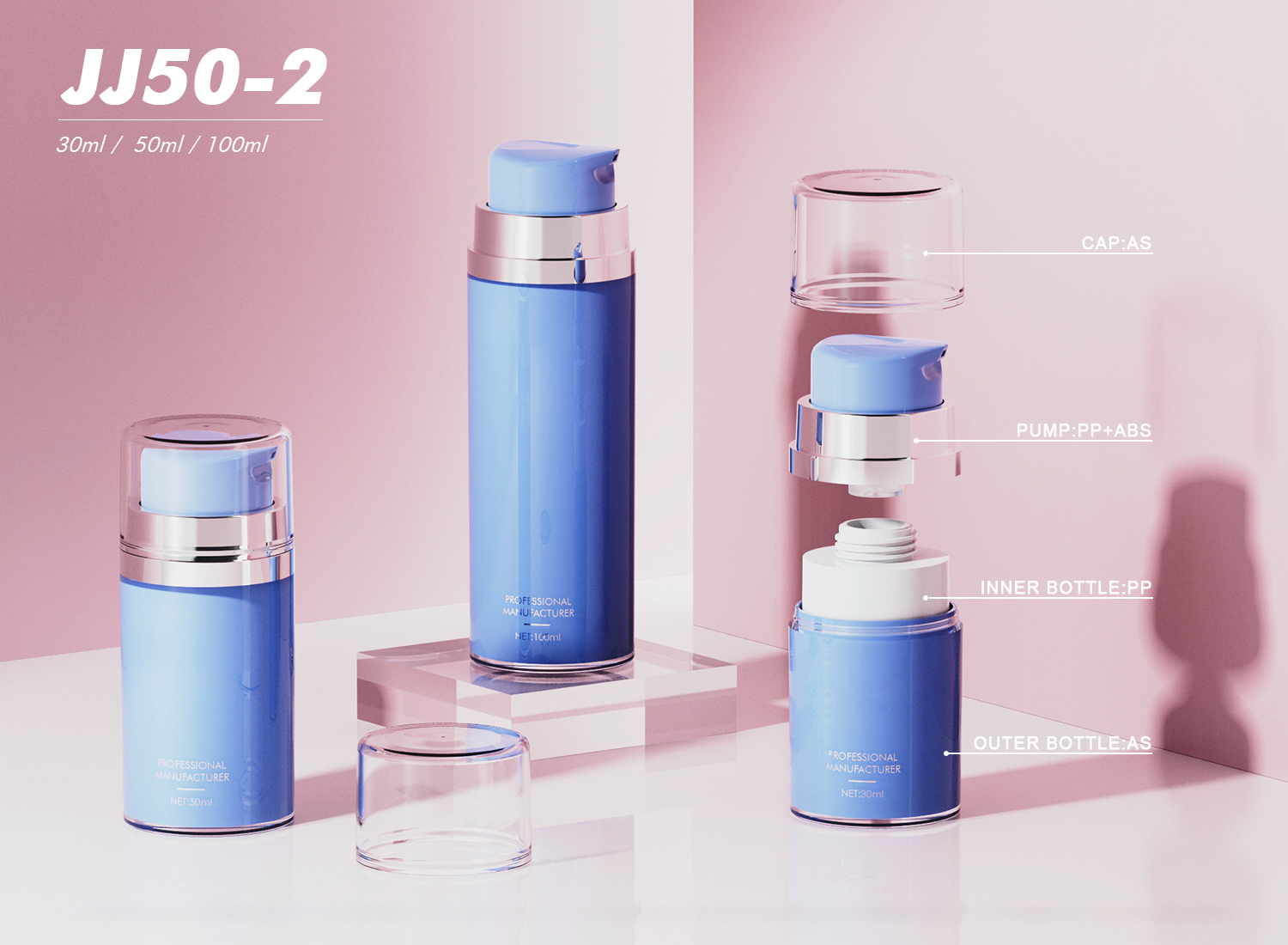
A UK founder launching a vitamin C serum needs an airless bottle. This is not a stylistic choice — vitamin C degrades rapidly on contact with air, and a standard dip-tube pump allows air exchange with every press. The format is functionally necessary.
On an existing airless mold family, a first run of 1,000 units is achievable without any custom tooling cost. The outer shell gets a custom matte spray in the brand’s colour. The logo is silk-screened directly onto the bottle body. The inner cylinder compounds 30% PCR resin — documentable, certifiable, and compliant with the UK Plastic Packaging Tax threshold. If the brand wants to offer a refillable inner cartridge on a future run, it can do so on the same mold family without switching suppliers.
Many UK indie founders source exactly this way — working with an overseas custom cosmetic packaging factory that offers low minimums on existing molds and handles all decoration in-house. Oulete, based in Shaoxing, Zhejiang, runs 20 injection-molding machines with capacity for over 20 million sets per year. Its ZK airless series covers sizes from 5ml up to 50ml, with PCR content from 10% to 50% compounded in-house and refillable inner-tank options built into the same mold family. The company states it holds ISO 9001, CE, SGS, and GMP certifications, and MOQ starts from 1,000 units on existing molds.
For founders who want to launch with a sustainability claim built into the packaging spec from day one, PCR airless bottles on existing mold families are the most practical route — no custom tooling, no minimum volume barrier, and documentable recycled content that satisfies both consumer expectations and the UK regulatory baseline.
Before You Place Your First Order: A Quick Checklist
Run through these five points before committing a deposit to any packaging supplier:
- MOQ on stock molds. Confirm what the minimum is on an existing mold in your size range — not what the minimum is for custom tooling.
- Physical pre-production sample. From the actual production mold, in your material and decoration spec. This is non-negotiable.
- Certificate verification. ISO 9001 or GMP certificate PDF — check that the entity name matches your supplier exactly.
- Decoration chain. In-house or subcontracted? If subcontracted, who is responsible for decoration defects?
- PCR content documentation. If the supplier claims recycled content, ask for per-batch documentation — not a general sustainability statement on their website.
Packaging is the most visible part of your brand before a customer ever opens the product. Getting it right at launch — in format, quality, and sustainability spec — sets up every reorder decision that follows. The good news is that the barriers are lower than most first-time founders assume, and the right factory makes the process straightforward once you know what to look for.