If you’ve recently started looking for shelving for your store, you’ve probably noticed something of a bit of a headache: the terms “shop racking” and “shop shelving” are used almost interchangeably across supplier websites, catalogues and trade forums yet they are fundamentally different products built for different purposes.
- What Is the Real Difference Between Shop Shelving and Shop Racking?
- Which UK Retail Environments Need What – Sector by Sector
- Convenience Stores & Off-Licences
- Pharmacies & Health Retailers
- Independent Supermarkets & Grocery Retailers
- Bakeries & Food-to-Go Retailers
- Pound Shops, Discount Stores & General Merchandise
- At-a-Glance: Shop Shelving vs Racking by UK Retail Sector
- 5 Non-Negotiables Before You Buy Any Retail Shelving or Racking
- The Hybrid Approach: How Smart UK Retailers Use Both
- The Bottom Line for UK Retail Owners
Choosing the wrong one doesn’t just waste money. It actively undermines your customer experience, creates safety risks and often leads to a full refit within a year or so.
We see this happen all the time.
This guide is written for UK independent retailers, convenience store owners, pharmacy managers, bakery operators, and supermarket fitters, who want a straight answer from people who have actually done this, not a generic overview copied from a supplier brochure.
What Is the Real Difference Between Shop Shelving and Shop Racking?
Before we look at specific retail environments, let’s establish clear definitions because this distinction will determine everything about your fit-out.
Shop Shelving: Built for Retail Display
Shop shelving is engineered for customer-facing retail environments. It is designed to be browsed, touched, and shopped from. The key technical features are:
- Adjustable shelf heights at 25mm or 50mm intervals to accommodate different product sizes
- Load capacities of 80–300kg per shelf (UDL – uniformly distributed load, which is what actually matters when shelves are fully packed)
- Retail-grade aesthetics: powder-coated steel, clean upright profiles, integrated accessory slots for price strips, label holders, shelf dividers, and end panels
- Gondola shelving (freestanding, double-sided) or wall-bay configurations
- Tool-free shelf adjustment in most quality systems, critical for fast planogram changes
If a customer sees it, reaches for it, or makes a purchasing decision standing in front of it, it should be shop shelving.
Shop Racking: Built for Load and Volume



Shop racking, also called racking systems, is industrial-grade storage. It is not built for customer browsing; it is built to hold heavy, bulk, or palletised stock safely in stockrooms, warehouses, and trade-counter environments.
- Load capacities from 500kg to several tonnes per bay, depending on configuration
- Heavy-gauge steel construction with floor or ceiling anchoring required for safety
- Formats: selective pallet racking, wide-span shelving, cantilever racking (for long/awkward items), and mezzanine racking
- Accessed by stock team using forklifts, hand pallet trucks, or step ladders not by customers
- Must comply with SEMA (Storage Equipment Manufacturers Association) guidelines under UK workplace safety law
The simplest test: is a customer or a forklift accessing this? Customer = shelving. Forklift = racking.
Which UK Retail Environments Need What – Sector by Sector
Most guides explain the difference in the abstract and leave you to figure out the application. Here’s what it actually looks like in the UK retail environments we work in every day.
Convenience Stores & Off-Licences
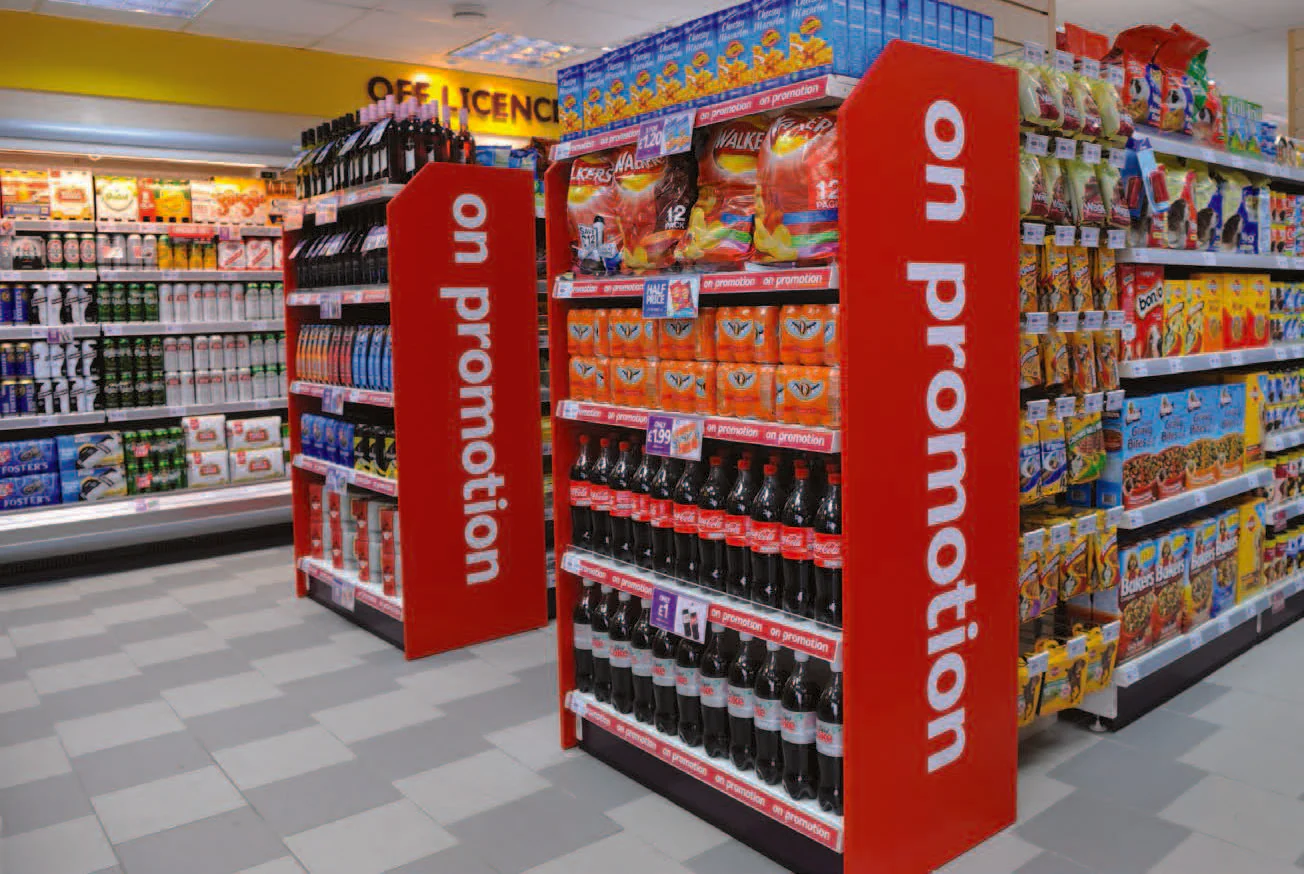
The UK has over 50,000 convenience stores from family-run corner shops and symbol group members (Spar, Nisa, Best-one) to independent off-licences and forecourt retailers. Almost all of them run primarily on gondola shelving and wall-bay systems.
We recently worked with a first-time convenience store owner who visited our showroom before their opening. Here’s what they shared afterwards:
“
It’s my first time opening a convenience store. The team took the time to understand exactly what I needed and offered smart, practical solutions that fit my space perfectly. The quality of the shelving is exceptional — sturdy, beautifully designed, and built to last. What truly stands out is their attention to detail and commitment to customer satisfaction. The prices are competitive, the craftsmanship is excellent, and the overall experience was smooth and stress-free.
★★★★★ Verified Google Review — 5 stars, 9 weeks ago
That outcome, a first-time retailer leaving with a layout that actually works is what gets missed when you buy shelving from a catalogue without expert input. Here’s what a well-specified convenience store typically needs:
- Central gondola runs (double-sided, 1.8m–2.0m height): your main aisles. Stick with adjustable bays so you can adapt to ranging changes and seasonal product rotations
- Perimeter wall bays: for canned goods, household products, pet food, and your high-margin lines. Wall bays maximise every square foot of the shop
- Chiller-adjacent dry shelving: your shelving provider should offer dry-goods bays that match your refrigeration units aesthetically mismatched systems look amateur and reduce perceived quality
- Stockroom pallet racking or medium-duty shelving (500kg+ per bay): cash-and-carry deliveries arrive heavy. Don’t skimp on back-of-house storage, it’s where your team’s efficiency lives
Industry Insight:
Post-Brexit supply chain disruptions have pushed many UK convenience operators to hold significantly more on-site stock than pre-2020. If your stockroom is regularly holding 20+ cases of soft drinks, beer, or canned goods, heavy-duty racking rated at 500kg+ per bay is worth every penny over standard shelving. A racking collapse in a stockroom isn’t just a stock loss — it’s a RIDDOR-reportable incident.
Pharmacies & Health Retailers
Whether you’re running an independent chemist or a franchise under Boots, Lloyds, or Well Pharmacy, pharmacy shelving has requirements that most generic shopfitting suppliers underestimate:
- Narrow shelf depths (300 – 400mm): OTC medicines, vitamins, and health products have small footprints – deep shelves waste space and make products hard to reach
- Integrated price strip channels on every shelf edge: NHS and pharmacy pricing compliance requires clear, legible pricing. Retrofit price strips look cheap; integrated channels look professional
- Lockable enclosed bays or display cases: for higher-value items (electric toothbrushes, premium skincare, medical devices) often required by pharmacist’s counter regulations
- Dispensary shelving (back room): narrow, lightweight, typically labelled alphabetically by BNF category or manufacturer. This is very different from the shop floor – lighter loads, tighter organisation
Pharmacies almost never need industrial pallet racking on the shop floor. The stockroom may benefit from medium-duty shelving (200 – 300kg per shelf) for bulk medicine and consumable deliveries but full racking is rarely warranted unless you’re operating a dispensing hub servicing multiple sites.
Independent Supermarkets & Grocery Retailers
Independent supermarkets particularly those competing head-to-head with Aldi, Lidl, and the Co-op require the most carefully specified combination of shop shelving and racking systems of any retail format:
- Heavy-gauge gondola shelving (2.0m – 2.2m bays, rated 150 – 250kg per shelf): ambient grocery is heavier than most retailers expect. Tins, bottled sauces and canned drinks add up fast
- End gondola bays (end caps): purpose-built promotional bays for seasonal lines, price promotions and supplier-funded feature space. These are high-revenue square footage don’t use standard bays
- Fresh and produce display shelving: stepped display tables, produce bins and open-sided bays with easy cleanability for fruit, vegetables, and bakery
- Back-of-house pallet racking: essential for high-volume ambient SKUs (soft drinks, cereals, canned goods). At supermarket volumes, you need proper pallet racking – medium-duty shelving won’t cope
HSE Compliance Note:
HSE guidance requires that gondola shelving bays exceeding 2.0m in height must be secured with anti-tilt brackets anchored to either the floor or an overhead rail system. If you’re specifying 2.2m+ bays for range maximisation, confirm this with your supplier before installation. Non-compliance is both a safety liability and an insurance risk.
Bakeries & Food-to-Go Retailers
Bakeries are consistently underserved by generic shopfitting advice. The requirements are genuinely different from standard retail:
- Tiered display shelving (stepped, open-front, 900 – 1,500mm height): for loaves, pastries, and baked goods at service counter height. Accessibility for both staff and browsing customers is key
- Ventilated display units: this is critical and almost never mentioned in generic guides. Enclosed shelving traps moisture around baked goods, accelerating mould and reducing product life significantly. Always specify ventilation gaps or open-sided units
- Below-counter storage shelving: medium-duty, within your service counter cabinet, for trays, packaging supplies, and short-term back-stock. Typically 200–300mm shelf spacing
- Dry goods back-of-house racking: flour arrives in 16kg – 25kg sacks; sugar in 25kg bags; butter in bulk cases. A full pallet of flour weighs 800kg. Standard shelving will not cope, you need proper racking rated accordingly
For artisan and premium bakeries, the shop floor display is as much a brand statement as it is functional storage. Bespoke or hand-finished shelving units can complement a premium aesthetic but the structural load ratings still apply regardless of how the unit looks.
Pound Shops, Discount Stores & General Merchandise
The UK discount sector – Poundland, B&M, Home Bargains, and thousands of independent equivalents operates at some of the highest shelf-fill densities in retail. The requirements are specific:
- Heavy-duty gondola shelving (200 – 300kg per shelf): discount retail packs shelves harder than almost any other format. Standard retail shelving will bow, distort, or fail under sustained overloading
- High bays (1.8m – 2.2m): maximises SKU count and creates the ‘treasure hunt’ browsing experience that drives the category. Factor in anti-tilt compliance at 2.0m+
- Robust end panels and header board systems: fast promotional cycles mean signage changes constantly. Cheap end panels will look broken within months
- Back-of-house pallet racking: high stock volumes, fast rotation, and bulk purchasing are the model – back-of-house storage is as important as the shop floor
Safety Warning for Discount Operators:
Shelf overloading is the single most common safety violation found during HSE inspections of UK discount retail stores. Always enforce the manufacturer’s UDL (Uniformly Distributed Load) rating not just the maximum point load and train all staff on it. A shelf collapse in a busy discount store is a serious injury risk and a significant public liability claim waiting to happen.
At-a-Glance: Shop Shelving vs Racking by UK Retail Sector
| Retail Sector | Shop Shelving | Racking Systems | Critical Specification |
|---|---|---|---|
| Convenience Store / Off-Licence | ✓ Essential | ✓ Stockroom | Gondola runs + perimeter walls; 500kg+ stockroom racking |
| Pharmacy / Chemist | ✓ Essential | Rarely needed | 300–400mm shelf depth; integrated price strips; lockable options |
| Independent Supermarket | ✓ Essential | ✓ Back-of-house | Heavy-gauge shelves; 2.0m+ compliance; pallet racking for volume |
| Bakery / Food-to-Go | ✓ Display shelving | ✓ Dry goods store | Ventilation gaps critical; bulk ingredient racking 500kg+ |
| Off-Licence / Beer Cave | ✓ Essential | ✓ Stockroom | Heavy shelves (glass bottles are dense); chiller-adjacent matching |
| Pound Shop / Discount | ✓ Heavy-duty | ✓ Back-of-house | UDL rating critical; 200–300kg minimum per shelf |
| Newsagent / CTN | ✓ Essential | Rarely needed | Compact bays; magazine racks; counter display solutions |
| Trade Counter | Optional | ✓ Essential | Wide-span or cantilever for heavy / long / awkward items |
5 Non-Negotiables Before You Buy Any Retail Shelving or Racking
Whether you’re buying shop shelving, racking systems, or a combination of both, these five checks will protect your investment and potentially your team’s safety.
- Check the UDL rating, not just the maximum load. UDL (Uniformly Distributed Load) tells you how much weight the shelf can hold when packed evenly across its full surface, which is exactly how retail shelves are actually used. Always match your heaviest fully-packed shelf to the UDL rating, then add 20% safety margin.
- Confirm SEMA compliance for any racking. All racking systems installed in UK workplaces must comply with SEMA (Storage Equipment Manufacturers Association) guidelines. This is not optional, it’s a legal requirement under PUWER 1998 and LOLER 1998, and non-compliance invalidates most commercial insurance policies. Ask for the compliance documentation before signing any order.
- Verify the system is genuinely modular. Good shop shelving and racking systems are modular – you can add bays, extend runs, change shelf heights, and add accessories without replacing the whole system. Ask specifically: ‘Can I add bays to this system in 12 months?’ If the answer is vague, walk away.
- Check the accessories range before ordering uprights. The uprights and shelves are the easy part. The accessories price strip channels, shelf dividers, label holders, anti-tilt brackets, end panels, header boards, LED lighting rails are what make a retail fit-out work commercially. Confirm the full accessories range exists and is in stock before you commit to any shelving system.
- Get lead times in writing and confirm installation support. UK retail fit-outs almost always run to a hard opening deadline. Shelving and racking arrives flat-packed or in component form. Confirm exact delivery windows, whether installation is included or available, and what happens if components are missing or damaged on delivery. A verbal assurance is worth nothing on opening day.
The Hybrid Approach: How Smart UK Retailers Use Both
The most commercially effective UK retail operations don’t choose between shelving and racking, they deploy both deliberately, assigned by zone:
- Shop floor and customer-facing areas: high-quality retail gondola shelving and wall bays (prioritise aesthetics, adjustability, and accessories)
- Stockroom and goods-in areas: medium to heavy-duty racking systems (prioritise load capacity, SEMA compliance, and vertical height utilisation)
- Trade counters and collection points: wide-span shelving – the hybrid middle ground that handles heavier loads than retail shelving but remains accessible without a forklift
For a typical medium-sized independent convenience store or pharmacy, a well-planned fit-out budget typically allocates roughly 65–70% to customer-facing shop shelving (the revenue-generating investment) and 30–35% to back-of-house racking (the operational efficiency investment). Getting this ratio wrong in either direction is expensive, over-spending on premium racking no customer ever sees, or cutting corners on the shop shelving that directly influences every purchasing decision made in your store.
The Bottom Line for UK Retail Owners
Shop racking and shop shelving solve different problems in the same building. For the vast majority of UK retail environments – convenience stores, pharmacies, supermarkets, bakeries, off-licence and newsagents, quality shop shelving is the primary investment and racking is the essential supporting system in the stockroom.
Get the shop floor right and you’ll see it in customer dwell time, basket size and repeat footfall. Get the stockroom right and you’ll see it in stock rotation speed, waste reduction, and operational efficiency. Get both right and you’ve built a retail environment that scales.