Paediatric first aid is not a certificate on a wall. It is a practical skill set that changes what you will do when a child chokes, has a seizure, or suffers a severe allergic reaction. You will find that the stakes are different with children. Their airways are smaller. Their bodies react faster. Your actions hence must be precise and calm.
- Types Of Paediatric First Aid Courses
- Paediatric First Aid (Two Day), Full Course
- Emergency Paediatric First Aid (One Day), Essentials
- Blended And Online Options
- Courses That Meet Ofsted And EYFS Requirements
- How To Choose The Right Course For You Or Your Setting
- Where To Find Paediatric First Aid Courses In The UK
- And Wrapping Up
Statistically, accidents are a leading cause of injury in early childhood. If you work with babies or young children you will be expected to respond quickly and effectively. Employers and regulators will look to you to keep children safe and minimise harm. You will want training that teaches you the right sequences and gives you repeated practice until responses feel second nature.
Beyond procedure, paediatric first aid builds judgement. You will learn when to call emergency services, what to document afterwards, and how to communicate with worried parents. In a crisis your words will steady others, and your record keeping will matter later. That combination of hands on skill and calm judgement is the reason training matters.
Types Of Paediatric First Aid Courses
Not every course is the same. The differences can be: length, depth, legal compliance and the amount of face to face practical work. Below are the common formats you will encounter and what each will do for you.
Paediatric First Aid (Two Day), Full Course
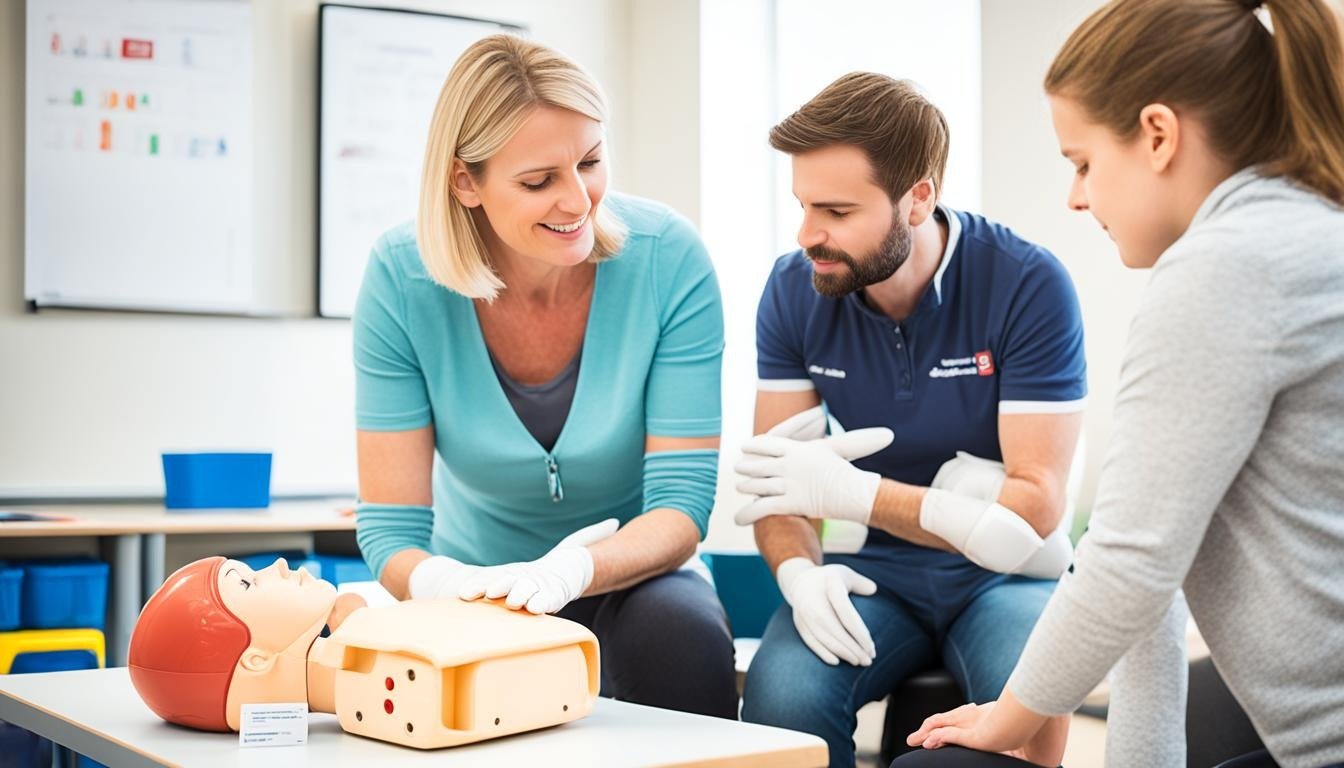
This is the comprehensive option. Over two full days you will cover CPR for infants and young children, choking, head injuries, anaphylaxis management, burns, fractures and basic life support. You will practice scenarios and receive feedback on your technique.
You will find that a full course includes risk assessment, record keeping and an emphasis on recognition of early signs of deterioration. For staff in nurseries, childminders and reception years this is often the required standard. You will leave able to perform sustained CPR, use a pocket mask if provided, and coordinate with ambulance services.
Emergency Paediatric First Aid (One Day), Essentials
The one day emergency course is concentrated. It focuses on immediate life saving interventions: infant and child CPR, choking relief and how to respond to severe bleeding and shock. It suits people who need core skills quickly or as a refresher between full courses.
If you work part time or need to meet an employer requirement fast, a one day course is useful. You must note its limits: it usually covers less on long term injuries, illness management and documentation.


Blended And Online Options
Blended courses combine online theory with a shorter face to face practical session. Fully online courses may cover theory well but cannot give practical hands on practice that employers and regulators prefer.
In the case that you choose blended learning, make sure the provider includes sufficient face to face time for CPR practice on manikins. Practical assessment matters. You will be less confident if the course is purely video based.
Courses That Meet Ofsted And EYFS Requirements
If you work in early years settings you will often need a course that explicitly states compliance with Ofsted and the Early Years Foundation Stage requirements. Those courses tend to be the two day paediatric first aid full course or an approved equivalent.
Check the course description for explicit reference to EYFS and the relevant statutory guidance. Employers will ask for certificates that name the course and the trainer, with dates of attendance and clear assessment outcomes. You will find that meeting these standards protects both the children and your professional standing.
How To Choose The Right Course For You Or Your Setting
Start with your role and responsibility. Are you a childminder, nursery manager, school receptionist or occasional volunteer at a community group? Your day to day exposure to risk shapes what you will need. Consider these practical checks before you book:
- Accreditation and trainer credentials. Look for recognised first aid organisations or trainers who list their qualifications and insurance. You will want an instructor who trains regularly with paediatric manikins.
- Course length and content. Match the syllabus to your needs. If your setting requires EYFS compliant training make that non negotiable.
- Practical assessment. Ensure the course includes observed CPR practice and scenario assessment. You will gain confidence from live feedback.
- Class size and equipment. Smaller groups mean more practice time for you. Ask how many manikins per student.
- Certificate validity and refresher recommendations. Certificates often last three years but employers may request more frequent refreshers. You will find regular short refreshers keep skills sharp.
- Location and timing. Consider travel time and whether you will need cover for the children in your care. Weekend or evening options might be available but check face to face hour totals.
Where To Find Paediatric First Aid Courses In The UK
You have several channels to find training. Each has pros and cons. Let’s take a look:
- Local community colleges and adult education centres. These often run accredited courses at modest cost. They can be convenient and familiar.
- Approved first aid training organisations. These are specialist providers who focus on paediatric training and supply up to date manuals and equipment. They will usually advertise EYFS compliant courses.
- Early years networks and employer led training. Many larger nursery chains provide in house training tailored to their policies. You will find this useful if you want continuity between training and workplace procedures.
- Professional associations and unions. They may offer discounted training or guidance on reputable providers.
- Online course directories. Sites that aggregate training providers can be efficient but verify each listing.
When you search, use precise phrases like paediatric first aid course EYFS compliant, paediatric first aid two day near me, or emergency paediatric first aid one day. You will find that location filters and course dates narrow options quickly.
Check reviews and ask for references. Speak to other professionals in your area about trainers they recommend. A short call to a course provider can reveal how seriously they take practical training and assessment.
And Wrapping Up
You will find confidence from choosing the right paediatric first aid course, not from ticking a box. The right course gives you reliable actions when seconds count, clear documentation afterwards and a steadying presence for anxious parents.
Pick a course that fits your role, demands hands on practice and states alignment with regulatory requirements if that matters for your setting. Ask specific questions about practical time, class size and assessment methods. Short refresher sessions will keep your muscle memory alive. If you pause before booking, ask yourself: will this course leave me able to act calmly and correctly around an infant in crisis? If the answer is yes, you have found a course worth your time.