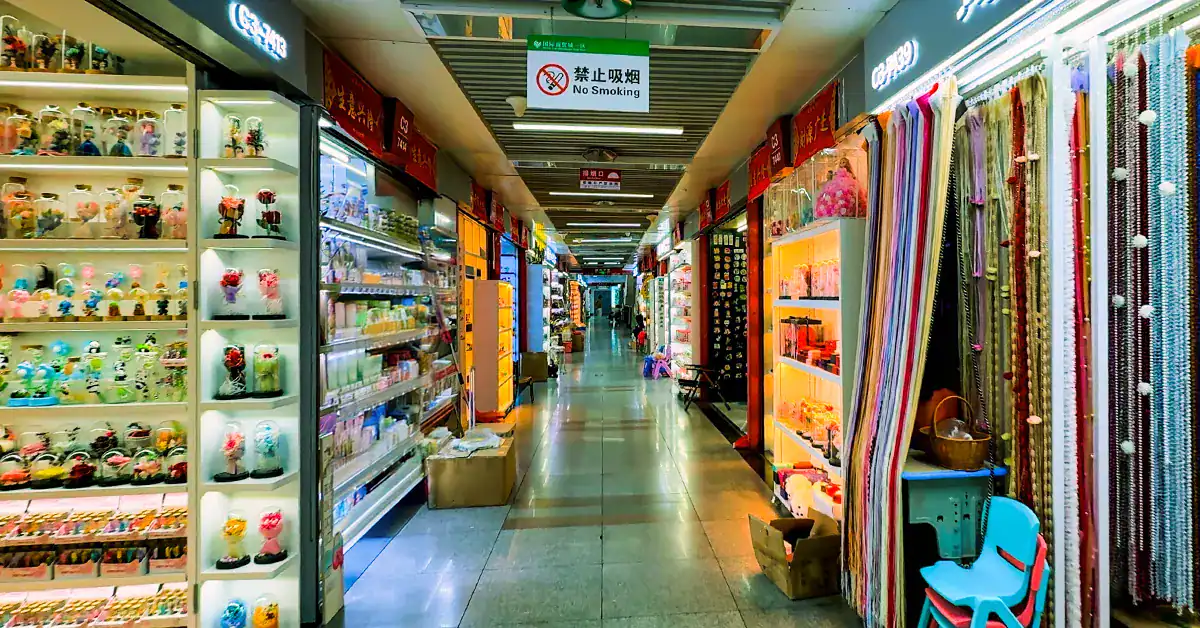
Imagine walking into a single building complex so large that it would take days to visit every shop inside it. A place where buyers from over 100 countries come to fill their stores, stock their Amazon listings, and build their wholesale businesses. That place is real, and it sits in a mid-sized city in eastern China called Yiwu.
The Yiwu Wholesale Market, officially known as the Yiwu International Trade City, is the largest small commodity wholesale market in the world. It covers more than 5.5 million square feet, contains over 75,000 individual supplier booths, and offers more than two million products across 43 different industries. For importers, wholesalers, e-commerce sellers, and retail buyers, this market represents one of the most powerful sourcing opportunities available anywhere on the planet.
But size brings complexity. And for most international buyers, especially those visiting for the first time, navigating this massive marketplace without local guidance is a serious challenge. That is exactly why working with a professional Yiwu agent has become standard practice for experienced importers. Companies like Goldenshiny specialize in helping global buyers source products efficiently, manage supplier relationships carefully, and ship goods home without unnecessary complications.
This guide is designed to walk importers through everything they need to understand about the Yiwu market, how it is structured, what sourcing challenges to expect, how a professional agent supports the entire process, and what practical steps buyers can take to make their sourcing experience as productive as possible.
Understanding the Yiwu Wholesale Market: More Than Just a Shopping Complex
Before diving into the specifics of how to source from Yiwu, it helps to understand what makes this market genuinely different from other wholesale destinations.
The Yiwu Wholesale Market is not a single building, it is a connected network of five specialized districts, each functioning as its own industry hub. Collectively, they form the Yiwu International Trade City, a government-supported trade complex that has grown steadily since the 1980s into the global sourcing powerhouse it is today.

![Watch~[VIRAL]~VIDEO: Pink Hoodie Hijab Fight Twitter Video Original](https://reelsmedia.co.uk/wp-content/uploads/2024/09/0_daX3pEgv43no39Ly-330x220.webp)
What sets the Yiwu market apart from factory-direct sourcing or other Chinese wholesale destinations is its accessibility. Many suppliers here are open to relatively flexible minimum order quantities, which means small and medium-sized businesses can source a wide variety of products without committing to enormous volumes. This flexibility is one of the key reasons why Amazon sellers, retail shop owners, boutique importers, and large wholesale distributors all find value in sourcing from Yiwu.
The market attracts buyers from more than 100 countries every single year. On any given business day, the floors are filled with international importers comparing prices, collecting product samples, negotiating terms, and building long-term supplier relationships. The energy is unlike anything in traditional retail buying, it is fast, competitive, and genuinely exciting for those who come prepared.
The Five Districts of Yiwu International Trade City: A Practical Navigation Guide
One of the most important things any buyer should learn before stepping foot in the Yiwu Wholesale Market is how its five districts are organized. Each district is a specialized hub focused on specific product categories. Knowing this layout in advance allows buyers to plan their time wisely, avoid irrelevant sections, and focus their energy on the suppliers most relevant to their business.
District 1, Toys, Jewelry Accessories, and Creative Goods
District 1 is the primary destination for creative, decorative, and seasonal merchandise. Buyers sourcing toys, whether plastic, plush, electric, or inflatable, will find an extensive range of options here. Artificial flowers, jewelry accessories, hair ornaments, handicrafts, and festival goods are also concentrated in this area. For anyone supplying holiday retail merchandise, gift shops, or fashion accessory stores, District 1 is an essential starting point.
District 2, Hardware, Electronics, and Home Appliances
District 2 shifts focus to more technical and functional product categories. Hardware tools, electronic gadgets, small home appliances, telecommunications accessories, watches, bags, and various types of locks are all found here. This section attracts buyers supplying hardware retailers, electronics distributors, and home goods stores looking for competitive pricing on practical everyday items.
District 3, Stationery, Cosmetics, and Footwear
District 3 is dedicated to personal care products and office or school supplies. Pens, notebooks, office stationery, cosmetics, skincare items, beauty accessories, mirrors, and footwear are the main product categories here. This district is popular among school supply distributors, beauty product importers, and fashion footwear sellers who need consistent supply at wholesale pricing.
District 4, Clothing, Textiles, and Daily Necessities
One of the largest sections in the entire complex, District 4 focuses on high-volume everyday products. Clothing, textiles, socks, hosiery, sewing threads, tape, and a wide variety of daily-use household items are all available here. Retailers supplying supermarkets, clothing stores, or general merchandise distributors typically spend a considerable amount of their sourcing time in this district.
District 5, Imported Goods and Automotive Products
District 5 serves more specialized sourcing needs. It features imported goods from various countries, automotive parts, accessories, and food products. This district appeals to buyers looking for niche items or unique products that are not typically found in the other four sections of the market.
Understanding this district structure before arriving at the Yiwu market allows buyers to build focused, productive itineraries. For example, a buyer sourcing jewelry and decorative home goods can spend the morning in District 1, while a buyer looking for cosmetics and stationery can combine Districts 1 and 3 into a single well-planned day. This kind of advance planning is the difference between a productive sourcing trip and an overwhelming one.
The Real Challenges of Independent Sourcing in Yiwu
The Yiwu Wholesale Market presents real opportunities, but it also comes with operational challenges that many international buyers underestimate, especially those visiting for the first time. Here is an honest look at the most common obstacles buyers face when they try to source independently without local support.
Language Barriers Create Costly Miscommunications
Most booth operators in the market communicate primarily in Mandarin Chinese. While some have basic conversational English, complex discussions about product specifications, customization options, material quality, or payment terms can easily lead to misunderstandings. A single miscommunication during a negotiation can result in receiving the wrong product, the wrong quantity, or goods that simply do not match what was originally agreed upon.
Finding Reliable Suppliers Is Harder Than It Looks
With over 75,000 booths spread across five districts, identifying suppliers who are genuinely reliable, experienced in export, and capable of consistent quality is a real challenge. Without local market knowledge or established contacts, buyers often spend valuable time visiting booths that are not a good fit, or worse, they place orders with suppliers who cannot deliver on their promises.
Quality Gaps Between Samples and Bulk Orders
One of the most frequently reported issues in large wholesale markets is the difference between the sample shown at a booth and the final bulk production. Products may look perfect during the selection phase but arrive in a shipment with inconsistencies in workmanship, packaging, or quantity. Without a proper inspection process in place before goods leave China, buyers have limited options for resolving these problems once the shipment arrives.
Logistics and Consolidation Are Genuinely Complex
Most buyers visiting the Yiwu Wholesale Market purchase from multiple suppliers across different districts. Coordinating the collection of these goods from various locations, consolidating them into a single container, preparing accurate export documentation, and managing the full shipping process requires specialized knowledge, local contacts, and careful coordination. This is not something most buyers can manage effectively on their own during a short sourcing trip.
Compliance and Import Regulations Catch Buyers Off Guard
Different destination markets have different import requirements. Certain product categories require specific certifications, CE marking for European markets, FDA compliance for goods entering the United States, or other safety standards depending on the product type and destination country. Buyers who are not familiar with these requirements can find their shipments delayed, rejected, or subject to unexpected costs at customs.
What a Professional Yiwu Agent Actually Does: A Step-by-Step Look
This is where working with a professional Yiwu agent becomes genuinely valuable. An experienced sourcing agent does not just help with translation, they manage the entire sourcing process from initial product selection through to international delivery. Here is how a professional agent typically supports buyers at each stage of the procurement journey.
Step 1, Understanding What the Buyer Actually Needs
Before any market visit or supplier search begins, a good agent takes time to understand exactly what the buyer is looking for. This includes product categories, target quality standards, acceptable price ranges, destination markets, and any compliance requirements relevant to the buyer’s country. This initial consultation allows the agent to plan the most efficient and targeted sourcing approach.
Step 2, Pre-Visit Supplier Research and Market Preparation
Rather than entering the Yiwu market without a plan, an experienced agent already has supplier contacts across the relevant districts. They know which booths have strong export experience, which suppliers offer genuine flexibility on minimum order quantities, and which vendors have a history of consistent production quality. This pre-visit research saves buyers significant time on the ground.
Step 3, Guided Market Navigation and Booth Visits
For buyers who travel to Yiwu in person, an agent provides on-the-ground guidance through the relevant districts. This includes interpreting supplier conversations, helping record booth numbers and product details, collecting business cards and samples, and ensuring the buyer stays focused on the most relevant sourcing opportunities without wasting time on unsuitable vendors.
Step 4, Price Negotiation and Supplier Communication
Negotiating effectively in the Yiwu market requires local knowledge, established supplier relationships, and an understanding of regional pricing norms. A professional agent uses their experience and existing connections to push for competitive prices and favorable terms, something that is genuinely difficult for foreign buyers to achieve independently, particularly when language barriers are involved.
Step 5, Order Confirmation and Production Coordination
Once product selections are finalized, the agent manages order confirmation, coordinates the initial deposit payment (typically 30% of the total order value), and tracks the production timeline to ensure everything stays on schedule. Regular communication with suppliers during this phase helps catch potential issues early before they become bigger problems.
Step 6, Quality Inspection Before Goods Leave China
Before any goods leave the supplier’s facility, a professional Yiwu agent conducts a thorough quality inspection. This covers workmanship, packaging, quantity accuracy, and compliance with the buyer’s original specifications. Any discrepancies identified at this stage can be addressed and corrected before goods are consolidated and prepared for international shipping, which is far more practical than trying to resolve quality issues after arrival.
Step 7, Warehouse Consolidation and Container Loading
Products from multiple different suppliers across various districts are collected and stored in a central warehouse facility. This consolidation step is critical for buyers who need to fill a mixed container with diverse product categories, for example, toys from District 1, electronics from District 2, and textiles from District 4. Professional container loading supervision ensures goods are packed securely and efficiently to minimize the risk of damage during transit.
Step 8, Export Documentation and International Shipping
The agent handles all export paperwork, customs declaration, and coordinates international shipping by sea, air, or express courier depending on the buyer’s timeline and budget. This includes preparing the commercial invoice, bill of lading, packing list, and any additional documentation required for smooth customs clearance at the destination port.
Goldenshiny: A Trusted Yiwu Trading Agent With Over a Decade of Experience
Goldenshiny is a professional sourcing company and Yiwu trading agent based in Yiwu City, Zhejiang, China. Established in 2012, the company has built more than a decade of hands-on experience operating within the Yiwu International Trade Market, working with importers from dozens of countries across Europe, Australia, the Middle East, and beyond.
Their service model is built around one core principle, making the process of importing from China simpler, more transparent, and less risky for international buyers of all sizes.
A Transparent Commission Structure That Aligns Interests
Rather than charging unclear or variable fees, Goldenshiny uses a straightforward commission-based pricing model tied to the total order value per shipment:
- Orders over USD 10,000, 5% commission
- Orders over USD 50,000, 3% commission
- Orders over USD 100,000, 2% commission
- Orders over USD 200,000, 1% commission
This tiered structure means the agent’s financial interests are directly aligned with the buyer’s success. As orders grow, the commission rate decreases, encouraging long-term partnerships and rewarding buyers who increase their procurement volume over time.
A Complete Service Range From Arrival to Delivery
Goldenshiny’s services cover the full sourcing lifecycle, which means buyers have a single point of contact managing every stage of the process:
- Airport pickup from Shanghai or Hangzhou for visiting international buyers
- Guided market tours through the relevant districts of the Yiwu market
- Supplier verification and vetting across the market’s 75,000+ booths
- Price negotiation and order confirmation support
- Quality control inspections at key production milestones
- Warehouse consolidation and professional container loading supervision
- Export documentation and China customs declaration management
- International shipping coordination by sea, air, or express courier
For buyers who cannot travel to China in person, Goldenshiny’s team conducts supplier visits, collects product samples, and carries out quality inspections on the buyer’s behalf, maintaining the same level of oversight as if the buyer were physically present in Yiwu.
Beyond the central Yiwu market, the company also supports sourcing from specialized hubs like the Keqiao Textile Market, giving clients broader access to product categories through a single trusted partner.
Who Gets the Most Value from Working With a Yiwu Trading Agent?
Not every buyer has the same needs, but in general, the following types of businesses tend to benefit most from working with a professional sourcing agent in Yiwu:
First-Time Importers Buyers who have never purchased from China before often have little understanding of how supplier relationships work, how to manage quality risks, or how to handle export documentation. An experienced agent provides the guidance and structure needed to make that first sourcing experience successful rather than stressful.
E-Commerce Sellers and Amazon Merchants Online sellers who need to source diverse product ranges from multiple categories benefit greatly from the consolidation services that agents provide. Rather than managing separate shipments from ten different suppliers, they can combine everything into a single shipment with one coordinated set of paperwork, saving time, reducing shipping costs, and simplifying logistics significantly.
Wholesalers Looking to Scale Their Product Range Established wholesalers who want to expand into new product categories can use an agent’s market knowledge and supplier network to identify suitable new product lines quickly and efficiently, without needing to spend weeks researching the Yiwu Wholesale Market independently.
Buyers Who Cannot Travel to China Not every importer has the budget or time to fly to Yiwu for a sourcing trip. Remote buyers can rely on a trusted Yiwu agent to manage the entire process on their behalf, from supplier selection and product sampling to quality inspection and international shipping coordination.
Experienced Importers Dealing With Complex Orders Even experienced buyers who have sourced from China before often find value in using a local agent when dealing with large or complex orders involving multiple suppliers, tight delivery deadlines, or products requiring specific quality standards or compliance certifications.
Practical Tips for Buyers Planning a Visit to the Yiwu Market
For importers who plan to visit the Yiwu market in person, proper preparation can make a significant difference in how productive the trip turns out to be. Here are some practical recommendations based on how experienced buyers approach their sourcing visits.
Start the Visa Application at Least One Month Early The Chinese business visa application process takes time, and unexpected delays can disrupt an entire sourcing trip timeline. Starting the application process at least four weeks before the intended travel date gives adequate buffer time for processing.
Use a Standardized Request for Quotation Template When visiting multiple suppliers within the same product category, using a consistent template to record unit prices, minimum order quantities, lead times, and packaging details makes it much easier to compare options accurately once the day’s visits are complete. Comparing suppliers from memory alone is unreliable after visiting dozens of booths.
Record Booth Numbers and Take Photos Systematically With thousands of booths spread across the complex, it is surprisingly easy to forget which supplier offered which product at what price. Recording booth numbers, taking product photos, and jotting down key details at each stop prevents the loss of critical information that could otherwise cost a buyer a great sourcing opportunity.
Evaluate Based on Total Value, Not Just the Quoted Price The lowest-priced booth is not always the best choice. Buyers should consider the supplier’s export experience, communication speed and clarity, minimum order quantity flexibility, production lead time, and packaging quality alongside the quoted price when making final supplier decisions.
Plan District-Specific Itineraries Each Day Rather than trying to cover the entire Yiwu Wholesale Market at once, experienced buyers focus on one or two related districts per day. This approach allows for a thorough evaluation of relevant suppliers without the decision fatigue that comes from trying to process too much information in a single visit.
Calculate the Full Landed Cost Before Committing The product price shown at a booth represents only one part of the total import cost. Buyers should factor in freight charges, inspection fees, packaging costs, customs duties at the destination, inland transport, and any compliance-related expenses when calculating whether a product is genuinely profitable at the retail or wholesale price they intend to sell at.
How Cargo Consolidation Reduces Costs for Mixed-Product Buyers
One of the most practically valuable services that a professional Yiwu agent provides, and one that many buyers do not fully appreciate until they experience it, is cargo consolidation.
When a buyer sources from multiple suppliers across different districts of the Yiwu market, each individual supplier typically does not have the capacity or infrastructure to handle direct international shipping for small mixed orders. This means that without a consolidation service, buyers would either need to pay for separate small shipments from each supplier, which is enormously expensive, or limit their purchasing to fewer suppliers, which reduces product variety and negotiating power.
A professional sourcing agent solves this problem by collecting goods from all the different suppliers and consolidating them into a single centralized warehouse. Once all products have been collected, inspected, and confirmed as meeting the buyer’s specifications, the agent supervises the loading of goods into a single shipping container, whether that is a full container load or a less-than-container-load arrangement shared with other buyers’ shipments.
This consolidation approach significantly reduces the per-unit international shipping cost, simplifies the export documentation process, and gives buyers the freedom to source a genuinely diverse product range from the Yiwu Wholesale Market without being penalized logistically for working with multiple suppliers.
Understanding Landed Cost: The Number That Really Matters
One of the most important concepts for any importer to understand, and one that a good Yiwu trading agent will always help buyers think through clearly, is landed cost.
Landed cost is the total expense of getting a product from a supplier’s booth in Yiwu to the buyer’s warehouse or fulfilment centre in their home country. It includes:
- The product purchase price negotiated with the supplier
- Inland transport from the supplier to the consolidation warehouse
- Inspection and quality control fees
- Agent commission or service fees
- Export documentation and customs declaration costs in China
- International freight charges (sea, air, or courier)
- Import duties and taxes in the destination country
- Any compliance or certification costs specific to the product type
Many new importers make the mistake of evaluating suppliers purely on the booth price, only to discover that after all the additional costs are factored in, the product is not as profitable as originally assumed. A professional agent helps buyers build an accurate landed cost estimate early in the sourcing process, before purchase decisions are made, so there are no unpleasant financial surprises when the shipment arrives.
Final Thoughts: Approaching Yiwu With the Right Strategy
The Yiwu Wholesale Market is genuinely one of the most powerful sourcing environments in the world. The variety of products, the competitive pricing structure, the flexibility in order quantities, and the concentration of suppliers across so many product categories make it an extraordinarily valuable destination for importers of all sizes and experience levels.
But the scale and complexity of the market also mean that going in without proper preparation or local support can quickly turn what should be a productive sourcing opportunity into a costly and time-consuming experience. Language barriers, supplier reliability concerns, quality control risks, logistics complexity, and compliance requirements are all real challenges that affect buyers who approach the Yiwu market without adequate knowledge or professional guidance.
Working with an experienced Yiwu Trading agent who understands the local trade ecosystem, and has a proven, structured process for managing every stage of procurement, removes the majority of these risks from the equation. A good agent does not just make the sourcing process easier. They make it smarter, more efficient, and more financially sound for the businesses they support.
For importers who are serious about building a reliable and profitable supply chain from China, investing time in finding the right sourcing partner in Yiwu is one of the most practical and high-return decisions they can make.