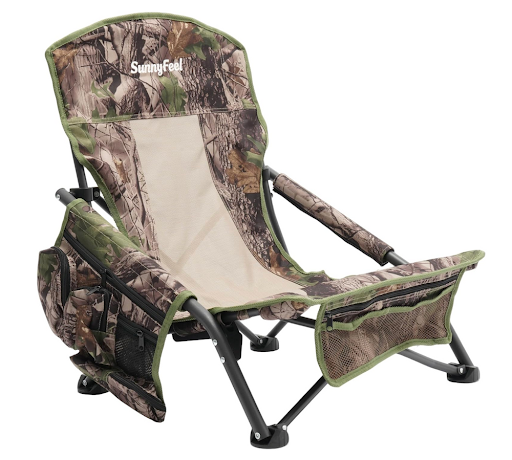
You’ve been on your feet since before dawn, covering miles of rough terrain, and now every muscle in your body is screaming for a break. There’s a fallen log nearby, but it’s wet, unstable, and about as comfortable as sitting on a pile of rocks. Sound familiar? Every hunter and outdoor enthusiast knows this moment — and it’s exactly where the right lightweight hunting and camping chair changes everything.
- Understanding Your Core Needs: More Than Just a Seat
- Key Features to Evaluate in Your Hunting & Camping Chair
- Weight and Packability: The “Lightweight” Promise
- Durability and Materials: Investing in Long-Lasting Furniture
- Comfort and Ergonomics: Ensuring Outdoor Comfort
- Portability and Setup: Ease of Use in the Field
- Camo Patterns and Stealth: Blending with Natural Environments
- The Practical Guide: How to Test and Choose Your Chair
- Make the Right Call Before You Head Into the Field
The challenge, of course, is that “lightweight” rarely comes without trade-offs. Finding a chair that won’t break your back on the trail, yet holds up against rugged field conditions while keeping you concealed and comfortable, is a genuine balancing act. You’re essentially solving a puzzle with four moving pieces: weight, durability, comfort, and stealth.
This guide is built for survivalists, hunters, and serious outdoor enthusiasts who refuse to compromise their kit. Whether you’re settling into a blind for a long sit, setting up a backcountry base camp, or moving fast and light through the wilderness, the decision framework here will cut through the noise. By the end, you’ll know exactly what to look for — and what to leave on the shelf.
Understanding Your Core Needs: More Than Just a Seat
Before you start comparing specs, get honest about how you actually hunt and camp. A still-hunter spending six hours motionless in a ground blind has completely different requirements than a backpacker covering fifteen miles to a remote base camp, who in turn needs something different from a car camper setting up a comfortable field kitchen. The “best” lightweight hunting and camping chair doesn’t exist in the abstract — it only exists relative to your specific use case.
For the minimalist survivalist moving fast and light, every ounce is a negotiation. You’re looking for something that folds down to near-nothing, sets up in seconds, and disappears into your pack without protest. Comfort is appreciated but secondary to packability. For the comfort-focused base camp hunter, the calculus shifts. You might tolerate an extra pound or two in exchange for genuine lumbar support and a seat that doesn’t punish you after hour three.
This tension is best understood through what gear veterans call the outdoor furniture triangle: Weight, Durability, and Comfort. Push hard on any one corner and the other two feel the pressure. An ultralight chair often sacrifices structural robustness or cushioning. A supremely comfortable chair tends to be heavier or bulkier. A bomb-proof, long-lasting design frequently adds weight and cost. There’s no escaping this triangle — but understanding it means you can make a deliberate trade-off rather than discovering it the hard way at mile eight on a mountain trail.
Key Features to Evaluate in Your Hunting & Camping Chair
Weight and Packability: The “Lightweight” Promise
In practical terms, a genuinely lightweight hunting chair lands under four pounds — ideally closer to two for backcountry use. Packed shape matters just as much as packed weight: a flat-folding chair slides along a pack’s frame, while a cylindrical roll straps to the outside without snagging brush. Aluminum frames deliver the best strength-to-weight ratio, shedding significant ounces over steel without sacrificing load capacity. Look for integrated carry straps or a dedicated stuff sack, because a chair that’s awkward to transport gets left behind.
Durability and Materials: Investing in Long-Lasting Furniture
Fabric denier tells the durability story. A 600D ripstop polyester resists tearing under tension and shrugs off abrasion from rocky ground, while lower-denier materials save weight but show wear faster. Oxford weave adds puncture resistance in high-stress zones like the seat pan and armrest junctions. On the frame side, welded joints outlast riveted ones under repeated flexing, and powder-coated finishes resist corrosion through wet seasons. Outdoor furniture specialists like SunnyFeelOutdoor build their field chairs around exactly these construction details — welded aluminum frames paired with high-denier fabrics — which is why long-lasting furniture earns its reputation through material choices rather than marketing claims alone.



Comfort and Ergonomics: Ensuring Outdoor Comfort
Seat height directly affects how long you can sit without discomfort — roughly sixteen to eighteen inches suits most hunters for extended ground-blind sessions. A reclining backrest angle reduces lower-back strain, while integrated lumbar support makes a measurable difference after hour two. Mesh panels improve breathability during warm-weather sits, preventing the clammy fatigue that kills focus. Padded armrests are a genuine comfort upgrade rather than a luxury when you’re waiting out a slow morning. Outdoor comfort at this level keeps you sharper and more patient in the field.
Portability and Setup: Ease of Use in the Field
Pre-dawn setups demand simplicity. Hub-style and instant-open mechanisms deploy in under ten seconds without tools, while multi-pole assembly chairs introduce fumbling and noise at exactly the wrong moment. One-handed operation is worth prioritizing if you’re frequently managing gear simultaneously. On uneven terrain — which describes most hunting ground — adjustable legs or wide rubberized feet prevent the wobble that breaks your concentration and your cover. A chair that sets up quietly and stands firmly is one less problem between you and a successful sit.
Camo Patterns and Stealth: Blending with Natural Environments
A chair’s camouflage isn’t just a cosmetic choice — it’s functional gear. When you’re sitting motionless in a ground blind or against a tree line, a solid-colored chair creates an unnatural shape that deer and turkey pick up instantly. Quality camo hunting chairs break up that human silhouette by introducing organic patterns that fragment your outline against the surrounding vegetation.
Pattern selection should match your primary terrain. Realtree Edge and Mossy Oak Break-Up Country perform well in mixed hardwood and brushy environments, offering high-contrast leaf and branch detail that disappears against autumn foliage. For marshland and wetland hunting, Mossy Oak Shadow Grass Blades mimics cattail and reed structure convincingly. Alpine and open-country hunters are better served by subdued, low-contrast patterns like KUIU Vias or similar open-terrain designs, where heavy dark patterns stand out rather than blend in.
High-contrast patterns excel in dappled light conditions but can read as unnaturally dark in flat, overcast light. Subdued patterns sacrifice some visual break-up in exchange for consistent performance across lighting conditions — a worthwhile trade for hunters who sit through changing weather. Beyond visual stealth, fabric noise matters enormously. Brushed polyester and tricot-finish fabrics move silently when you shift weight, while stiff coated nylons produce a telltale crinkle. Run your hand across the fabric before buying — if it whispers, it passes the field test.
The Practical Guide: How to Test and Choose Your Chair
Knowing what to look for is half the battle — the other half is applying that knowledge systematically so you don’t end up with buyer’s remorse at the trailhead. Work through this decision process before you commit to any chair.
Start by defining your primary activity and setting hard limits on weight and packed size. Write it down: “I need something under three pounds that fits inside my pack’s side pocket” is a far more useful filter than a vague preference for “lightweight.” If you can’t articulate your constraints, you’ll rationalize your way into a chair that doesn’t actually serve you in the field.
Next, shortlist two or three models that clear your weight and size threshold, then compare them against the feature hierarchy that matters most for your use case — prioritizing setup speed if you’re a mobile hunter, or lumbar support if long sits are your norm. Resist the urge to evaluate a dozen options simultaneously; decision fatigue leads to poor choices.
Whenever possible, test in person. Sit in the chair for at least five minutes, not five seconds. Run through the full setup and breakdown with your eyes half-closed to simulate low-light conditions. Squeeze the packed chair against your body to feel whether the shape actually works with your pack. These thirty seconds of hands-on testing reveal more than any spec sheet.
Before finalizing, search specifically for long-term durability reviews — look for feedback from users who have owned the chair for a full season or more, focusing on seam integrity, frame joints, and fabric wear. Features like gear loops, a rifle or bow rest, and a built-in cup holder can serve as legitimate tie-breakers between otherwise equal options, adding genuine utility without meaningful weight penalties. Ultimately, the best hunting gear is the gear you’ll actually carry — a chair that stays in the truck because it’s too heavy or awkward has already failed its one job.
Make the Right Call Before You Head Into the Field
Choosing the right lightweight hunting and camping chair comes down to three fundamentals working together. First, match the chair to your actual activity — a backcountry setup demands a different tool than a stationary blind, and pretending otherwise leads to gear that stays in the truck. Second, make a deliberate call on the weight-durability-comfort triangle rather than hoping to win on all three corners simultaneously. Third, treat camouflage and fabric noise as functional requirements, not optional aesthetics, especially if you’re hunting pressured game in tight quarters.
A quality lightweight hunting and camping chair is genuinely critical hunting gear, not a comfort indulgence. The difference between sitting sharp and alert at hour four versus fidgeting and fatigued often comes down to the seat beneath you. Endurance, patience, and focus — the qualities that separate successful hunters from unsuccessful ones — are all quietly supported by gear that fits the mission.
Apply the framework laid out here: define your constraints, evaluate features in priority order, test before you buy when possible, and let long-term durability reports guide your final call. Do that, and you won’t just find a chair that checks boxes on a spec sheet. You’ll find a trusted piece of kit that earns its place in your pack season after season — one that turns an uncomfortable wait into a confident, well-rested setup every time you head into the field.