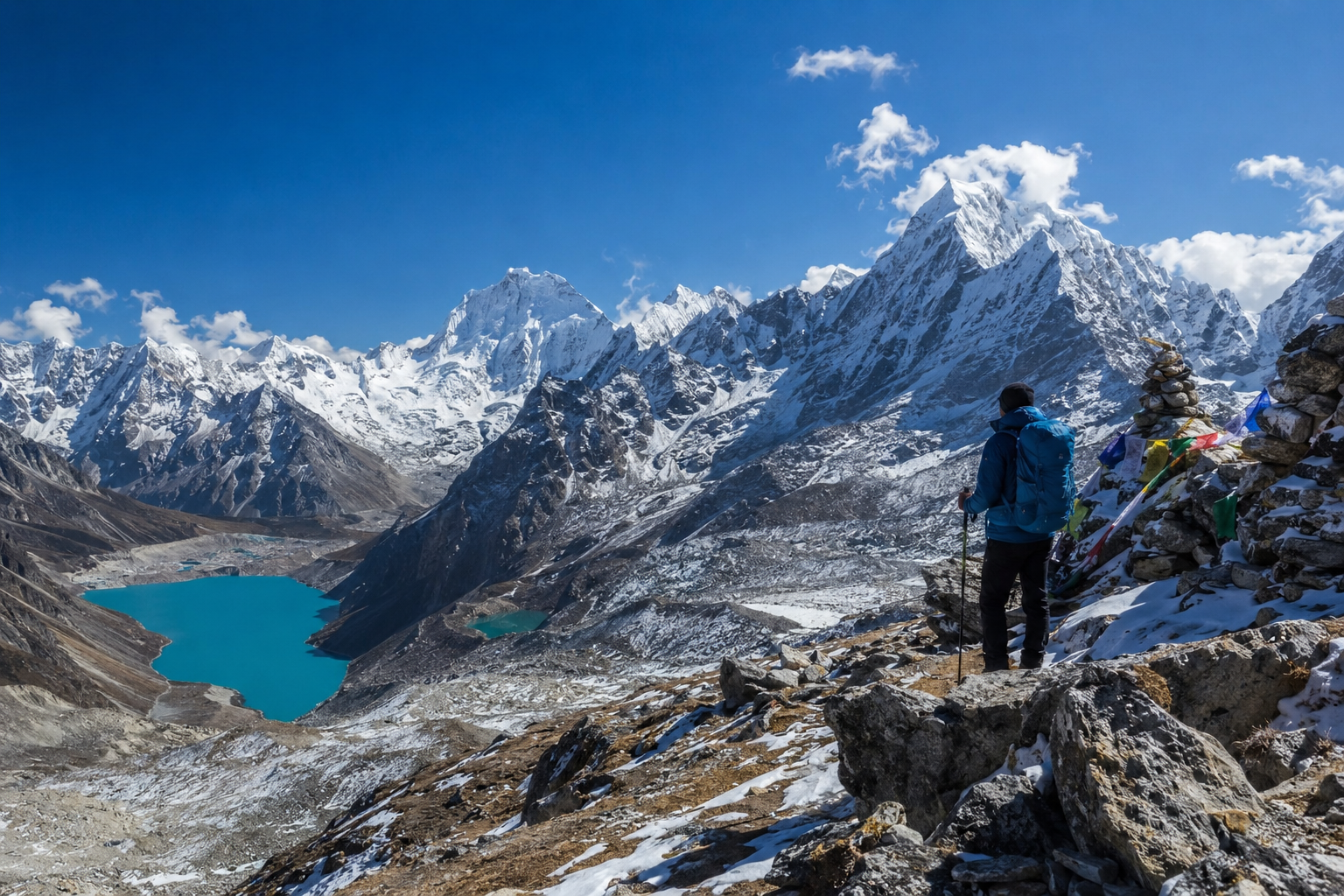
Adventurers from around the world flock to Nepal each year to tackle its rugged Himalayan peaks, visit ancient villages, and soak up views that take your breath away. While trekking in Nepal is very popular for many reasons, it’s also something of a rite of passage for many people. The Everest area is by far the most famous part of Nepal to trek in; it provides you with phenomenal scenery, an introduction to the vibrant Sherpa culture, and memories that will live with you long after your trek has ended.
If you’re itching for something beyond the classic Everest Base Camp trek, the Everest Cho La Pass Trek is where things really get interesting. This route isn’t just about walking; it’s about crossing glaciers, exploring new heights, and catching those sweeping Himalayan panoramas you only see in postcards. The trail joins up with the Gokyo Valley, and honestly, it’s one of the best treks you can do if you want adventure plus those jaw-dropping moments.
Why Choose This Trek?
If you’re looking for an adventure, and are someone who enjoys looking for new places to explore outside of the Base Camp treks around Mount Everest, this is also a great option. Not only does this trek provide an exciting adventure with the prestigious and challenging Cho La Pass, but you will hike on quieter routes with beautiful views of the mountains.
Here are some things you can do along the way:
- See the breathtaking views of Mt. Everest, Lhotse, Ama Dablam and Cho Oyu
- Experience the world famous Cho La Pass at a very high elevation
- Visit Base Camp and Kala Patthar
- Visit the beautiful Gokyo Lakes
- Meet the Sherpas and learn about their customs
- Experience the beautiful scenery during a mountain flight to Lukla
Combining the beauty of nature with the many cultural aspects that this trek offers provides a truly great experience.
Difficulty Level and Trek Preparation
The Everest Cho La Pass Trek is a moderately challenging trek, thanks to its steep terrain, long duration of trekking each day, and high elevation. Trekkers will be trekking approximately 5 to 7 hours each day while gradually going up in elevation through the Everest Region.
Preparation is key to the success of this trek. Cardiovascular exercise; practice of walking/hiking; and strength workouts will all contribute to a greater level of endurance when embarking on this adventure. Additionally, acclimatization is an important factor to consider, as the trip will put trekkers at elevations above 5000 m.
Some helpful tips for pre-trek preparation are:


- Be sure to train on a regular basis before leaving for your trek.
- Bring adequate clothing a proper layering system is important.
- Make sure to stay hydrated throughout your trip.
- Walk at a consistent pace.
- Be sure to plan for acclimatization days when creating your itinerary.
The benefit of good preparation will provide the chance for a safe and enjoyable trek.
Best Time for the Trek
The months of spring (March through May) and autumn (September through November) are regarded as the best seasons to trek in the Everest region, with stable weather and mostly clear skies, allowing for exceptional mountain views.
Spring (March – May) offers:
- Warm temperatures
- Flowering rhododendrons
- Long days
Autumn (September – November) offers:
- Brilliant visibility of the mountains
- Dry trail conditions
- Comfortable temperatures for walking.
Trekking in winter is possible, but you will be extremely cold at the higher elevations, and the monsoon season can produce rain and muddy, slippery trails.
Accommodation and Meals
Throughout the trekking path, there are tea houses providing an adequate level of accommodation. The majority of the dwellings are basic with twin beds and shared dining rooms furnished with bedding.
Meals to look forward to during your trek include:
- Dal Bhat (rice, lentil and veg)
- Tibetan breads and pancakes
- Noodles, soups and pasta
- Garlic soup (to help with altitude sickness)
- Tea, coffee and hot lemon drinks
The facilities at tea houses become simpler as you trek higher, however, the people who run them provide warm, friendly hospitality, making each one feel welcoming.
Scenic Landscapes and Cultural Experience
Sherpa culture as well as Buddhism will leave lasting impressions while trekking through villages where you will find prayer wheels, Buddhist monasteries, mani stones and colourful prayer flags. The most common villages along the route: Namche Bazaar, Dingboche, Gokyo offer an insight into the traditional way of life in the Himalayas with wonderful views of the mountains. Additionally, you will have the chance to take photographs – particularly around sunrise and sunset when the mountain ranges create a brilliant display of various shades of red, pink, orange, yellow and white against snow-covered peaks.
Trek Cost and Travel Planning
There are many aspects that can alter the total cost of a trek in Nepal including how much you will spend on permits, accommodation, transport, food, and the use of any guide and porter services. For instance, on treks over challenging terrains like the Cho La Pass, it is very highly recommended that trekkers take along an experienced guide because of how quickly weather conditions can change, making it more challenging to navigate trails.
When planning a Himalayan adventure, many travelers compare trekking budgets across different regions. Understanding the Everest Base Camp Trek Cost is an important part of this process, as it helps trekkers estimate expenses and choose a route that matches their budget and expectations. Many adventurers also compare the Everest region with other popular treks, including the Manaslu Circuit, to determine which experience best suits their interests.
Along with the costs associated with trekking, it is critical to get a comprehensive travel insurance package for any high-altitude adventure. This type of coverage should include parts of an emergency medical treatment policy, coverage for helicopter evacuations and other unforeseen events. By adequately planning for finances and getting proper insurance, trekkers can have peace of mind that will enable them to focus on enjoying their experience trekking in the Himalayas.
Final Thoughts
The Everest Cho La Pass Trek is a wild adventure through the heart of the Himalayas. You get jaw-dropping views, everything from the legendary Everest Base Camp to the peaceful Gokyo Lakes. Honestly, every part feels unique—none of it blends together or gets forgettable. Whether you’re a seasoned trekker or just figuring it out, you’ll come away with stories that stick for life.
With the right preparation and professional guidance, everyone can safely enjoy one of the most beautiful and adventurous trekking routes in Nepal.
Because of this, many travellers choose to work with a reputable local trekking company such as World Alpine Treks. They provide experienced guides, fully organised itineraries and dependable support while trekking the route.
FAQs
Is the trek to Everest Cho La Pass at a moderate level of difficulty?
The trek is moderately challenging due to the steep terrain, extremely high elevations, and long durations of time one must walk to complete the trek.
How long will it take to complete the Everest Cho La Pass Trek?
Every itinerary for this trek will be an average of 15-18 days long, but this will vary depending on each trekkers ability to acclimatize to the altitude changes and from one navigational route taken.
What are the best seasons for trekking the Everest Cho La Pass?
The best seasons for trekking this route are spring months from March to May and autumn months from September to November.
Am I required to have completed previous treks in order to complete the Everest Cho La Pass Trek?
While completed past trekkers will be at an advantage, it is possible for physically fit beginners to complete the trek with adequate training beforehand.
Is altitude sickness a probable issue?
Yes. Trekkers travelling at elevations above 3,000 meters may experience some form(s) of altitude sickness; therefore, it is important for trekkers to adequately hydrate and acclimatize prior to undertaking this trek.
Can I complete the trek without hiring a guide?
While it is possible for a person to complete this trek without the use of a guide, we recommend that trekkers hire an experienced guide for safety, navigation purposes and for assistance in speaking to locals as necessary.