Introduction — You Don’t Need a Warehouse to Build a Clothing Brand
Most people think starting a clothing brand requires thousands of dollars, a factory connection, and boxes of inventory stacked in their garage.
- Introduction — You Don’t Need a Warehouse to Build a Clothing Brand
- Why Custom Apparel Is the Smartest Dropshipping Niche in 2026
- What Exactly Is Custom Apparel Dropshipping?
- Step 1 — Pick a Niche That Buyers Are Already Loyal To
- Step 2 — Create Designs That Make People Stop Scrolling
- Step 3 — Choose a Supplier Who Won’t Let Your Customers Down
- Step 4 — Set Up Your Store in One Afternoon
- Step 5 — Get Your First Sale Without Spending a Dollar on Ads
- The Honest Numbers — What Can You Actually Earn?
- 4 Mistakes That Kill Custom Apparel Businesses Fast
- Frequently Asked Questions
- Conclusion — Your Clothing Brand Starts With One Design This Weekend
That’s completely wrong in 2026. The dropshipping market is valued at $401.41 billion in 2026 — growing at 21.3% annually. Research And Markets And the biggest winner in that market? Custom apparel.
Apparel leads as the most prominent dropshipping niche, accounting for 26% of all top-performing dropshipping stores worldwide.
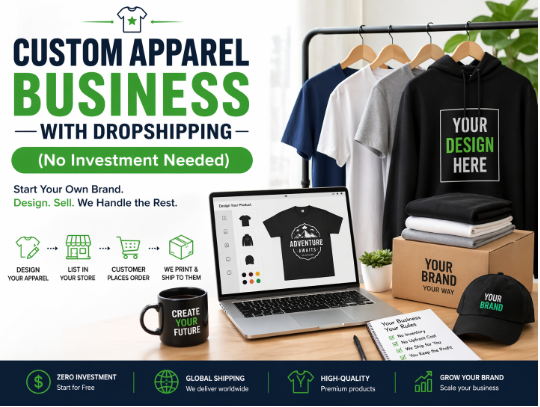
The model is simple. You design. A supplier prints. A customer orders. The supplier ships directly to them. You keep the profit — without ever touching the product.
This guide covers exactly how to start a custom apparel dropshipping business from zero — no investment, no experience, no warehouse required.
Why Custom Apparel Is the Smartest Dropshipping Niche in 2026
Not all dropshipping niches are equal. Custom apparel consistently sits at the top — and the numbers explain why.
The average order value for custom apparel stores is $55 — higher than general fast fashion. Rawshot That means more profit per sale without needing more customers.
The apparel and fashion segment is expected to hold a 38.5% share of all dropshipping through 2035 — secured by clothing’s strong ties to identity, self-expression, and repeat buying.


Custom products specifically outperform generic ones. Buyers don’t want the same hoodie everyone else is wearing. They want something that represents them — their profession, their pet, their community.
That emotional connection is what drives custom apparel sales — and it’s something you can deliver from your laptop.
What Exactly Is Custom Apparel Dropshipping?
Let’s clear up the confusion before going further.
| Business Model | Inventory | Upfront Cost | Risk |
| Traditional clothing brand | Required | $5,000+ | 🔴 High |
| Wholesale reselling | Required | $1,000+ | 🔴 High |
| Custom apparel dropshipping | None | $0 | 🟢 Zero |
Here’s how it works in three steps.
Step one: You create a design and list it on a product — a hoodie, t-shirt, or sweatshirt.
Step two: A customer places an order in your store.
Step three: Your dropshipping supplier prints the item and ships it directly to the customer. You earn the profit.
You never buy stock upfront. You never pack a box. You never visit a post office.
Step 1 — Pick a Niche That Buyers Are Already Loyal To
This is the single most important decision you’ll make.
Generic custom clothing — “cool hoodies” or “funny shirts” — doesn’t sell consistently. Niche-specific clothing sells because it creates an emotional connection.
Profitable dropshipping clothing stores share three things in common: a high-margin product, a sub-category niche, and solid branding.
Most profitable custom apparel niches in 2026:
- Profession-based — nurses, teachers, firefighters, construction workers
- Pet lover clothing — dog breed-specific, cat mom/dad designs
- Streetwear and urban — oversized fits, bold graphics, washed aesthetics
- Sports and gym culture — motivational, niche sports teams
- Couple and family sets — gifts, holidays, milestones
- Minimalist aesthetic — clean designs, neutral tones
Niches to avoid:
- Anything with copyrighted characters or brand logos
- Oversaturated generic motivational quotes
- Trends with no specific audience behind them
Research before you design. Search your niche on Etsy. If you see listings with hundreds of reviews — demand is proven. If results are empty — the niche may be too small.
Step 2 — Create Designs That Make People Stop Scrolling
You don’t need Photoshop. You don’t need a design degree.
Canva is free, beginner-friendly, and has hundreds of apparel design templates. Kittl is excellent for vintage and detailed styles. Both work on a standard laptop.
Design rules that increase custom apparel sales:
Keep it simple. One to two colors and one clear message always outperform busy, complex designs. A clean “Golden Retriever Mom” hoodie beats an overcrowded graphic every time.
Design specifically for your niche. “Dog Lover” is too broad. “French Bulldog Dad Who Runs on Coffee” is a product that sells.
Always preview your design on a realistic mockup before listing. What looks great in a file can look terrible on fabric.
Sellers using mockup generators for product images see a 30% reduction in time-to-market. Rawshot Use lifestyle mockups — not flat product images — to show how the item actually looks worn.
Technical requirements:
- Minimum 300 DPI resolution
- PNG format with transparent background
- Check the print area dimensions of each product before finalizing your design
Step 3 — Choose a Supplier Who Won’t Let Your Customers Down
Your supplier is your brand’s backbone. Poor quality means bad reviews. Bad reviews mean a dead store.
The dropshipping success rate is roughly 10% — and most failures trace back to weak product choices, underestimated costs, and unreliable suppliers.
Choose carefully from the start.
For custom apparel that looks and feels premium, Tapstitch is built specifically for fashion-first brands. Premium blanks, zero minimum orders, automatic Etsy and Shopify fulfillment — and every order ships with your branding, not theirs.
| Platform | Product Quality | Branding | Min Order | Best For |
| Tapstitch | ⭐⭐⭐⭐⭐ | ✅ Full custom | Zero | Fashion brands |
| Printful | ⭐⭐⭐⭐ | ✅ Good | Zero | Beginners |
| Printify | ⭐⭐⭐ | Partial | Zero | Lowest base cost |
Always order samples before selling. What you see on screen must match what arrives at your customer’s door.
Step 4 — Set Up Your Store in One Afternoon
You don’t need a web developer. You don’t need coding skills.
Platform options:
Etsy — best starting point. Over 90 million active buyers already shopping for unique, custom products. Zero audience-building required.
Shopify — better for full brand control and scaling. Small monthly fee but more customization.
TikTok Shop — fastest growing channel in 2026 for apparel. Especially strong with Gen Z buyers.
Most beginners should start with Etsy and expand later.
Store setup checklist:
- Shop name: niche-specific, easy to spell, memorable
- Logo: Canva free template — 10 minutes
- About section: tell your real story — buyers trust people
- Connect your supplier: enable automatic order fulfillment
Write listings that actually rank on Etsy:
Bad title: “Black Hoodie”
Good title: “Oversized Golden Retriever Dad Hoodie — Dog Dad Gift, Pet Lover Sweatshirt, Cozy Streetwear Gift for Him”
The difference is massive. The second title matches dozens of real buyer searches. Use all 13 Etsy tags. Mix broad keywords with specific long-tail phrases.
Step 5 — Get Your First Sale Without Spending a Dollar on Ads
You don’t need a paid advertising budget to start.
Pinterest is the best free traffic source for apparel sellers. One pin can drive buyers to your store for months. Create boards around your niche — “Golden Retriever Mom Gifts,” “Nurse Appreciation Apparel,” “Oversized Streetwear.” Post 3–5 product and lifestyle images per week.
TikTok drives the fastest organic reach in 2026. TikTok influenced nearly 40% of Gen Z buying decisions globally in 2024. Google Show your design process. Show unboxing footage. Show your product being worn. Even small accounts drive real sales with the right content.
Etsy SEO is your always-on traffic source. Optimize your titles, descriptions, and tags with keywords real buyers search. Add new listings consistently — Etsy’s algorithm rewards active shops with more visibility.
Pick one platform. Be consistent. Add a second platform only after the first is producing results.
The Honest Numbers — What Can You Actually Earn?
| Stage | Timeline | Monthly Earnings | Hours/Week |
| Setup | Week 1–2 | $0 | 10–15 hrs total |
| First sales | Month 1 | $50–$200 | 5–8 hrs |
| Growing | Month 2–3 | $200–$800 | 5–8 hrs |
| Scaling | Month 4–6 | $800–$2,500 | 5–10 hrs |
| Established | Month 6–12 | $2,500–$5,000+ | Flexible |
Real profit example — Premium Hoodie:
- Tapstitch base cost: $22
- Selling price on Etsy: $58
- Etsy fees (~10%): $5.80
- Your profit: ~$30 per hoodie ✅
34 hoodie sales per month = $1,000 profit. That’s achievable within 3–5 months.
Good profit margins for clothing stores in 2026 land around 60–70% gross and 10–20% net after all expenses. Trueprofit Custom apparel hits the higher end of that range because buyers pay premium prices for personalized products.
4 Mistakes That Kill Custom Apparel Businesses Fast
Mistake 1 — Spreading across too many niches. Pick one. Master it. Build a recognizable brand. Then expand. Five average niches earn less than one strong one.
Mistake 2 — Skipping product samples. Always order a physical sample before selling to customers. Mockups look great. Real products sometimes don’t. Know the difference before your buyers do.
Mistake 3 — Underpricing your products. The average order value for custom apparel is $55 — buyers already expect to pay premium prices for custom clothing. Rawshot Pricing too low signals low quality, not a good deal.
Mistake 4 — Ignoring Etsy SEO completely. A great product with a bad title gets zero traffic. Spend as much time on your listing SEO as you do on your design.
Frequently Asked Questions
Q1: Can I start a custom apparel dropshipping business with no money?
Yes. Tapstitch and Etsy both charge zero upfront fees. You only pay production costs after a customer buys. Total startup cost can be under $5 in Etsy listing fees.
Q2: How much can I realistically earn from custom apparel dropshipping?
Beginners typically earn $200–$800/month by month 2–3. Sellers with strong niches and consistent marketing reach $2,500–$5,000+/month within 6–12 months.
Q3: Do I need design experience to start?
No. Canva is free and beginner-friendly. Many bestselling custom apparel designs are simple text-based graphics created in under 30 minutes.
Q4: What is the best platform to sell custom apparel with dropshipping?
Tapstitch for premium fashion-grade products. Etsy for built-in marketplace traffic. TikTok Shop for fastest growth in 2026. Most successful sellers eventually use all three.
Q5: How long does it take to get my first sale?
Most sellers get their first sale within 2–4 weeks of launching with 10–15 optimized listings and active promotion on at least one social platform.
Q6: Is custom apparel dropshipping still profitable in 2026?
The dropshipping market grew from $330.86 billion to $401.41 billion in 2026 at 21.3% CAGR — with fashion and apparel leading the way. The Business Research Company Profitable for sellers who focus on niche, quality, and branding.
Q7: How does this connect to making extra income?
Custom apparel dropshipping is one of the most flexible extra income streams available — no fixed hours, no inventory, fully automated once set up. For more strategies, this guide on how to make extra income while working full-time covers additional models worth combining with your apparel store.
Conclusion — Your Clothing Brand Starts With One Design This Weekend
You don’t need a factory. You don’t need $10,000. You don’t need years of business experience. You need a niche, a design, and the right supplier behind you.
The custom apparel dropshipping model removes every traditional barrier to starting a clothing brand — no inventory risk, no upfront investment, no shipping logistics.
The sellers building $2,000–$5,000/month businesses in 2026 didn’t start with a perfect plan. They started with one hoodie design, one Etsy listing, and one consistent week of promotion.
Start with your niche today. Create your first design this weekend. And let custom apparel dropshipping through Tapstitch handle everything after the sale.