Discover how AI is transforming customer segmentation, enabling deeper insights, hyper-personalization, and more effective marketing strategies.
Understanding your customers is fundamental to any successful business. For years, companies have used traditional methods for customer segmentation, grouping people by broad demographics or their buying history. While these methods offer some help, they often miss the finer details of what individuals truly prefer or how they behave.
Now, Artificial Intelligence (AI) is changing the game. It’s not just tweaking old methods; AI is completely overhauling how businesses approach customer segmentation. With AI, companies can sift through huge amounts of data incredibly quickly, spotting patterns humans might miss.
This shift is opening doors to super-personalized experiences, more effective marketing, and stronger customer bonds. For anyone running a business or working in marketing today, using AI for customer segmentation isn’t a far-off idea – it’s a must-do to stay competitive.
The limitations of traditional customer segmentation
Traditional customer segmentation has been around for a long time. It usually involves looking at things like age, gender, location, income, or information from surveys. These methods give a basic way to group customers, but they often don’t cut it in today’s fast-moving market.
The segments created are often too wide. This means marketing messages can be too general and might not really connect with anyone in particular. This “one-size-fits-many” way of doing things can lead to wasted ad spend and lost chances to build real connections.
Static segments and slow adaptation
A big issue with old-school customer segmentation is that it’s pretty static. Segments get defined based on past data and then tend to stay the same for ages. But people change – their tastes, their needs, their behaviors – all the time. New trends pop up, life events happen, or even one interaction with a brand can shift things. Traditional methods just can’t keep up.
This means that by the time segments are finally updated, they might already be out of date. Marketing campaigns could end up targeting people based on old habits that don’t reflect who they are now. Plus, the manual work to gather, analyze, and update these segments takes a lot of time and effort. So, these reviews don’t happen very often. In a digital world that moves at lightning speed, this leaves businesses making decisions based on old news, at a clear disadvantage.



Superficial insights and missed nuances in customer segmentation
Traditional segmentation often sticks to data that’s easy to count. This can lead to a somewhat shallow understanding of the customer. Knowing someone’s age and where they live is useful, sure, but it doesn’t tell you why they do things, what their real problems are, or the story behind their buying choices.
These deeper, more subtle insights are often hiding in places like social media comments, customer reviews, or support call notes. Traditional methods aren’t built to handle this kind of unstructured data, especially not on a large scale. So, important details about what customers really want and how they behave often get missed.
This lack of depth means marketing messages might hit the right demographic but miss the mark emotionally or contextually. For instance, businesses that master visual lead generation on social platforms gain a much deeper feel for user intent, allowing them to capture subtle preferences that traditional AI-free segments usually ignore.
How AI is reshaping customer segmentation for the better
Artificial Intelligence isn’t just a small step up from old methods; it’s a giant leap for customer segmentation. AI, especially machine learning, can chew through massive amounts of varied data – both the neat, organized kind and the messy, unstructured stuff – at speeds we couldn’t have imagined before.
This power lets businesses move beyond simple groupings. They can now create highly refined, dynamic, and even predictive customer segments. The result? A much deeper, more accurate understanding of who customers are, what they’re looking for, and what they might do next. This is truly changing the nature of customer segmentation.
Dynamic and predictive segmentation with AI
AI is brilliant at spotting complex patterns and connections in data that would fly right over a human analyst’s head. This allows for dynamic customer segments that change in real-time as people’s behaviors shift. No more relying on old snapshots; AI-powered customer segmentation can adapt instantly to new information.
If someone’s browsing shows a new interest, or how they react to marketing changes, AI can automatically re-segment them. This ensures that what you send them stays relevant. This ability to react to live data is a true game-changer.
Beyond that, AI brings a predictive edge to customer segmentation. By looking at past actions and spotting key indicators, machine learning can guess future behaviors. Think about predicting if a customer might leave, their potential long-term value, or if they’re likely to buy a certain product.
This foresight lets businesses be proactive. If AI flags a group of customers as high-risk for leaving, you can roll out retention efforts before they actually go. This predictive power makes customer segmentation much more strategic.
Hyper-personalization through granular insights
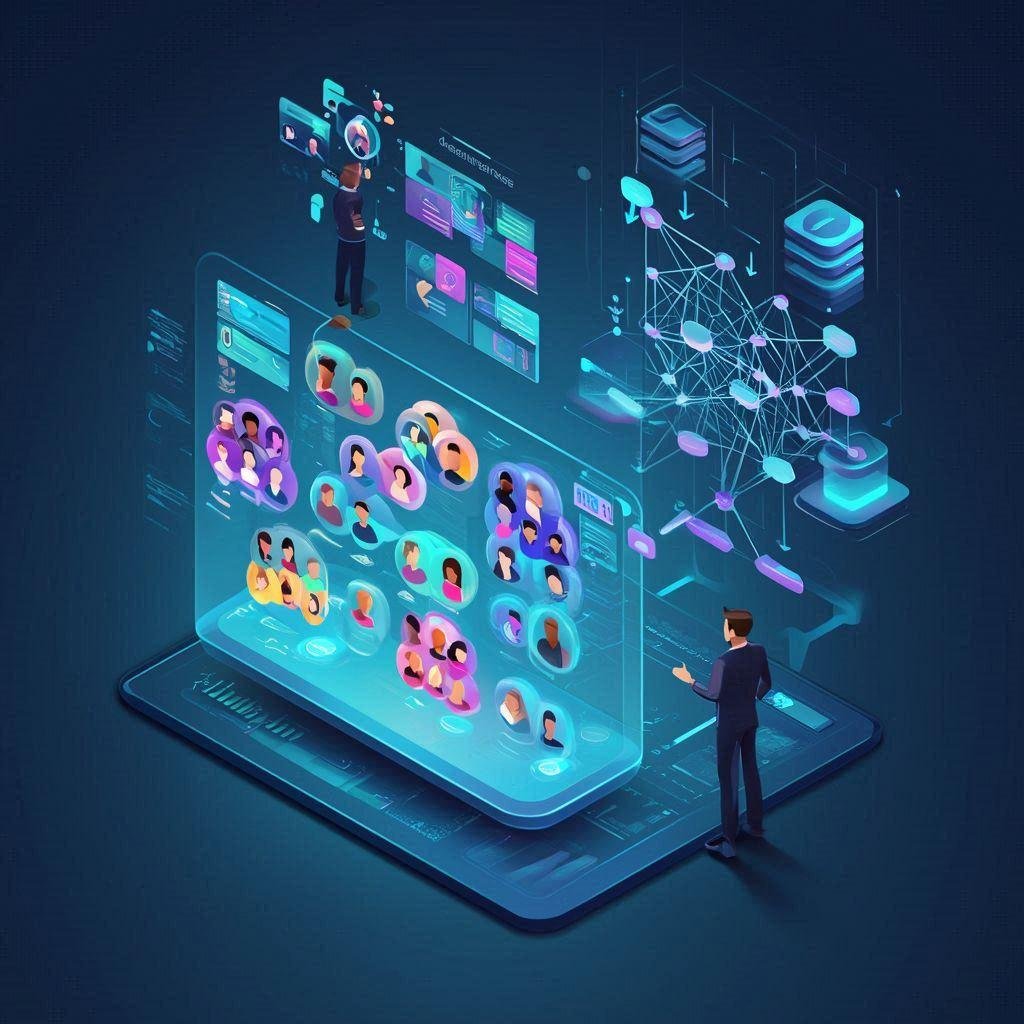
Perhaps the biggest win AI brings to customer segmentation is hyper-personalization at scale. AI can create tiny micro-segments – sometimes even a segment for just one person – by picking up on very specific combinations of traits, actions, and tastes.
This fine-grained detail means marketing messages, product suggestions, and even website experiences can be tailored like never before for each individual. It’s way beyond just putting a name in an email. It’s about delivering genuinely relevant stuff at the perfect moment, through the best channel. This deep connection builds loyalty.
For instance, AI can analyze a customer’s entire interaction history, including their service queries. Forward-thinking companies are now implementing an advanced AI Agent to handle these conversations; the granular insights harvested from these interactions can directly refine segments based on a customer’s most recent expressed needs. This detailed understanding makes true one-to-one marketing possible.
This is why many companies also rely on an ai agent tools to monitor customer interactions and detect behavioral patterns that help refine segmentation strategies over time.
Embracing the future of AI-driven customer segmentation
The AI revolution in customer segmentation is happening now, and its impact will only get bigger. Businesses that jump on board with AI-powered approaches will get a serious competitive edge.
They’ll build deeper customer bonds and make their marketing spend work much harder. Moving from static, broad segments to dynamic, detailed, and predictive ones offers a level of customer understanding we just couldn’t reach before.
This journey isn’t just about new tech. It’s also about building a data-focused culture and being ready to keep learning and adapting. Ultimately, using AI for customer segmentation lets businesses treat customers like the unique individuals they are, not just faceless members of a demographic.
This shift to true customer-centricity, powered by smart data analysis, is the future. By acting on the rich insights AI provides, companies can deliver amazing value, build lasting loyalty, and drive real growth.