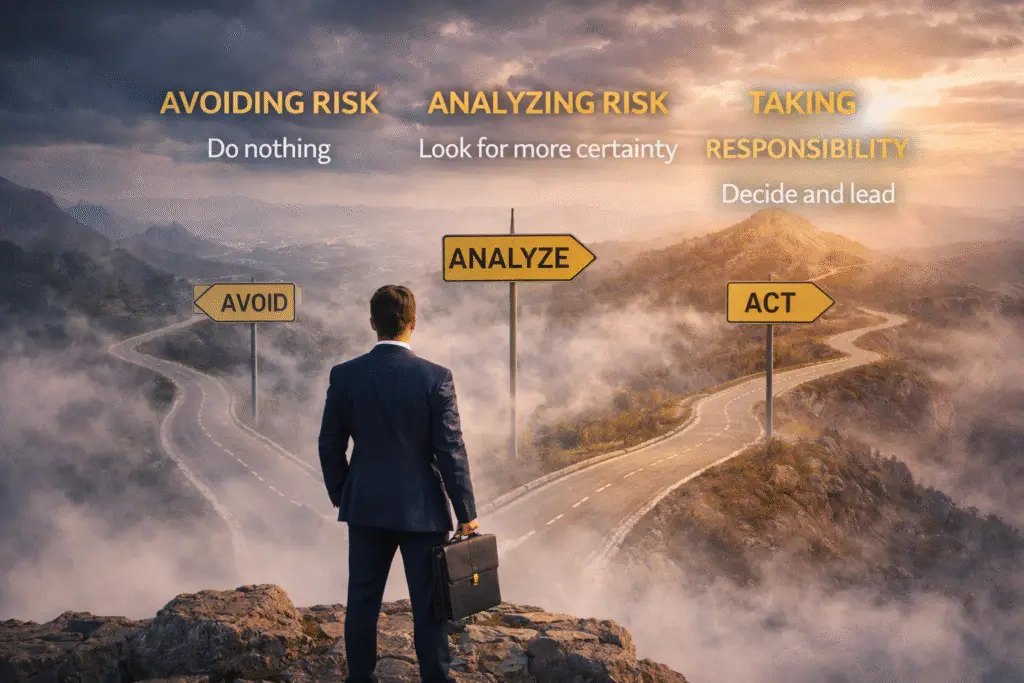
When executive leadership teams gather in boardrooms to conduct quantitative risk assessments for major corporate initiatives, their analytical focus naturally gravitates toward tangible, measurable variables. Financial modeling teams meticulously stress-test cash flow projections against shifting interest rates. Supply chain strategists develop complex redundancy plans to mitigate geopolitical volatility and material shortages. Legal and compliance departments pore over evolving regulatory frameworks to insulate the enterprise from costly litigation.
These macroscopic, external hazards are standard components of any disciplined corporate risk registry. Yet, there is an internal, silent risk factor that routinely slips through the cracks of standard operational audits, despite possessing the capacity to derail a high-stakes deployment just as catastrophically as a sudden market crash. This profoundly underestimated hazard is cognitive fatigue—the systemic depletion of a workforce’s mental bandwidth and decision-making capacity.
The Invisible Erosion of Decision-Making Quality
Unlike a broken piece of manufacturing machinery or a server network outage, cognitive fatigue does not trigger an immediate, automated alarm within an enterprise management system. It accumulates quietly across an organization, manifesting as a slow, progressive degradation of mental acuity, situational awareness, and analytical rigor.
When teams are subjected to chronic, unmanaged operational stress—characterized by relentless back-to-back meetings, overlapping software migrations, and a continuous influx of communication alerts—their prefrontal cortexes begin to ration energy. In this depleted neurological state, human beings unconsciously default to the path of least resistance. Highly skilled professionals stop thoroughly verifying technical data, compromise on rigorous quality assurance protocols, and overlook subtle anomalies in financial reports or engineering code. The risk is not that the team lacks the skill to identify a critical error; the risk is that they are too cognitively exhausted to notice it.
The Multiplier Effect of Change Saturation
Cognitive exhaustion becomes exceptionally dangerous during periods of rapid organizational transformation. When a business simultaneously attempts to restructure its internal departments, deploy a new enterprise resource planning (ERP) system, and accelerate a product development timeline, it inflicts a phenomenon known as change saturation on its personnel.
Every single structural pivot or technological adaptation demands an immense amount of mental processing power. When human beings are forced to constantly switch contexts between competing priorities, their cognitive reserves are rapidly drained. This operational friction quickly ripples through the hierarchy. Mid-level managers find themselves so overwhelmed by administrative noise that they fail to provide clear direction, while frontline execution teams begin to view every new executive directive with deep cynicism and resentment. Instead of driving innovation, the compounding mental strain paralyzes the organization, trapping teams in a state of hyper-reactive firefighting where strategic vision is entirely sacrificed for short-term survival.
De-Risking the Human Infrastructure
Mitigating a hazard as abstract as collective cognitive exhaustion requires looking beyond basic human resource platitudes and focusing heavily on structural project architecture. Leaders cannot simply advise their personnel to manage their time better while continuing to impose unmanageable operational debt onto their schedules. The workspace itself must be engineered to protect and optimize human attention.
Establishing this protective operational model demands a high degree of administrative discipline and objective oversight. When internal leadership teams are deeply embedded in the daily chaos of a major deployment, they frequently lose the detachment required to see that their personnel are reaching a breaking point. To stabilize these high-risk environments, forward-thinking enterprises often engage an external project management consultant to conduct comprehensive operational health checks, optimize resource allocation models, and establish transparent governance frameworks. An objective expert can identify where administrative redundancy is draining team energy, map out realistic delivery velocity thresholds, and install systematic communication boundaries. By anchoring the transition with clear, predictable project tracking rather than chaotic, ad-hoc mandates, the consultant helps preserve the team’s mental bandwidth, ensuring that critical strategic milestones are executed with absolute clarity and analytical precision.



The Long-Term Toll on Organizational Retention
When an organization consistently underestimates cognitive fatigue, the consequences eventually break through the abstract barrier of daily friction and manifest directly on the company’s bottom line as a retention crisis. High performers will tolerate intense, high-velocity sprints when a project demands it, provided there is a clear finish line and a structured recovery period.
However, when an intense sprint transforms into a permanent, unremitting culture of chronic exhaustion, the company’s most self-motivated and valuable assets will inevitably begin to burn out. Employees quickly realize that the organization views their mental well-being as an infinite, expendable resource rather than a delicate asset requiring strategic management. This realization breeds deep cultural resentment, erodes workplace psychological safety, and ultimately drives top-tier talent straight out the door. The business is left with a compounding talent vacancy bottleneck, forcing them to expend significant financial and temporal capital to recruit and onboard replacements, which further stresses the remaining, already exhausted workforce.
Conclusion
True organizational resilience requires a fundamental paradigm shift in how leadership quantifies operational risk. Human attention, focus, and decision-making capacity are finite, precious resources that sit at the very center of every corporate success story. By systematically auditing workflows to eliminate bureaucratic clutter, respecting cognitive boundaries, and leveraging disciplined project governance to protect teams from change saturation, companies can insulate themselves from the silent danger of collective exhaustion. In a fast-moving corporate landscape, the ultimate competitive advantage belongs to the leader who builds a clean, organized, and balanced environment where the company’s best minds can execute with an unshakeable, sustainable focus.