The Basic Guide to DIY Watch Care
People own watches for all sorts of different reasons. People might get a timepiece purely for practical reasons to keep their days in order, while others wear them for decorative purposes and some might even pick their watch as a status symbol. But, no matter the standard of the watch you wear or your reason for doing so, it’s important to have some simple watch care techniques on hand to keep your piece ticking for years to come.
This article will share the basics of home watch maintenance, covering everything from essential cleaning processes to replacing watch batteries properly. With some simple guidelines for preventative and responsive care, you should be able to keep your watch functioning like new.
Daily care routines
The best defence for your watch’s quality will come in the form of a daily care routine. A little repeat process completed at the end of every day will make a huge difference over time.
- Make sure to wipe down the case and crystal of your watch with a microfibre cloth at the end of the day. Skin oils and sweat will degrade metal and gaskets over time.
- Keep your watch some distance away from magnetised objects throughout the day. If a mechanical watch starts running faster, it’s likely been magnetised, but you can purchase a demagnetiser to reset the balance.
- Always tighten the crown before the watch comes into any sort of contact with water, as a little drop of moisture can cost hundreds in repairs.
These simple daily processes can do wonders for protecting your watch.
Basic DIY repairs & “surgery”
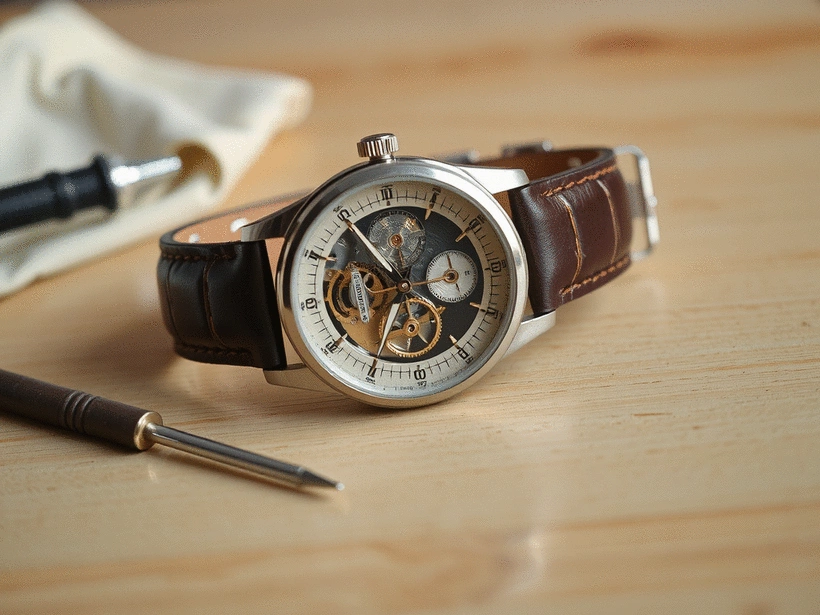
Basic maintenance can be completed at home, but you shouldn’t just approach your watch willy-nilly. Only the simplest, external repairs should be made on your home watch. And to do so, you should start by investing in a Spring Bar Tool and a Bergeon-style loupe to operate and magnify, respectively.
Task 1. Cleaning gunk
Watches can often build up with gunk and mess over time, which you can clean yourself with the right techniques.
- Use a small, soft-bristled toothbrush and a tiny amount of mild dish soap for this task.
- If your watch is rated 50m water resistant, scrub the lugs where the strap meets the watch and any links in the metal bracelet. These areas often collect lots of dead skin and dirt.
- Pat the washed areas dry with a soft cloth. Never be tempted to use a hairdryer, as heating up the metal might expand the gaskets and let in moisture.
Task 2. Swapping the strap
Swapping the strap can be completed with a spring bar tool, as long as the strap is made from fabric. With the right technique, you can remove a leather strap and swap it for a more casual one (or vice versa) in a matter of minutes. Apply some polyamide tape to the lugs before you start, as this will help to prevent scratches.
These are the kinds of DIY tasks you can feel good about attempting, but it’s about as far as you should go.



Tasks that (might) require professional help
It’s important to know when you might need to search for “watch maintenance near me”, because the ceiling on DIY watch care is actually very low.
- A watch battery replacement will generally require professional completion, unless it’s a simple quartz watch.
- Scratches should always be polished by professionals.
- Speed regulation tasks should be handled by watch specialists.
It’s important to understand your watch specifically, as this will dictate its capacity for DIY care. If in doubt, speak to a professional, because a small mistake in DIY could cost a lot more than the attempt was worth.