If you’ve ever felt that a cramped apartment or a tiny spare corner means sacrificing your fitness goals, you’re not alone. Millions of people struggle with the same frustration—wanting to train consistently but lacking the square footage for a traditional gym setup. The good news is that the best home gym for small space living isn’t about having a dedicated room; it’s about making intelligent choices with what you have. A well-designed compact gym delivers the same core benefits as any commercial facility: the convenience of training on your schedule, complete privacy to push your limits, and long-term cost savings that add up fast. Whether you’re working with a garage corner, a section of your bedroom, or even a multipurpose living area, this guide walks you through selecting space-saving equipment, organizing your layout, and designing workout routines that produce serious, measurable results without requiring serious real estate.
- Step 1: Strategic Space Assessment and Planning
- Step 2: Selecting Core Equipment for Maximum Efficiency
- 2.1 The Foundation: Adjustable Dumbbells and Resistance Bands
- 2.2 The Central Station: A Compact Functional Trainer or Power Rack
- 2.3 Essential Support Gear: Mats, Benches, and Storage
- Step 3: Designing Effective Workouts for Limited Space
- Step 4: Integrating Technology for Tracking and Accountability
- Step 5: Maintaining Your Compact Home Gym
- Transform Your Small Space Into a Complete Training Station
Step 1: Strategic Space Assessment and Planning
Before purchasing a single piece of equipment, grab a tape measure and get precise dimensions of your available area. Whether it’s a 6×6 garage corner, a bedroom alcove, or a section of your living room, knowing your exact footprint—including ceiling height—determines what equipment will actually fit and function safely. Check your floor type as well; concrete and hardwood handle heavy loads differently than carpet or laminate, and this affects both equipment stability and your need for protective flooring. Next, think in terms of multi-functional zones. A living area that serves as your training space during mornings can return to its normal purpose by afternoon if you plan for quick transitions. This means prioritizing wall-mounted storage racks, vertical hooks, and under-bed or closet solutions that keep gear accessible yet invisible when not in use. Finally, assess ventilation and lighting—a small fan or open window prevents overheating, and adequate light reduces injury risk during complex movements. A deliberate plan drawn on paper, even a rough sketch, prevents the creeping clutter that turns a compact gym into an unusable mess and ensures every square inch earns its place.
Step 2: Selecting Core Equipment for Maximum Efficiency
2.1 The Foundation: Adjustable Dumbbells and Resistance Bands
Adjustable dumbbells are the single smartest investment for any small-space gym because one pair replaces an entire rack of fixed weights. By turning a dial or sliding a pin, you move from light warm-up sets to heavy compound lifts without surrendering precious floor space to a dozen separate dumbbells. They’re particularly effective for single arm training—unilateral movements like one-arm rows, single-arm presses, and Bulgarian split squats that correct muscle imbalances, strengthen stabilizers, and reduce injury risk over time. Complement your dumbbells with a set of resistance bands in varying tensions. Bands introduce constant resistance training, meaning the load increases throughout the range of motion rather than relying solely on gravity. This challenges muscles differently than free weights alone. Loop a band around your back during push-ups, anchor it to a door frame for pull-aparts, or combine it with dumbbell curls to intensify the peak contraction. Swapping between band tensions lets you adjust intensity levels instantly without any additional equipment footprint.
2.2 The Central Station: A Compact Functional Trainer or Power Rack
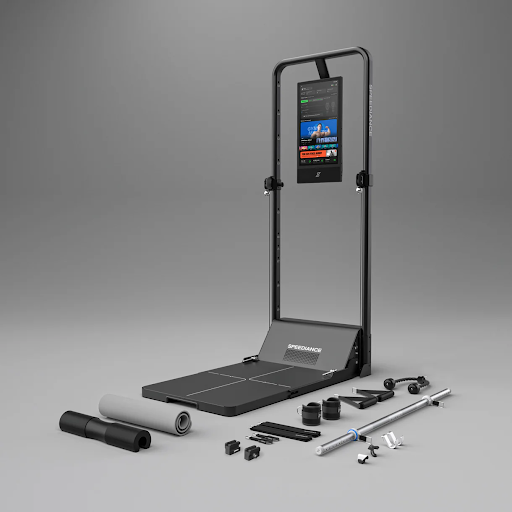
If your budget and space allow one larger piece, a compact functional trainer or wall-mounted power rack becomes the centerpiece that elevates your training from basic to professional-grade. A dual-cable functional trainer offers versatile training modes for varied workout routines—lat pulldowns, tricep pushdowns, cable crossovers, woodchops, and dozens more—all from a single station with a footprint often under four feet wide. Brands like Speediance have designed all-in-one smart gym systems specifically with space constraints in mind, combining cable-based resistance with digital coaching in a compact form factor. For those who prefer barbell work, wall-mounted folding racks swing flat against the wall when not in use, reclaiming the entire floor area between sessions. When shopping for small spaces, prioritize slim profiles that sit close to the wall, foldable or retractable arms, and dual-functionality features like integrated pull-up bars or band pegs built into the frame. These machines eliminate the need for multiple single-purpose stations and give you the exercise variety that keeps programs progressive month after month.
2.3 Essential Support Gear: Mats, Benches, and Storage
Supporting equipment ties everything together and keeps your compact gym functional rather than chaotic. Start with a dense, high-quality exercise mat that rolls up tightly and stores vertically in a closet or behind a door—it protects your floors during deadlifts and cushions your joints during floor work. Add a foldable adjustable bench that locks into flat, incline, and decline positions for presses, rows, and step-ups, then collapses thin enough to slide under a bed or lean against a wall. Storage deserves equal attention: vertical dumbbell stands keep weights off the floor, over-the-door hooks hold resistance bands and jump ropes, and small wall-mounted shelves organize accessories like wrist wraps and timers. In a small gym, organization isn’t optional—it’s the difference between a space that invites daily use and one that feels cluttered enough to skip.
Step 3: Designing Effective Workouts for Limited Space
Having the right equipment means nothing without a training approach built specifically for confined quarters. The most effective strategy for small-space training is circuit-based programming, where you move between exercises with minimal rest, eliminating the need for multiple stations set up simultaneously. Structure your circuits around compound movements—exercises like dumbbell thrusters, renegade rows, or band-resisted squats that recruit several muscle groups at once, delivering more training stimulus per minute than isolation work ever could. Single arm training fits perfectly into this framework because it doubles your effective sets without requiring additional equipment; perform a one-arm dumbbell press on your left, then immediately switch to your right, and you’ve completed twice the work in the same physical footprint. Manipulating intensity levels keeps these circuits progressive week over week. Use your adjustable dumbbells for mechanical drop sets—start with a heavy overhead press, reduce the weight, and immediately transition into lateral raises without leaving your two-foot square of floor space. Layer resistance bands over dumbbell movements to create accommodating resistance that peaks where you’re strongest, forcing adaptation without adding a single piece of new gear. Program three to four circuits of four exercises each, resting only between full rounds, and you’ll compress a 60-minute commercial gym session into 30 focused minutes that leave your muscles genuinely challenged and your small space completely sufficient for the task.
Step 4: Integrating Technology for Tracking and Accountability
The most well-equipped small gym still underperforms without a system to track what you’re doing and whether it’s working. Workout results tracking transforms random exercise into structured progression, and modern technology makes this effortless regardless of where you train. Start with a dedicated fitness logging app like Hevy or Strong—these platforms let you record every set, rep, and weight used, then visualize your progressive overload over weeks and months. When you can see that your single-arm dumbbell press moved from 30 pounds for eight reps to 40 pounds for eight reps across two months, motivation becomes self-sustaining. Layer in a wearable device like a smartwatch to capture real-time heart rate data, calorie expenditure, and recovery metrics during your circuit sessions. This data reveals whether your intensity levels are genuinely challenging or merely comfortable, allowing you to adjust rest periods and loads with precision rather than guesswork. For personal trainers managing clients who train from home, comprehensive data tracking features built into client-management platforms allow remote program review and adjustment. Trainers can monitor logged workouts, identify stalling patterns, and modify programming without requiring an in-person visit—making small-space home training just as accountable as any supervised gym session.
Step 5: Maintaining Your Compact Home Gym
A small gym that falls into disrepair quickly becomes a small gym that goes unused. Establish a two-minute post-workout reset routine: re-rack your dumbbells on their stand, hang bands on their hooks, fold your bench, and wipe down any surfaces that collected sweat. This immediate reset keeps the space inviting for tomorrow’s session and prevents the psychological barrier of walking into a cluttered area. On a weekly basis, inspect your equipment for wear—check resistance bands for micro-tears or discoloration near anchor points, tighten any loose bolts on your rack or bench, and clean cable pulleys if you use a functional trainer. Bands degrade with UV exposure and repeated stretching, so replace them at the first sign of cracking rather than waiting for a mid-set snap. Every three months, reassess your layout with fresh eyes. As your training evolves, you might find that repositioning your bench or swapping a storage solution opens up movement space you didn’t realize you were losing. This ongoing maintenance habit directly supports long-term consistency because a clean, functional, well-organized space removes friction between you and your next workout.



Transform Your Small Space Into a Complete Training Station
Building the best home gym for small space living comes down to a sequence of deliberate decisions rather than square footage. Start by measuring and planning your area with precision, then invest in versatile core equipment—adjustable dumbbells that replace entire weight racks, resistance bands that introduce constant resistance training across every movement pattern, and a compact functional trainer or folding rack that serves as your central training station. Design your workouts around circuit principles and single arm training techniques that maximize muscle recruitment without demanding extra room, and manipulate intensity levels through drop sets, accommodating resistance, and progressive overload to ensure continuous adaptation. Finally, integrate technology to track your workout results, maintain accountability, and make data-driven adjustments that keep you progressing month after month. The defining factor of an effective home gym was never its size—it’s the strategic thinking behind every piece of equipment chosen, every exercise programmed, and every session logged. Your compact space already holds everything you need to build genuine strength and fitness. Measure your corner, pick your first piece of gear, and start training today.