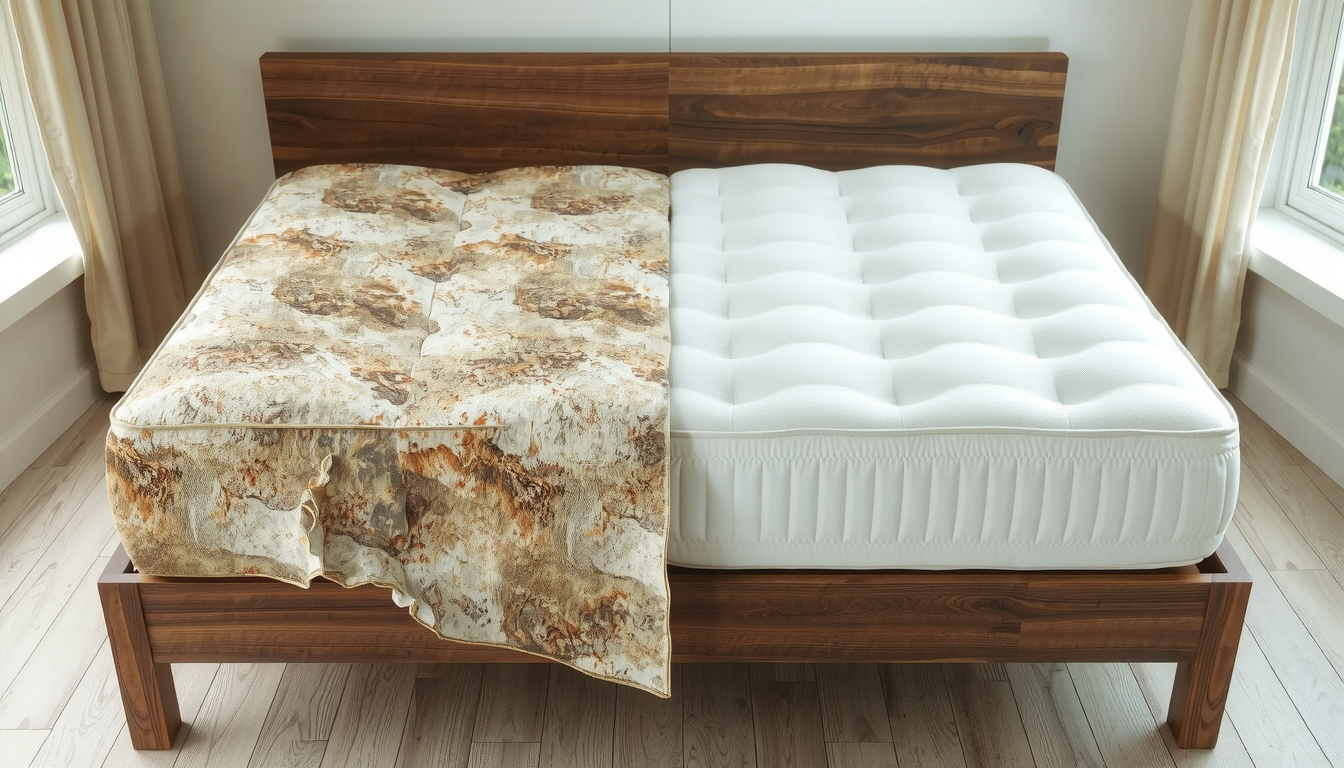
Do you want to ask about the average lifespan of a mattress? Many questions of this kind will come across most people’s minds. The majority of mattresses have a duration of around 7-10 years. Of course, this is a very general rule. The actual response depends on many factors such as the kind of mattress, its materials, and also how you care for it. This guide will cover all these topics. It will not only explain the lifespan of various mattress types but also tell you the signs that require a new mattress. Furthermore, we will include tips that will aid you in extending the lifespan of your mattress.
- How Long Does a Mattress Last? A Breakdown by Type
- The 7 Clear Signs You Need a New Mattress
- Beyond the Label: What Really Decides a Mattress’s Lifespan?
- A Simple Checklist to Make Your Mattress Last Longer
- FAQ: Your Questions on Mattress Lifespan Answered
- 1. Can a mattress really last 20 years?
- 2. Does a longer warranty mean a longer-lasting mattress?
- 3. How often should you replace your pillows?
- 4. Why is my new Hybrid Mattress already showing small dents?
- 5. Is it worth it to buy a more expensive mattress?
- Conclusion
How Long Does a Mattress Last? A Breakdown by Type
The right materials, setup, and structure all contribute to how long a mattress will last. The mixture of different materials in a Hybrid Mattress is terrific. Its lifespan is reliant upon the quality of its parts. However, not all beds are equal. According to the issued advice of the sleep experts at the Sleep Foundation, there is a considerable disparity in how long a mattress lasts.
So here are the expectations you should hold for different mattress types in 2026:
| Mattress Type | Average Lifespan | Durability Notes |
| Innerspring | 5-8 years | The metal coils lose tension and support that leads to sagging over time. |
| Memory Foam | 7-10 years | The durability factor is highly dependent on the foam’s density; the higher density lasts longer. |
| Latex | 10-15+ years | Natural latex is exceptionally strong and one of the longest-lasting materials. |
| Hybrid | 7-10 years | Incorporates both coils and foam. The lifespan is determined by the quality of each component. |
| Pillow-Top | 5-7 years | The soft comfort-layer on the top is often the first to compress and break down. |
The 7 Clear Signs You Need a New Mattress
Age is just one thing to think about when asking how long a mattress lasts. How it works is what really matters for your sleep. Picture these points as a checking system for your bed. Once you recognize some of these signs, it may be time to search for a new one.
- You Wake Up with Aches and Pains
This is the first and foremost sign. You might go to bed feeling fine but then wake up with lower back pain, stiff joints, or sore shoulders. Your mattress has probably caused it. In these cases, the pain often lessens as you move throughout the day. This is because the mattress cannot provide adequate support and is not able to keep your spine in a straight position.
2.You Can See Sagging or Body Marks
Look at your mattress without sheets. Do you see a dip where you sleep? This “hammock look” is a clear sign of wear. You can check it with a straightedge like a ruler. Place it across the bed. If there is a gap of more than one inch between the ruler and the mattress, the support has gone.
3.It Makes Noise
A mattress should be quiet. Your innerspring or Hybrid Mattress should not creak or groan. If it makes noise every time you move, the coils are worn out. This noise means that the metal springs have lost their strength. They no longer provide stable support.
4.You Sleep Better in Other Places
Have you observed that you usually sleep great in a hotel? Or perhaps in a guest room? If you always sleep better on other beds, your own mattress is the problem. Your body is telling you it needs a more comfortable surface with better support.
5.Your Allergies or Asthma Got Worse
Over many years, mattresses accumulate dust mites, dead skin cells, mold, and other things that contribute to allergies. For many people, this buildup can make allergy and asthma symptoms worse. Do you wake up stuffy or sneezing? Do you have watery eyes? An old mattress might be the reason.



6.It Feels Lumpy or Bumpy
Over time, the comfort layers inside a mattress break down. They can shift and clump together, which makes an uneven, lumpy surface. Run your hand across the mattress. You might find hard spots or areas that feel different. This makes it difficult to find a comfortable position.
7.You Feel Your Partner Move
If you share your bed, you will probably notice this more. When your mattress was new, you probably didn’t feel your partner move. Now, every toss and turn feels like a wave. The mattress has lost its ability to stop motion. This is common as foams and coils get old.
Beyond the Label: What Really Decides a Mattress’s Lifespan?
You know the average lifespans now. But why does one mattress last 12 years while another fails in six? It comes down to what’s inside. Understanding these things will help you know how long a mattress should last. It will make you a smarter shopper too.
Material Quality Cannot Be Ignored
The quality of materials is the biggest factor. Mattress durability experts explain that construction and materials are key to how long it lasts.
For foams, density is most important. High-density memory foam has more material packed in. This makes it heavier and much stronger than low-density foams. For latex, natural is better than fake for a longer life.
For coils in an innerspring or Hybrid Mattress, the gauge matters. This is the thickness of the steel. Lower-gauge numbers mean thicker, stronger wire. This resists sagging for longer. Pocketed coils are wrapped individually. They tend to hold up better than older spring systems that connect together.
How You Sleep and Use It
How you use the mattress also affects how long it lasts. A mattress used by a heavier person will wear out faster. A couple’s mattress will also wear out faster than one used by a single, lighter person. There is simply more pressure on the materials every night.
Your sleeping position also creates wear patterns. Side sleepers put a lot of pressure on their shoulders and hips. This can cause those areas of the mattress to get soft more quickly.
The Foundation is Very Important
A mattress needs a good base. Putting a brand-new mattress on an old, sagging box spring is a bad idea. This is especially true for a heavy Hybrid Mattress or foam model. A weak frame can cause problems too. A bad base can make a new mattress sag too early. It will almost always void the warranty.
A Simple Checklist to Make Your Mattress Last Longer
You want to get the most from your purchase. By properly caring for your mattress, you can often make it comfortable and supportive for years longer. Follow this simple checklist.
Use a Good Mattress Cover. This is the number one rule. A cover shields your mattress from spills, sweat, and body oils. These things break down foams. It also stops allergens from building up.
Turn Your Mattress Often. Every 3 to 6 months, turn your mattress 180 degrees. Move the head to where the foot was. This helps it wear evenly. Most new mattresses, including almost every Hybrid Mattress, have one side only. Do not flip them over.
Make Sure You Have Good Support. Make sure your bed frame or base is strong and supportive. For queen and king sizes, you need a center support leg.
Clean it the Right Way. Vacuum your mattress with an upholstery tool a few times a year. This removes dust and dead skin cells. Clean any stains with mild soap. But try not to get the mattress too wet.
Don’t Jump or Sit on the Edge. Heavy weight in one spot can damage the materials. Jumping can break down coils and foams. Always sitting on the edge can make it collapse. This is especially important for the strong edges of a Hybrid Mattress.
FAQ: Your Questions on Mattress Lifespan Answered
1. Can a mattress really last 20 years?
It’s very rare. A top-quality, 100% natural latex mattress might get close with perfect care. But most materials will break down long before then. After ten years, body oils and allergens build up. The natural loss of support happens too. This makes most mattresses dirty and uncomfortable.
2. Does a longer warranty mean a longer-lasting mattress?
Not always. A warranty is not a promise of comfort life. It covers problems like severe, early sagging. This is often 1.5 inches or more. It doesn’t cover the normal, slow loss of comfort and support that happens with use. A long warranty is a good sign. But don’t mix it up with how long the mattress will last.
3. How often should you replace your pillows?
You should replace pillows much more often than your mattress. Usually every 1 to 2 years. They soak up a lot of oils and skin cells. They quickly lose their shape. An old, flat pillow can cause major neck pain.
4. Why is my new Hybrid Mattress already showing small dents?
Small body marks are normal during the break-in time of a new mattress. These are usually less than an inch deep. This is simply the foam comfort layers fitting to your body’s shape. But if these marks become very deep or cause you pain, contact the company.
5. Is it worth it to buy a more expensive mattress?
Often, yes. A higher price usually means stronger materials are used. This includes high-density foams, natural latex, or stronger coil systems in a Hybrid Mattress. You don’t have to buy the most expensive option. But buying a quality mattress from a good brand often gives you better sleep. It also lasts longer.
Conclusion
In the end, the 7-10 year rule is helpful for how long a mattress should last. But the most important thing is to listen to your body and watch your bed. If you see clear sagging or you’re not getting good sleep, it’s time for a change. Making your sleep a priority by buying a supportive mattress is one of the best things you can do for your health.