The shift to electric vehicles (EVs) brings a new era of driving, centered not around gas stations, but around charging points. While home charging stations and public networks form the backbone of EV infrastructure, a crucial tool bridges the gap between them: the portable EV charger. Often called a “granny charger” or a Mobile Connector, this device is a versatile lifeline for any EV owner, turning any standard electrical outlet into a potential refueling stop. This article explores what portable EV chargers are, their key features, practical applications, and essential considerations for safe, everyday use.
- What Is a Portable EV Charger and How Does It Work?
- Key Features to Look for in a Portable EV Charger
- Common Power Levels and Charging Speed
- When and Where a Portable EV Charger Is Most Useful
- Compatibility with Different EV Models and Plug Types
- Safety, Portability, and Everyday Use Considerations
- Conclusion
What Is a Portable EV Charger and How Does It Work?
A portable EV charger is a compact, cable-integrated unit that allows you to plug your electric vehicle into a standard household or industrial electrical outlet. Unlike fixed wallbox chargers, it is designed for mobility and convenience, typically stored in your vehicle’s trunk for emergencies or opportunistic charging.
It works by safely interfacing with the AC power from the outlet. The charger’s box (the control unit) contains essential safety components like a Ground Fault Circuit Interrupter (GFCI) and a control pilot circuit. This unit communicates with your EV to establish a safe connection, manage the flow of electricity, and ensure the current drawn does not exceed the outlet’s or the cable’s capacity. It converts the AC power from the grid to the DC power needed to charge the vehicle’s battery using the car’s own internal onboard charger. The power output is therefore limited by both the outlet’s rating and the car’s onboard charger capacity.
Key Features to Look for in a Portable EV Charger
Not all portable chargers are created equal. When selecting one, prioritize these features:
- Adjustable Amperage: A premium feature that allows you to dial down the charging current (e.g., from 16A to 12A or 8A). This is vital for safely using older home wiring or shared outlets without tripping breakers.
- Build Quality and Cable Length: Look for a robust, weather-resistant case (at least IP54-rated for outdoor use) and a flexible, durable cable. A longer cable (typically 4-7 meters) provides much-needed reach.
- Interchangeable Plug Heads: The best units come with a set of adapters (e.g., NEMA 5-15 for standard 120V outlets, NEMA 14-50 for 240V dryer/RV outlets), maximizing the types of sockets you can use.
- Smart Features: Some models offer Wi-Fi/Bluetooth connectivity, allowing you to monitor charging status, schedule sessions, and track energy use via a smartphone app.
- Safety Certifications: Ensure the unit is certified by relevant national or international safety standards (like UL, CE, or ETL).
Common Power Levels and Charging Speed
Portable EV chargers primarily operate at two voltage levels, dramatically affecting speed:
- Level 1 (120V): Using a standard household outlet (NEMA 5-15), this provides slow but steady charging at about 1.2 to 1.4 kW. It adds roughly 3-5 miles of range per hour. A full charge for an empty battery can take 24-48 hours. This is the most common, “emergency” mode.
- Level 2 (240V): Many portable chargers can also plug into 240V outlets (like a NEMA 14-50 or 10-30) using an adapter. This increases power to 3.8 kW up to 9.6 kW, adding 12-35 miles of range per hour. This transforms the portable charger into a viable primary charging solution if you have access to a suitable outlet, potentially replenishing a battery overnight.
Crucial Note: The actual charging speed is the lower of the portable charger’s maximum output or your EV’s onboard charger capacity. A 9.6 kW portable charger will only deliver 7.2 kW to a car with a 7.2 kW onboard charger.
When and Where a Portable EV Charger Is Most Useful
The portable charger’s value lies in its flexibility:
- Emergency Backup: It’s your insurance policy against running low on charge in areas with sparse public charging.
- Destination Charging: Ideal at destinations where you’ll be parked for hours—visiting family, staying at a hotel, or a weekend cabin.
- Renters and Urban Dwellers: For those without permission or space to install a permanent wallbox, a portable charger used with an existing 240V or even a dedicated 120V outlet can be a perfect solution.
- Workplace Charging: If your employer allows it, plugging into an outdoor outlet can provide a useful top-up during the workday.
- Road Trips & Adventure: For exploring off-the-beaten-path locations, carrying a portable charger and the correct adapters can provide peace of mind.
Compatibility with Different EV Models and Plug Types
Compatibility is twofold: vehicle connectors and plug heads.


- Vehicle Connector: In North America, the standard for most non-Tesla EVs is the SAE J1772 plug. Tesla vehicles use a proprietary Tesla Connector, but their Mobile Connector kit comes with a J1772 adapter for public stations. Tesla also sells a J1772 Wall Connector that works with non-Tesla EVs using an adapter.
- Plug Heads (Input): Ensure the portable charger you buy has, or can be adapted to, the plug type for your region. A kit with multiple interchangeable adapters offers the greatest utility.
Always consult your EV’s manual for specific compatibility and recommended charging equipment.
Safety, Portability, and Everyday Use Considerations
- Safety First: Never use an extension cord unless it is a heavy-duty, outdoor-rated one specifically designed for EV charging. Regularly inspect the cable and plugs for damage. Ensure the outlet is in good condition and not overheating. Always use the charger’s built-in cable management to avoid creating a trip hazard.
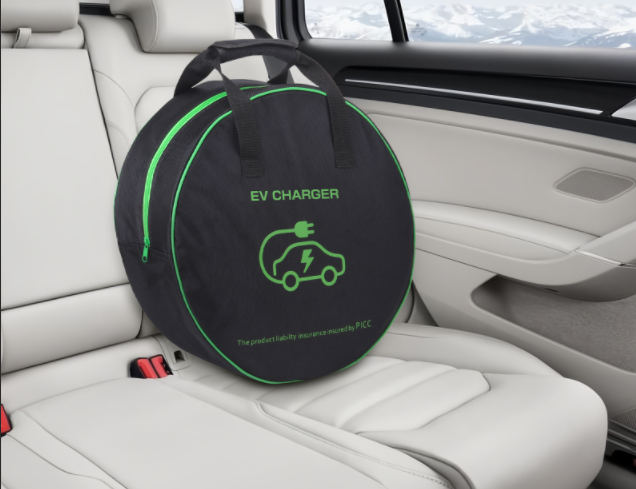
- Portability Trade-offs: Higher-power Level 2 portable chargers often have thicker, heavier cables and larger control boxes. Consider your strength and storage space. A dedicated travel bag can help keep the kit organized.
- Everyday Use: If used as a primary charger, consider installing a dedicated, properly rated outlet (like a NEMA 14-50) by a licensed electrician to ensure safety and reliability. For frequent use, mounting a hook or reel near the outlet can improve convenience and cable longevity.
Conclusion
A portable EV charger is far more than a simple emergency tool; it is a fundamental enabler of EV ownership freedom and flexibility. By understanding its capabilities—from slow Level 1 “trickle charging” to faster Level 2 refueling—and prioritizing key features like adjustable amperage and robust build quality, you can select a model that perfectly complements your lifestyle. Whether you’re a renter in the city, a long-distance traveler, or simply someone who values preparedness, investing in a high-quality portable EV charger demystifies range anxiety and unlocks the full, convenient potential of electric driving. It ensures that wherever you find an outlet, you find the power to move forward.