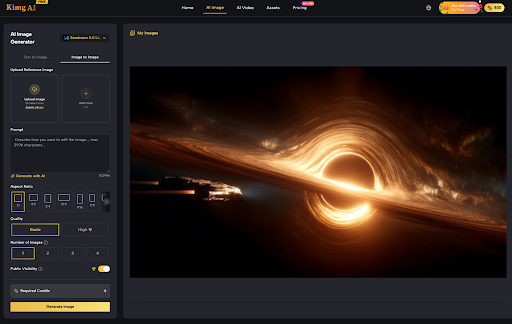
For the solo creator or the small studio, the shift from experimenting with generative AI to building a profitable content engine is usually where the wheels fall off. It is easy to generate a single, striking image; it is significantly harder to produce five hundred of them that maintain a consistent aesthetic, meet professional resolution standards, and integrate into a broader commercial workflow.
- The Logic of the Multi-Model Stack
- Step 1: Conceptual Validation and Prompting
- Step 2: High-Fidelity Generation and Inpainting
- Step 3: Elevating Assets to “K Level” Resolution
- Step 4: From Static to Motion (Video Integration)
- Building a Monetizable Content System
- Managing the “Credit Economy”
- The Reality of AI Limitations
- Standardization Over Innovation
The difference between a hobbyist and an operator lies in the pipeline. An operator treats generative tools like Banana AI not as magic boxes, but as specific components in a production line. To monetize AI-assisted media, you need a repeatable system that moves an idea from a text prompt to a high-resolution, multi-format asset without manual friction.
The Logic of the Multi-Model Stack
One of the first mistakes prompt-first creators make is sticking to a single model for every task. In a production environment, different models serve different purposes based on their latent “knowledge” and their adherence to specific prompt structures.
Within the Nano Banana Pro ecosystem, the distinction between standard models and Pro-tier models is foundational. The standard Nano Banana model is often sufficient for rapid prototyping and conceptual mood-boarding. However, when you are building assets intended for client delivery or high-quality print-on-demand, the leap to Nano Banana Pro AI is necessary for the sake of detail retention and composition accuracy.
A production-grade pipeline usually follows a four-stage process: discovery, generation, refinement, and expansion. By separating these stages, creators can avoid the “sunk cost” trap of spending hours refining a prompt on a high-credit model when the core concept hasn’t been validated yet.
Step 1: Conceptual Validation and Prompting
The discovery phase is where you determine if your visual concept is achievable within current model limitations. It is important to acknowledge that even advanced models like Nano Banana Pro AI have “blind spots.” For instance, highly specific anatomical intersections or complex mechanical linkages can still result in artifacts that require post-production.
During this stage, creators should use lower-resource settings to test different prompt architectures. Are you seeking a cinematic aesthetic or a flat vector look? By iterating quickly, you establish the “DNA” of your project. Once the prompt consistently yields the desired structural layout, you move that prompt into the high-fidelity generation phase.
Step 2: High-Fidelity Generation and Inpainting
When moving to the production phase, the focus shifts to pixel quality. This is where Nano Banana Pro becomes the primary engine. The goal here is to produce a “master” image that requires minimal corrective work.



However, even a near-perfect generation often has small errors—a stray object in the background or a lighting inconsistency on a face. Instead of re-rolling the entire prompt (which wastes credits and changes the composition you liked), production-savvy creators use inpainting.
Inpainting allows you to mask a specific area and ask the Banana AI to “re-imagine” only that section. This level of surgical control is what separates professional workflows from casual use. It allows for the incremental improvement of an asset rather than relying on the “slot machine” of global prompt generation.
Step 3: Elevating Assets to “K Level” Resolution
A common bottleneck in AI monetization is the resolution gap. Most base models output images around 1024×1024 pixels. While this is fine for a social media post, it is unacceptable for professional web design, 4K video backgrounds, or large-format printing.
The refinement stage must include a dedicated upscaling step. Moving an image to “K level” resolution involves more than just stretching pixels; it requires a model that can intelligently add texture and detail that wasn’t present in the original low-res file.
One limitation to keep in mind is that “blind” upscaling—upscaling without reviewing the added details—can sometimes introduce weird textures in smooth areas, like skin or clear skies. An operator-led approach involves checking the upscaled asset at 100% zoom to ensure the AI hasn’t hallucinated “micro-noise” that ruins the clean look of the original.
Step 4: From Static to Motion (Video Integration)
For creators focused on YouTube, social media advertising, or digital signage, static images are often just the starting point. The modern workflow involves taking a curated Nano Banana Pro AI image and using it as a reference frame for video generation.
Tools like Kling or Veo 3 have changed the landscape here, but they require a high degree of skepticism from the creator. AI video is still prone to “morphing” and temporal inconsistency. A repeatable system for video monetization usually involves:
- Generating a high-quality static image as a “keyframe.”
- Using image-to-video tools to animate specific motions (camera pans, subtle character movements).
- Cutting the resulting clips into short, high-impact segments.
Because video generation is resource-intensive, the “discovery” phase mentioned earlier is even more critical here. You do not want to spend your credits animating a base image that wasn’t perfectly composed to begin with.
Building a Monetizable Content System
How does this pipeline actually make money? The most successful creators build systems around specific niches rather than trying to be generalists.
The Brand Kit Factory
Agencies and startups need consistent visual identities. A creator can use Nano Banana Pro to generate a series of 50-100 consistent background textures, character avatars, and icon sets for a specific brand. By documenting the exact prompt parameters and model versions used, the creator can offer “on-demand” expansions to that brand kit as the client grows.
Social Media Management at Scale
For performance marketers, the bottleneck is often creative fatigue. Using a standardized pipeline allows a creator to turn out 20 variants of an ad creative in the time it used to take to design one. By leveraging Banana AI to swap backgrounds or adjust styles while keeping the core product image consistent, you create a “content machine” that can support rapid A/B testing.
Print-on-Demand (POD) 2.0
The “K level” upscaling is the secret sauce here. High-resolution files are a requirement for quality POD platforms. A creator can build a pipeline that moves from trend research to Nano Banana Pro AI generation, through upscaling, and directly into a product mockup tool. This reduces the time-to-market for new designs from days to minutes.
Managing the “Credit Economy”
Every production pipeline has a cost-of-goods-sold (COGS). In the world of AI creators, that COGS is your credit balance. Managing this is a vital part of the business model.
Indie makers often fail because they treat credits as an infinite resource rather than a budget. To maintain a healthy margin, your workflow should prioritize efficiency. This means using lower-cost models for initial testing and reserving the Nano Banana Pro AI credits for the final, revenue-generating outputs.
It is also wise to keep an eye on check-in bonuses and subscription tiers. If you are producing assets for clients, the cost of your Kimg AI subscription should be baked directly into your project fees. Treat it like a software license or a raw material cost.
The Reality of AI Limitations
While the potential for monetization is high, a restrained, practical perspective is necessary. AI models are not “set and forget.” There is no button you can press that will generate a perfect, ready-to-sell comic book or movie without human intervention.
Expectation-reset: You will have sessions where the model simply does not “understand” your prompt, regardless of how well-crafted it is. You will have instances where an upscaled image looks worse than the original because of over-sharpening. These are not failures of the system; they are the natural boundaries of the technology.
A professional pipeline accounts for these failures by building in “buffer time” for manual correction. If you tell a client you can deliver 100 images in an hour, you are setting yourself up for failure. If you tell them you can deliver 100 curated, upscaled, and corrected images in a day, you have a sustainable business.
Standardization Over Innovation
For the prompt-first creator, the urge is always to chase the next big model or the newest “hack.” However, the creators who actually make money are those who find a workflow that works and stick to it until it becomes a habit.
Using a stable environment like Banana AI allows you to standardize your outputs. When your tools are consistent, your results become predictable. In the world of business, predictability is more valuable than occasional flashes of brilliance. By treating Nano Banana Pro as a professional workstation, you move away from the chaos of experimental prompting and toward the stability of a production-grade asset pipeline.