In aviation, safety and reliability are not goals—they are requirements. Every electrical module, battery system, relay, controller, and mechanical assembly must perform flawlessly under demanding operational conditions. Even minor component failures can result in delays, regulatory issues, or serious safety risks.
- The Problem: Hidden Component Degradation
- Why Basic Checks Are Not Enough
- The Solution: Structured Component Testing
- 1. Strengthens Aviation Safety
- 2. Ensures Regulatory Compliance
- 3. Reduces Unscheduled Downtime
- 4. Supports Predictive Maintenance Strategies
- 5. Protects Operational Reliability
- 6. Minimizes Financial Risk
- Final Thoughts
That is why professional aircraft component testing services are essential for maintaining aviation safety, compliance, and long-term operational reliability.
Let’s examine the core problem facing aviation maintenance teams—and how structured component testing provides the solution.
The Problem: Hidden Component Degradation
Aircraft components do not typically fail instantly. Instead, they degrade gradually due to:
- Electrical stress
- Thermal cycling
- Vibration exposure
- Environmental factors
- Repeated operational load
Without thorough testing, small performance variations can go unnoticed until they result in operational disruption.
Visual inspection alone cannot confirm functional reliability.
Why Basic Checks Are Not Enough
Routine maintenance checks often focus on surface-level inspections:
- Visual condition
- Basic continuity tests
- Simple functional checks
While important, these methods do not:



- Simulate real operational loads
- Validate sustained performance
- Detect internal degradation
- Provide detailed performance documentation
In aviation, relying solely on basic checks increases operational risk.
The Solution: Structured Component Testing
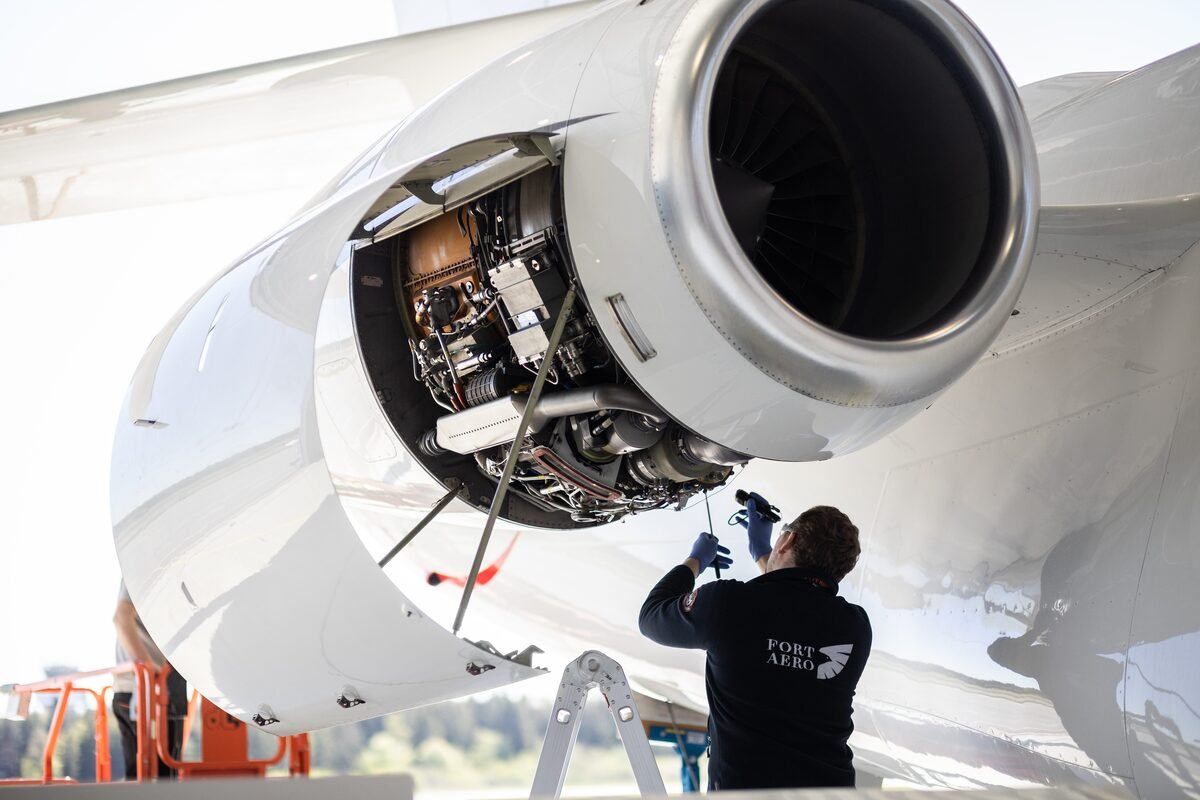
Professional aircraft component testing services use calibrated equipment and standardized procedures to verify that components meet aviation performance standards.
Comprehensive testing includes:
- Functional validation
- Load simulation
- Performance measurement
- Fault detection
- Compliance documentation
This ensures each component performs according to regulatory and operational requirements before returning to service.
1. Strengthens Aviation Safety
Aircraft systems rely on interconnected components. A single malfunctioning unit can impact multiple systems.
Testing services:
- Identify early-stage failures
- Detect hidden defects
- Validate performance under real-world conditions
- Reduce in-flight malfunction risk
Safety improves when every component is verified beyond visual inspection.
2. Ensures Regulatory Compliance
Aviation authorities require documented proof that components meet performance standards.
Aircraft component testing services provide:
- Traceable test records
- Time-stamped documentation
- Audit-ready reports
- Compliance verification
Proper documentation simplifies inspections and protects operators from regulatory penalties.
3. Reduces Unscheduled Downtime
Unexpected component failure leads to:
- Aircraft-on-ground (AOG) events
- Flight delays
- Increased labor costs
- Operational disruption
Proactive testing helps maintenance teams detect degradation before failure occurs, reducing emergency interventions.
4. Supports Predictive Maintenance Strategies
Modern aviation maintenance increasingly relies on data-driven decision-making.
Structured testing allows operators to:
- Track performance trends
- Monitor lifecycle degradation
- Schedule replacements proactively
- Optimize inventory planning
Predictive strategies reduce long-term maintenance costs and improve fleet readiness.
5. Protects Operational Reliability
Reliable aircraft operations depend on dependable systems.
Comprehensive component testing:
- Verifies consistent functionality
- Confirms load-bearing capability
- Reduces unexpected system errors
- Improves dispatch reliability
Operational continuity strengthens airline performance metrics.
6. Minimizes Financial Risk
Component failures can create significant financial impact through:
- Schedule disruptions
- Passenger compensation
- Emergency repairs
- Replacement part costs
By validating performance before deployment, testing services reduce liability exposure and unexpected expenses.
Final Thoughts
In aviation, assumptions are unacceptable. Every component must be verified to meet strict safety and performance standards.
Professional aircraft component testing services provide the structured validation required to ensure safety, compliance, and operational reliability. For MRO facilities, airlines, and fleet operators, component testing is not simply a maintenance task—it is a foundational safeguard that protects both aircraft and passengers.
In a safety-critical industry, reliable components begin with precise testing.