If you are planning your postpartum month in Singapore, confinement herbal soup packages can feel like one more item on a long checklist. You may wonder which herbs matter, how many days you really need, and whether pre-packed confinement herbs suit your body after delivery.
- What confinement herbal soup packages are
- What you typically get in a confinement herbal soup package
- Buying checklist: how to choose the best package for your body and birth plan
- Quality markers that protect your time and reduce waste
- How much to budget in Singapore
- How to cook herbal soup for confinement without stress
- Common myths that can derail your recovery plan
- How PEM supports you during confinement
- A calmer way to decide
This buying guide walks you through what to look for, how to use a confinement herbal soup package safely and practically, and how to plan so your recovery meals stay consistent when you are tired and sleep-deprived.
What confinement herbal soup packages are
Confinement herbal soup packages are pre-portioned Traditional Chinese Medicine (TCM) herb packs designed for postpartum soups across a set number of days, commonly 28 to 42. TCM is a traditional system that uses ingredients such as roots, botanicals, and foods to support the body’s balance after birth.
Many families choose a herbal soup for confinement because it simplifies daily cooking. Instead of buying and measuring multiple herbs, you follow labelled packs that match different stages of recovery.
Confinement practices remain highly common. One study reported that 96.4% of Chinese mothers followed confinement practices during the first three weeks postpartum, which helps explain why these packages are widely used across Singapore.
What you typically get in a confinement herbal soup package
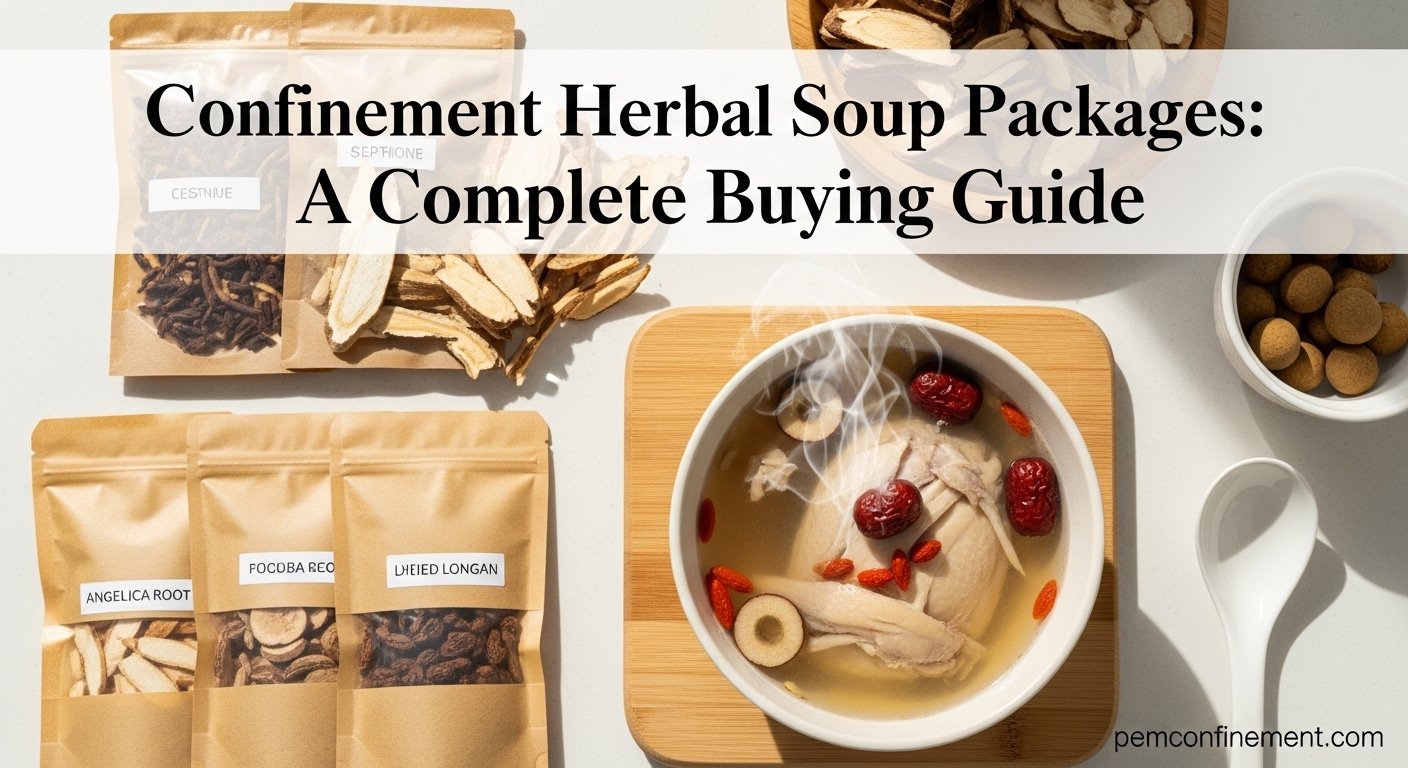
Most packages include daily herb sachets and a schedule. Some add teas and bath herbs. The exact herbs vary by brand, but you often see ingredients used in postpartum soups such as dang gui (angelica root) and red dates, prepared in combinations intended for different phases.
A well-organised confinement herbal soup package usually includes:
- 28 to 30 labelled daily packs (or more for longer plans)
- A phased calendar (by week, or by “clearing” and “tonic” stages)
- Simple cooking instructions, including water volume and cooking time
- Optional add-ons like herbal teas and herbal bath packs
If you want to see an example of what a complete set can include, you can check the details on PEM’s confinement herbal package page here.


Understanding the “phases”
Many brands divide soups into stages to match everyday postpartum needs. Lochia, which means the normal bleeding and discharge after childbirth, often drives the first stage. Later stages focus more on digestion, strength, and warming support.
Here is a practical way to understand common phase labelling:
| Phase (typical) | When it is used | What it aims to support (non-medical) | Common features |
| Phase 1: clearing | Days 1 to 7 | Routine postpartum cleansing and comfort | Lighter-tasting soups, often paired with ginger and warming foods |
| Phase 2: digestion | Days 8 to 14 | Appetite and digestion when you feel bloated or tired | Gentler herbs, soups that feel easier to drink |
| Phase 3: rebuilding | Days 15 to 21 | Energy and nourishment as bleeding reduces | Richer soups with proteins like chicken or fish |
| Phase 4: tonics | Days 22 to 28+ | Ongoing nourishment as you regain strength | More “tonic-style” packs, sometimes with ginseng in some brands |
You do not need to memorise the herb names. You do need a clear schedule that aligns with your delivery and preferences.
Buying checklist: how to choose the best package for your body and birth plan
When you compare confinement herbal soup packages, focus on fit, quality, and clarity. A good plan reduces the need for last-minute decisions when you are recovering.
Use this checklist before you buy:
- Duration that matches your confinement plan
Many families choose 28 days, while others prefer 35 to 42 days for a longer rhythm. - Birth type considerations
If you expect a C-section, look for clear guidance on when to start specific packs. Some mums prefer gentler soups early on, especially if their appetite is low. - Breastfeeding-friendly approach
If you plan to breastfeed, prioritise hydration and balanced meals. Soups can support overall nourishment, but you still need plain water. - Dietary preferences and allergies
Check for potential allergens, strong warming ingredients, or ingredients you avoid. If you take medication or have a health condition, ask your doctor before using herbal products. - Clear instructions for busy households
The best pre-packed confinement herbs come labelled by day, with cooking time and recommended proteins.
Quality markers that protect your time and reduce waste
It is easy to buy a big set and then stop using it because it feels complicated. Quality is not only about the herbs. It is also about how consistently you can follow the plan.
Look for:
- Individually sealed packs to keep herbs dry in Singapore’s humidity. Precisely set expiry dates and storage instructions
- A consistent supplier with transparent ingredient lists
- Reasonable cooking methods (many soups simmer in 1 to 2 hours)
If a package feels vague or lacks a schedule, you may struggle to keep it going when you feel tired.
How much to budget in Singapore
In Singapore, many confinement herbal soup package options range from SGD 288 to 599, depending on the number of days, herb grade, and add-ons like teas or baths. Delivery fees and urgent fulfilment can add to the cost, so confirm what the price includes before you check out.
Prices vary by brand, inclusions, and season, and they may change without notice.
How to cook herbal soup for confinement without stress
You do not need complicated tools. You need a consistent method.
A simple routine works well:
- Rinse herbs quickly if the instructions recommend it
- Add the daily pack to a pot with water and your chosen protein (commonly chicken, pork ribs, or fish)
- Simmer gently for 1 to 2 hours (or follow the package guide)
- Add salt lightly, if desired, near the end
Batching can help, but do not push yourself. Fresh soup tastes better, and shorter cooking sessions often feel more manageable when you are feeding the baby.
Storage tips:
- Refrigerate promptly in covered containers
- Reheat thoroughly before drinking
- Avoid leaving soup at room temperature for extended periods in warm weather
Common myths that can derail your recovery plan
Myth: You must avoid plain water during confinement.
Truth: Your body needs hydration, especially if you breastfeed. Herbal soups and teas can complement your fluids, but they should not replace water.
Myth: One package suits every mum.
Truth: Every mum’s appetite, warmth preference, and comfort level differ. Choose a plan you can follow consistently, and ask a qualified professional if you’re unsure about any ingredients.
Myth: Herbal soups automatically cause baby jaundice.
Truth: There is no clear evidence that standard, properly prepared confinement soups cause jaundice through breastfeeding. If your baby shows signs of jaundice, speak to your paediatrician promptly.
If you ever experience persistent low mood, panic, or thoughts of harming yourself, seek medical attention immediately. Postpartum depression is severe and needs professional care.
How PEM supports you during confinement
Herbs work best when they fit into a calm daily routine. PEM nannies support you with day and night baby care, so you can rest and recover while keeping feeds, soothing, and baby hygiene steady.
PEM also keeps your home routine practical with a clear job scope that includes:
- Day and night baby care, including feeding support and settling routines
- Confinement food and tonic cooking to match your planned schedule
- Herbal bath preparation (no complicated steps for you)
- Breastfeeding guidance in day-to-day positioning and comfort support
- Laundry for mum and baby essentials
PEM brings authority you can rely on. PEM trains nannies through 150 hours of comprehensive training based on modules reviewed by a leading mum and baby expert. PEM also brings 30+ years of industry experience, with 550+ nannies who have served 50,000+ mothers, and PEM guarantees the nanny’s arrival.
If you like the convenience of a herbal package, PEM nannies are trained to prepare them, and you can add one on at a special rate.
A calmer way to decide
The best confinement herbal soup packages help you stay consistent when your days feel unpredictable. Choose a plan with clear phases, simple instructions, and a duration you can realistically follow, then build support around it so you can rest.
If you want to plan your confinement support early, reach out to PEM to discuss timing and options. Enquire now by clicking this link.