How Artificial Intelligence Is Evolving
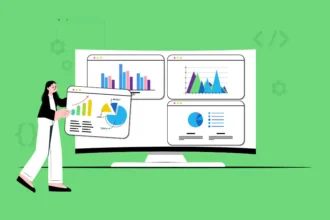
Artificial intelligence is no longer a distant concept reserved for research labs or science fiction. It has quietly embedded itself into daily life, business operations, and global industries in ways that continue to expand each year. At its core, AI refers to computer systems designed to perform tasks that normally require human intelligence. These tasks include recognizing patterns, interpreting language, making predictions, and learning from data over time.
What makes the current phase of AI development remarkable is not just speed, but adaptability. Earlier software systems followed rigid rules programmed in advance. Modern AI systems, especially those powered by machine learning, improve as they process more information. They can identify trends, refine outputs, and adjust recommendations without being manually reprogrammed for every scenario.
Today, AI is moving beyond narrow applications. It is increasingly capable of handling complex language tasks, generating realistic images, analyzing massive datasets, and supporting decision-making processes across industries. While it does not replace human judgment, it enhances efficiency by managing large-scale analysis that would otherwise require enormous amounts of time and labor.
Automation and Decision Support in Business
As businesses scale across regions, language management becomes part of operational efficiency rather than a secondary task. Multilingual communication affects customer support, documentation, compliance, and internal coordination. AI systems designed for translation now play a practical role in maintaining clarity at scale.
Lara Translate represents a specialized language AI built specifically for translation workflows. Instead of generating new content, it focuses on preserving meaning, tone, and terminology across languages. This precision is essential when accuracy directly impacts business outcomes.
By using contextual intelligence and domain-specific modeling, it adapts translations based on audience and subject matter. Glossary management and ambiguity


detection supports consistent terminology across departments. This reduces friction in cross-border communication and minimizes interpretation errors.
In complex organizations, efficiency depends not only on automation but on reliability. Specialized AI systems for translation help companies operate globally without sacrificing linguistic precision. As operations become more international, language accuracy becomes part of core business infrastructure.
Creative and Generative Capabilities
Perhaps one of the most visible changes in recent years has been the emergence of generative AI. These systems can create text, images, music, and even video based on learned patterns from large datasets. While early versions produced inconsistent results, newer models generate increasingly sophisticated outputs that resemble human-created work.
In marketing and media, AI assists with drafting content, generating design concepts, and personalizing messaging. In software development, AI helps write code, identify bugs, and suggest optimizations. In design and architecture, it produces visual prototypes and layout variations in seconds.
These capabilities are not about replacing creativity but accelerating it. Creative professionals often use AI as a starting point, refining and improving outputs rather than building everything from scratch. The collaboration between human creativity and machine efficiency is reshaping workflows across industries.
At the same time, ethical considerations are becoming more prominent. Questions around intellectual property, data sourcing, and responsible use are actively debated. As AI grows more capable, governance and transparency become essential to ensure trust and accountability.
AI in Healthcare and Scientific Research
Beyond business and creative fields, AI is making significant contributions in healthcare and scientific research. Machine learning models analyze medical images to detect early signs of disease. AI systems assist in drug discovery by predicting molecular interactions faster than traditional laboratory methods. Predictive analytics support hospital staffing, patient risk assessment, and treatment planning.
In research settings, AI accelerates data modeling in climate science, physics, and genomics. Complex simulations that once required months of computation can now be processed more efficiently. These advancements do not eliminate the need for expert interpretation, but they shorten the path from hypothesis to discovery.
The growing integration of AI into healthcare and science illustrates its broader potential. When combined with domain expertise, AI becomes a powerful analytical partner capable of expanding human capability rather than replacing it.
AI and SEO in the Digital Landscape
In the digital marketing world, the intersection of ai and seo is becoming increasingly important. Search engines themselves use AI to interpret search intent, evaluate content quality, and personalize results. Businesses now use AI tools to analyze keyword trends, audit website performance, and identify optimization opportunities more quickly than manual research would allow.
The collaboration between ai and seo enables marketers to respond faster to algorithm changes and evolving user behavior. AI-driven insights can uncover content gaps, predict ranking opportunities, and recommend structural improvements. However, strategy remains critical. AI provides analysis and pattern recognition, but human marketers determine positioning, messaging, and brand alignment.
This combination of technology and expertise highlights a broader truth about artificial intelligence. Its strength lies in enhancing human strategy rather than operating independently.
The Future of AI Integration
Looking ahead, AI is expected to become even more embedded in daily systems. Advances in natural language processing will improve conversational interfaces. Computer vision technologies will refine automation in manufacturing and transportation. Predictive analytics will continue to shape finance, healthcare, and urban planning.
One emerging trend is the development of AI systems that integrate multiple data types at once, combining text, images, and numerical information for richer analysis. These multimodal systems expand what AI can interpret and generate, opening possibilities across industries.
Yet with expanded capability comes responsibility. Businesses and governments are increasingly focused on ethical frameworks, bias reduction, and data security. As AI systems grow more influential in decision-making, ensuring fairness and transparency becomes critical.
A Technology Still Taking Shape
Artificial intelligence is not a single tool or product. It is a rapidly evolving field that continues to expand its range of capabilities. From automating business workflows to supporting scientific discovery, from creative generation to enhancing ai and seo strategies, AI is shaping how information is processed and decisions are made.
What AI is starting to be able to do is impressive, but it remains a tool guided by human intention. Its greatest impact occurs when paired with clear goals, thoughtful oversight, and strategic alignment. As development continues, the focus will not simply be on what AI can do, but on how responsibly and effectively it is used to support progress.
The future of AI will likely be defined not by replacement, but by partnership. When integrated carefully, it becomes an extension of human capability, amplifying analysis, accelerating workflows, and opening new possibilities across every major sector.