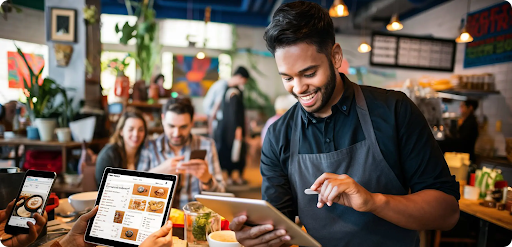
Running a Restaurant Is More Than Cooking
From the outside, owning a restaurant can look exciting. The atmosphere, the creativity, the packed dining room on a Saturday night. But anyone who has actually operated one knows how thin the margins can be and how quickly things can shift.
A slow week. A spike in food costs. Staff turnover. Weather changes. A bad online review at the wrong time. Restaurants are built on passion, but they survive on strategy.
Great food alone does not guarantee steady business anymore. In today’s environment, visibility is just as important as quality. That is where marketing becomes less of a luxury and more of a necessity.
Many restaurant owners begin with culinary talent, not marketing expertise. They assume word of mouth will be enough. Sometimes it is, at first. But long-term stability requires something more intentional.
Customers Decide Before They Arrive
The dining decision rarely starts at the front door anymore. It starts on a phone.
People search reviews. They scroll through photos. They compare menus. They check hours and pricing. If your restaurant does not appear in those moments, you lose the opportunity before it even begins.


Marketing ensures your business shows up where customers are already looking. That includes search engines, online maps, review platforms, and social media. It also includes maintaining updated information and responding to customer feedback.
A restaurant might serve incredible food, but if its online presence is outdated or inconsistent, trust erodes quickly. Inconsistent information creates hesitation. Hesitation sends customers elsewhere.
Professional marketing help brings structure and consistency to these channels so your reputation reflects the quality you work so hard to provide.
Branding Shapes the Experience Before the Meal
Branding is often misunderstood in the restaurant world. It is not just a logo or a color scheme. It is the feeling customers associate with your business.
Are you a cozy neighborhood staple? A fast-paced lunch destination? A high-end experience for special occasions?
When branding is clear, marketing becomes more effective. Your photos, your tone, your promotions, even your menu design align with a recognizable identity. Customers begin to know what to expect before they even sit down.
That familiarity builds loyalty. People return to places that feel consistent and intentional.
Without a defined brand, marketing becomes reactive instead of strategic. And in a competitive market, reactive marketing rarely wins.
Driving Steady Traffic in an Unpredictable Industry
Restaurants operate in cycles. There are busy seasons and slow seasons. There are packed Friday nights and empty Tuesdays. Marketing helps smooth those gaps.
Targeted promotions can drive midweek traffic. Event marketing can fill slower months. Loyalty programs encourage repeat visits rather than one-time curiosity.
Even small adjustments can make a difference. A well-timed special. A limited seasonal menu. A promotion tied to a local event.
Marketing professionals analyze patterns and identify opportunities to fill seats consistently rather than sporadically. Financial stability depends on predictable traffic, not just occasional surges.
The more consistent the revenue, the easier it becomes to manage payroll, food costs, and long-term planning.
Using Direct Communication the Right Way
Social media is important, but direct communication often produces stronger results. When customers willingly opt in to hear from your restaurant, engagement increases dramatically.
Email marketing remains effective, especially for special announcements or seasonal updates. Text messaging has also gained popularity. Many businesses are now exploring sms marketing for restaurants as a way to reach customers instantly with limited-time offers, reservation reminders, or event announcements.
Used properly, sms marketing for restaurants can create urgency and fill empty tables quickly. A short message about a midweek discount or last-minute cancellation can drive immediate action.
The key is restraint. Messages should feel valuable, not overwhelming. When communication feels respectful, customers remain engaged rather than unsubscribing.
Direct outreach strengthens relationships when done thoughtfully.
Protecting the Business Behind the Brand
While marketing fuels growth, restaurants also face operational risks. A kitchen fire. A slip-and-fall accident. Equipment breakdown. Supply chain interruption. These situations can happen without warning.
This is where insurance becomes essential.
Purchasing appropriate insurance coverage provides peace of mind for restaurant owners. It ensures financial protection against property damage, liability claims, and business interruption. Without it, a single unexpected event could derail years of work.
Insurance also supports customer trust. Guests feel safer dining in establishments that operate responsibly and maintain proper coverage. Staff members feel more secure knowing workplace risks are accounted for.
Financial protection allows restaurant owners to take calculated risks in marketing and expansion without fearing total collapse from a single incident.
Peace of mind is not just something restaurants sell to guests. It is something owners need as well.
Marketing and Insurance Work Together
At first glance, marketing and insurance may seem unrelated. One drives revenue. The other protects against loss.
In reality, they support the same objective: long-term sustainability.
Marketing increases visibility and brings customers through the door. Insurance ensures that if something goes wrong, the business can recover.
Growth without protection is fragile. Protection without growth leads to stagnation.
Restaurants need both.
When owners feel confident in their marketing strategy and secure in their financial protection, they can focus on delivering exceptional experiences rather than constantly reacting to crises.
Why Professional Help Makes Sense
Restaurant owners already juggle countless responsibilities. Hiring, training, inventory management, vendor negotiations, menu planning. Adding full-scale marketing strategy to that list can dilute focus.
Professional marketing support provides expertise, structure, and accountability. It tracks performance metrics. It refines campaigns. It adapts strategies based on data rather than guesswork.
The goal is not flashy advertising. It is smart, sustainable growth.
In an industry where reputation, visibility, and trust determine survival, marketing is not optional. It is foundational.
And when paired with solid insurance coverage that delivers peace of mind and financial protection, restaurants position themselves for something more powerful than short-term success.
They build stability.