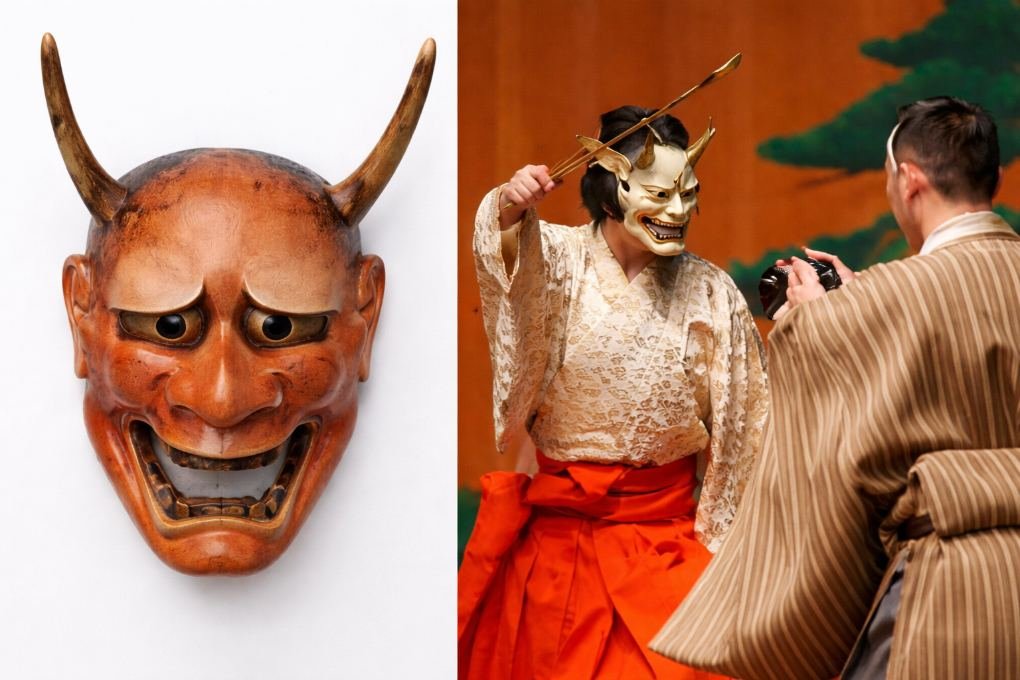
Something is unsettling about the way the Hannya Masks stare back at you. Not with rage, not with peace, but with something in between. That twisted expression, part snarl, part sorrow, has haunted Japanese theater for centuries. And it’s not just performance, it’s personal. In Noh Theater, Hannya Masks are worn to embody a woman consumed by jealousy and desire. But this isn’t just about drama. It’s about transformation. The mask doesn’t hide emotion; it amplifies it. It turns heartbreak into horror, longing into madness.
Why do we keep returning to this face? Maybe because it reflects something we don’t like to admit: that jealousy and desire aren’t opposites. They’re twins. This blog explores how Hannya Masks became symbols of emotional symbolism, tracing their journey from ancient stages to modern tattoos, decor, and collectors’ shelves. We’ll decode the Japanese mask meaning, dissect the Hannya mask symbolism, and ask why this female demon still speaks to us.
Why Jealousy & Desire?
In Noh Theater, the Hannya Mask is worn by a woman who’s been betrayed, often by a lover. Her jealousy doesn’t fade. It mutates. Her desire doesn’t heal. It consumes. The mask captures this emotional shift: from longing to rage, from sorrow to vengeance. It’s not just a demon’s face; it’s the emotional fallout of love gone wrong. That’s why Hannya Masks don’t just represent jealousy and desire, they embody what happens when those feelings are denied, ignored, or weaponized.
Historical Emergence in Noh Theater | Where Hannya Masks First Took Shape
Before Hannya Masks became tattoo icons or collector obsessions, they were born on stage, not just any stage, but the solemn, stylized world of Noh Theater. It was the 14th century, deep in the Bunmei era, when classical drama wasn’t just entertainment; it was ritual, philosophy, and emotional exorcism rolled into one.
The origin of the Hannyā mask traces back to performances like Aoi no Ue and Dōjōji, where women, twisted by jealousy and desire, transformed into demons. These weren’t just characters; they were warnings. And the mask? It wasn’t just a prop. It was a mirror.
There’s a strange irony here. The word Hannya comes from the Sanskrit Prajñā, meaning wisdom. So how did wisdom become a symbol of emotional collapse? Maybe because wisdom doesn’t protect you from heartbreak, it just makes you feel it more deeply.
Timeline of Evolution
Let’s walk through how Hannya Masks evolved from sacred stage tools to emotional icons.
- 14th century | First documented use in Noh plays
- Bunmei era | Masks carved with exaggerated emotion
- Hannya-bō | Legendary mask carver whose work shaped the archetype
Notable Details
These elements shaped the emotional and spiritual weight behind every Hannya Mask.



- Prajñā → Sanskrit root of “Hannya”
- Masks used to portray female demons, not generic spirits
- Emotional symbolism tied to Buddhist ideas of impermanence and suffering
“In Noh, the mask doesn’t hide the soul, it reveals what it’s afraid to say.”
Color Variations & Emotional Gradients | What the Shades of Hannya Masks Reveal
Not all Hannya Masks scream the same emotion. Some whisper. Some burn. Some just stare. The mask colors aren’t random; they’re emotional stages carved into pigment. From pale jealousy to pitch-black obsession, each shade tells a different story. And if you’ve ever seen one up close, you know: the color isn’t just visual, it’s visceral.
White Hannya | Early Jealous
This version carries the ache before the eruption.
- White masks often represent a woman still clinging to humanity
- Used in scenes where jealousy simmers but hasn’t yet consumed
- Symbolizes emotional restraint, not innocence
Red Hannya | Deep Obsession
Here, the mask doesn’t hide; it attacks.
- Red signals emotional combustion, desire turned violent
- Common in intense Noh performances where betrayal peaks
- Represents the tipping point between sorrow and rage
Black Hannya | Complete Transformation
This is where grief dies and fury takes over.
- Black masks show a full descent into demonic form
- Rarely used unless the character has lost all emotional control
- Seen as the final stage in symbolic metamorphosis
“The darker the mask, the deeper the wound.”
Collector Behavior & Mask Craftsmanship | Why Hannya Masks Aren’t Just Art
For some, Hannya Masks are theater relics. For others, they’re emotional trophies. In Dubai’s niche collector circles, these masks aren’t just bought, they’re hunted. Scarcity, symbolism, and artisan techniques make each piece more than decor. It’s a story carved in wood, lacquered in rage, and polished with sorrow.
Collectors don’t just chase beauty. They chase mask authenticity. And that means knowing the difference between a mass-produced replica and a handmade Hannya mask that took weeks to carve.
Materials Used in Craftsmanship
the soul of the mask lies in what it’s made of.
- Wood | Preferred for traditional depth and texture
- Metal | Used for modern interpretations, often heavier and colder
- Lacquer | Adds durability and emotional sheen, especially in red or black masks
Emotional Symbolism & Collector Interest
Collectors aren’t just buying, they’re connecting.
- Masks tied to betrayal or grief often fetch higher interest
- Emotional backstory increases perceived value
- Some collectors seek masks that reflect personal experiences
Regional Variations in Design
Where it’s made changes how it feels.
- Kyoto masks often feature subtle sorrow in the eyes
- Osaka designs lean toward aggressive horn curvature
- UAE artisans blend Japanese form with Arabic calligraphy for a hybrid appeal
Crafting Stages & Collector Appeal
Here’s what makes a mask collectible.
- Design sketch → Emotional intent mapped
- Carving → Wood shaped to reflect symbolic emotion
- Lacquering → Color applied based on emotional gradient
- Detailing → Eyes, teeth, and horns refined for impact
Comparative Breakdown | Hannya vs Oni vs Namanar
Not all Japanese demon mask types are created equal. Some scream. Some whisper. Some just watch. If you’ve ever confused a Hannya Mask with an Oni mask, or wondered where Namanari fits in, you’re not alone. These masks live on a spectrum, not just of emotion, but of transformation.
Each one plays a distinct role in Noh Theater, shaped by gender, emotional depth, and symbolic weight. And while they may share horns or snarls, their meanings couldn’t be more different.
Differences in Emotional Representation
Let’s break down what each mask is really saying.
- Hannya Masks reflect jealousy and desire, emotions that twist slowly
- Oni masks are blunt, violent, and rage-driven
- Namanari masks show a woman mid-transformation, not fully demon yet
Gendered Symbolism & Performance Roles
The mask’s gender isn’t just visual, it’s emotional.
- Hannya and Namanari are female demons, often tied to betrayal or sorrow
- Oni is male, used to represent brute force or punishment
- In Noh, each mask signals emotional depth and narrative arc
Mask Hierarchy Comparison | Emotional & Cultural Breakdown
| Mask Type | Primary Emotion | Gender Representation | Performance Usage |
| Hannya | Jealousy, Desire | Female | Noh theater, Kagura rituals |
| Oni | Rage, Violence | Male | Festivals, Folk Theater |
| Namanari | Transitional Emotion | Female | Early-stage demon roles |
Cultural Symbolism in Jewelry & Decor | When Hannya Masks Leave the Stage and Enter the Home
You don’t need to wear a full mask to convey its meaning. In Dubai’s art and lifestyle circles, Hannya Masks have found new life, not on faces, but around necks, on shelves, and inside gift boxes. These aren’t just decorative pieces. They’re emotional talismans, worn and displayed to protect, provoke, and remind.
Whether it’s a Hannya mask necklace or a carved wall piece, the symbolism runs deep. People choose these items not for fashion, but for what they represent: betrayal survived, desire tamed, rage transformed.
Jewelry as Emotional Armor
Wearing the mask is a statement, it’s not just style.
- Often gifted after heartbreak or personal transformation
- Seen as a shield against emotional manipulation
- Popular among collectors who value wearable symbolism
Home Decor as Spiritual Protection
the mask watches, not just decorates.
- Placed near entrances to ward off negative energy
- Used in meditation spaces to channel emotional clarity
- Featured in Japanese mask decor collections across the UAE
Symbolic Gifting Practices
The meaning behind the gift matters more than the item itself.
- Given during transitions, divorce, relocation, emotional recovery
- Represents strength, emotional depth, and protection
- Popular in Dubai’s artisan markets and niche boutiques
Materials That Matter
Each material adds its own emotional texture.
- Silver | Reflects clarity and resilience
- Jade | Symbolizes emotional balance
- Wood | Carries traditional warmth and spiritual grounding
“A Hannya Mask on your wall doesn’t just fill space, it holds space.”
Explore the Mask | Carry the Meaning
If this story stirred something in you, well. That’s what Hannya Masks are meant to do. Whether you’re drawn to their emotional depth, their theatrical legacy, or their place in modern identity, there’s always more to uncover.
Start small. A pendant. A wall piece. A tattoo sketch. Or maybe just a deeper look into what jealousy and desire really mean when carved into wood. You don’t need to wear the mask to understand it. But once you do, you might never see emotion the same way again.
Looking to collect or gift a Hannya Mask in Dubai? Explore local artisan markets or niche decor boutiques for authentic pieces.