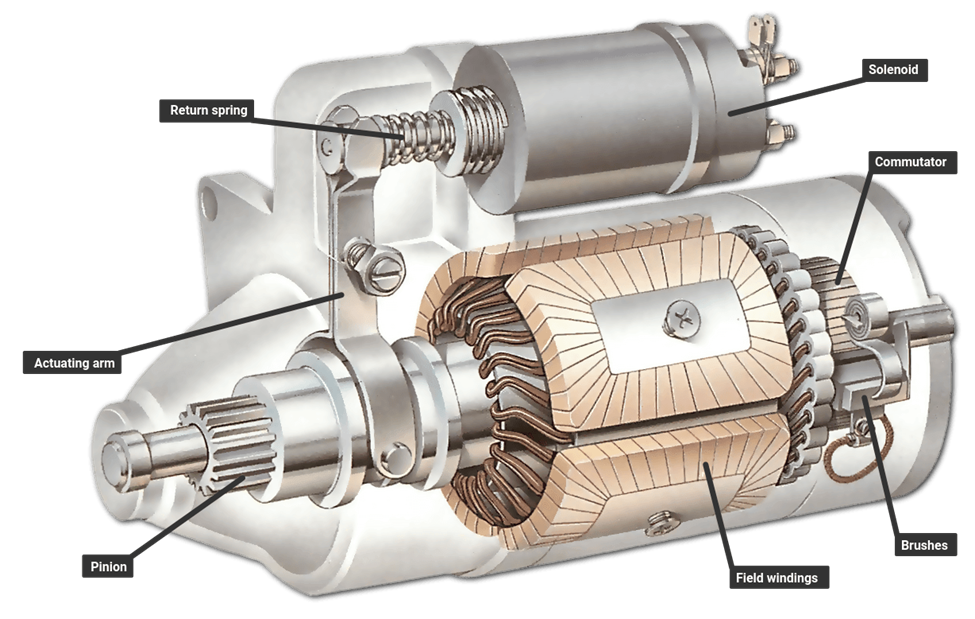
A starter motor is a key part in most cars, trucks, and other vehicles with gasoline or diesel engines. It turns the engine over so the engine can start running on its own. When you turn the key or push the start button, the starter motor spins the crankshaft until the engine fires up. After that, the starter stops and the engine keeps going. Without a working starter motor, your vehicle stays silent even if the battery is full. This article explains in plain, everyday language what a starter motor is and exactly how it works. We also look at its main parts, different types, common problems, and why it matters for your car.
What does a starter motor do?
The starter motor’s only job is to crank the engine. When the engine is cold and not moving, it needs help to reach the speed where fuel and air can mix and ignite. The starter provides that first strong spin. It draws a lot of power from the battery for just a few seconds. Once the engine starts, a small gear on the starter pulls back so it does not get damaged by the faster spinning engine.
You will find the starter motor bolted to the engine block, usually near the bottom or side. It connects to a large toothed ring called the flywheel (in manual cars) or flexplate (in automatic cars). A good starter turns the engine quickly and quietly. If it sounds slow or makes clicking noises, something is probably wrong.
Main parts of a starter motor
A starter motor has several important pieces that work together:
- The electric motor: This is the main spinning part. It creates the power to turn the engine.
- The solenoid: A small cylinder on top that acts as a heavy switch. It controls when power goes to the motor and pushes the gear forward.
- The pinion gear (also called the drive gear): A small gear that slides out and locks into the flywheel teeth.
- The Bendix drive or lever fork: The part that moves the pinion gear in and out.
- Brushes and commutator: These carry electricity to the spinning armature inside the motor.
- Field coils or permanent magnets: They create the magnetic field that makes the motor spin.
- The housing: The strong metal case that holds everything and mounts the starter to the engine.
Each part must be in good shape for the starter to work reliably every time you start the car.
How does a starter motor work? Step by step
Here is the simple sequence that happens when you start your vehicle:
- You turn the ignition key to START or press the start button.
- A small amount of electricity goes from the battery to the starter solenoid.
- The solenoid activates. It has two coils — a pull-in coil and a hold-in coil. These coils create a strong magnetic field.
- The solenoid plunger moves and does two jobs at once: it pushes the pinion gear forward so the teeth mesh with the flywheel, and it closes heavy contacts that send full battery power to the electric motor.
- The motor spins at high speed. In many modern starters, it first turns slowly to help the gears line up smoothly, then speeds up.
- The spinning pinion gear turns the flywheel, which rotates the crankshaft and pistons.
- As soon as the engine starts and spins faster than the starter, the pinion gear automatically disengages and pulls back.
- You release the key or button, the solenoid turns off, and the starter stops completely.
This whole process usually takes one to two seconds. The starter draws a lot of current — often 200 to 400 amps or more — which is why a weak battery can stop the car from starting even if the starter itself is fine.
Types of starter motors
There are two common types you will see in vehicles:


Direct-drive starters are the older, simpler design. The electric motor connects straight to the pinion gear without extra gears. They are larger and heavier, and they need more current from the battery. You still find them in some older cars and heavy-duty trucks.
Gear-reduction starters are the most common type in modern vehicles. They use a small set of planetary gears inside to multiply torque. This lets the motor spin faster while using less electricity and producing more turning power. Gear-reduction starters are smaller, lighter, quieter, and better at handling cold weather or larger engines. They have become the standard because they save space and draw less power from the battery.
Both types do the same basic job, but gear-reduction models are usually more efficient and last longer in everyday driving.
The role of the battery and cables
The starter motor needs a huge burst of electricity to work. That power comes from the battery through thick cables. If the battery is old, weak, or low on charge, the starter may click but not spin the engine. Dirty or loose battery terminals can also cut power and cause problems.
Keeping the battery in good condition and the cables clean and tight is one of the easiest ways to protect your starter motor. Many starter failures are actually caused by battery or connection issues rather than the starter itself.
Common signs of a bad starter
When a starter motor starts to fail, you usually notice clear clues. The engine may crank very slowly or not at all. You might hear a rapid clicking sound when you turn the key — that is often the solenoid trying to work but not getting enough power. Other signs include a grinding noise if the gears do not line up properly, or the starter spinning without turning the engine.
Sometimes the starter stays engaged even after the engine starts, which can damage the pinion gear. If you notice any of these issues, it is best to have the starter checked soon to avoid getting stuck.
To understand the warning signs in more detail, learn more about the signs of a bad starter.
How long does a starter motor last?
A quality starter motor can last 100,000 miles or more under normal driving conditions. However, short trips, extreme hot or cold weather, and poor battery maintenance can shorten its life. Heat from the engine also affects the starter because it sits close to the exhaust.
Regular checks of the battery and electrical connections help the starter last longer. When it finally needs replacement, using a good quality unit with a solid warranty makes a big difference.
Replacing a starter motor
Replacing a starter is a common repair job. The process involves disconnecting the battery, removing the old starter, and bolting in the new one. In some vehicles the starter is easy to reach, while in others it sits in a tight spot and takes more time.
Always match the new starter to your vehicle’s exact specifications for amperage, mounting, and gear type. A professional mechanic can test the old starter to confirm it is the problem before you buy a new one.
Choosing a quality starter motor
When you need a new starter, quality counts. Cheap starters may use thinner materials and fail much sooner. Look for units that come with at least a one-year warranty and have been fully tested. Reputable brands pay attention to details like strong solenoids, good brushes, and proper gear alignment.
Whether you drive a daily commuter or a work truck, a reliable starter keeps you moving without unexpected breakdowns.
For dependable starter motors and other vehicle electrical parts, visit Unitech Motor.
Final thoughts
A starter motor is a simple, tough electric device that gives your engine the first spin it needs to start. It uses a solenoid to engage the gears and send power, then an electric motor to turn the crankshaft until the engine runs on its own. Understanding its basic parts and how it works helps you spot problems early and make smarter repair choices.
Taking care of your battery and connections is one of the best ways to keep the starter working well for years. When replacement time comes, choose a quality part that matches your vehicle. A good starter means reliable starts every morning and fewer headaches on the road.