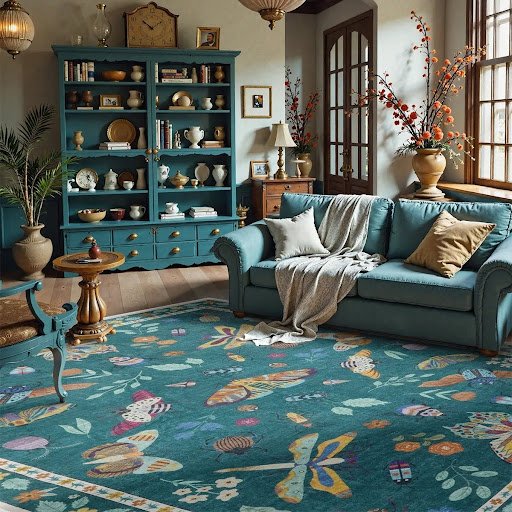
Bare floors in kitchens and hallways are more than just an aesthetic concern — they’re a daily discomfort and a genuine safety hazard. Hard surfaces like tile, hardwood, and laminate offer no cushioning underfoot, amplify noise, and become dangerously slippery when wet. For anyone who spends time cooking, rushing through a hallway, or managing a busy household, this is a problem that compounds with every passing day.
- Why Runner Rugs are Essential for Kitchens and Hallways
- Key Considerations Before You Buy a Runner Rug
- Choosing the Right Material for Your Needs
- Safety First: The Importance of Non-Slip Rugs
- Step-by-Step Guide to Selecting Your Perfect Runner
- Care and Maintenance for Long-Lasting Rugs
- Making the Right Choice for a Safer, More Comfortable Home
Runner rugs offer an elegant and practical answer. These long, narrow floor coverings transform high-traffic zones into spaces that are safer, quieter, and far more inviting. But choosing the right one is rarely straightforward. The challenge lies in balancing four competing demands: visual appeal, long-term durability, slip resistance, and ease of cleaning. Get one wrong, and you’re left with a rug that looks great but falls apart in six months, or one that’s tough as nails but impossible to keep clean.
This challenge becomes even more pressing for families with children, where spills, muddy shoes, and relentless foot traffic are daily realities. The right runner needs to work as hard as your family does. This guide cuts through the confusion, walking you through every critical factor — from materials and sizing to safety features and maintenance — so you can make a confident, informed choice that serves your home beautifully for years to come.
Why Runner Rugs are Essential for Kitchens and Hallways
A runner rug is a long, narrow floor covering designed specifically for tight, elongated spaces — typically ranging from two to three feet wide and anywhere from six to fourteen feet long. Unlike area rugs, which anchor a seating arrangement or define a room’s center, runners serve a more targeted purpose: protecting and enhancing the specific zones where people spend the most time on their feet.
The functional benefits are immediate and tangible. In the kitchen, standing on hard tile for extended periods puts real strain on your back, knees, and feet. A runner with adequate cushioning absorbs that impact, making meal prep noticeably more comfortable. In hallways, runners protect hardwood or laminate flooring from the grinding wear of constant foot traffic, preserving the floor beneath and saving you from costly refinishing down the line. They also absorb sound, softening the echo that hard surfaces amplify throughout a home.
Safety is another compelling reason. Smooth hard floors — especially when wet from a kitchen spill or tracked-in rain — are a leading cause of household slips and falls. A properly secured runner creates reliable traction underfoot, a benefit that matters enormously for young children and older adults alike. Beyond function, runners visually define a space, drawing the eye down a hallway or grounding the work zone in a kitchen. Both rooms are high-traffic thoroughfares that take a daily beating, which is precisely why the rug you choose for them needs to be chosen carefully.
Key Considerations Before You Buy a Runner Rug
Before you start browsing options, a few minutes of honest assessment will save you from a costly mistake. The first question to answer is how the space actually gets used. A kitchen runner positioned in front of the stove and sink will face grease splatter, water drips, and prolonged standing — demands that are entirely different from a hallway runner that primarily absorbs foot traffic and the occasional muddy shoe. Understanding your specific use case shapes every decision that follows.
Measuring accurately is non-negotiable. For hallways, the runner should leave two to three inches of bare floor visible on each side — this framing effect looks intentional rather than like a rug that doesn’t fit. For kitchens, measure the length of your primary work zone, typically from the refrigerator to the sink or stove. Avoid runners that extend under cabinet toe-kicks, as they create tripping hazards and complicate cleaning. Width matters too: a runner that’s too narrow looks awkward and fails to protect the floor effectively.


Style and color are secondary to function but still worth deliberate thought. Darker tones and busier patterns are far more forgiving in high-traffic areas, masking dirt and wear between cleanings. Consider whether the rug’s palette pulls from existing cabinet colors, flooring tones, or accent pieces already in the room — a cohesive look elevates the entire space without requiring a full redesign.
Solving for Families: Durability and Easy Cleaning
For households with children, the calculus shifts decisively toward practicality. Spilled juice, tracked-in mud, dropped food, and the general chaos of family life mean your runner will face stresses that a childless home simply won’t. This is where washable runner rugs become the most sensible starting point. Brands like Lahome have built their collections around exactly this need, offering machine-washable runners designed to handle the demands of busy family households without sacrificing style. Unlike traditional rugs that require professional cleaning or careful spot treatment, washable options go directly into a standard washing machine, letting you address messes completely rather than just managing them. Beyond cleanability, look for rugs with tight, dense construction — loose weaves and long piles trap crumbs, snag under toys, and degrade faster under constant foot traffic. Durability and easy maintenance aren’t a compromise; they’re the baseline requirement.
Choosing the Right Material for Your Needs
Material choice is where most runner rug decisions are won or lost. The fiber your rug is made from determines how it feels underfoot, how long it lasts, and — critically — how easy it is to clean after life happens to it.
Natural fibers like wool and jute each have a loyal following, and for good reason. Wool is remarkably durable, naturally resilient, and has an inherent resistance to crushing under foot traffic that synthetic fibers often can’t match. It also regulates moisture to a degree, which helps with minor spills. The trade-off is cost and cleaning complexity — wool rugs typically can’t go in a washing machine and require more careful stain treatment. Jute and sisal offer a textured, organic look that suits casual and coastal interiors well, but they’re genuinely moisture-sensitive. In a kitchen where spills are routine, a jute runner will absorb liquids, stain permanently, and potentially develop mildew. They’re better suited to dry hallways with light traffic.
Synthetic fibers — particularly nylon, polypropylene, and polyester — are where families with children will find their best options. Nylon is the most durable synthetic available, holding up exceptionally well under heavy foot traffic and resisting abrasion over time. Polypropylene, also sold as olefin, is inherently stain-resistant because its fibers don’t absorb liquid, making cleanup a matter of blotting rather than scrubbing. Polyester offers a softer feel and vivid color retention at a lower price point, though it compresses more quickly in very high-traffic zones. Many washable runner rugs are constructed from these synthetics precisely because they tolerate machine washing without degrading — a decisive advantage for any household where cleanliness isn’t optional.
Safety First: The Importance of Non-Slip Rugs
A runner rug that slides underfoot isn’t just annoying — it’s genuinely dangerous. Unsecured rugs on hard floors are one of the most common causes of household falls, and the risk multiplies in kitchens where wet feet and slick tile create the worst possible combination. For homes with young children who run rather than walk, or older adults with less stable footing, an unsecured runner can cause serious injury in seconds. This is why non-slip rugs deserve to be treated as a safety requirement rather than a bonus feature.
The most reliable protection starts with the rug itself. When shopping, look specifically for runners with built-in non-slip backing — typically made from latex or PVC. Latex backing grips hard floors naturally and provides a degree of cushioning, though it can degrade over time with repeated machine washing. PVC backing is more durable through wash cycles and maintains its grip effectively on tile and hardwood. Either option significantly reduces movement compared to an unlined rug, and both are worth prioritizing over decorative considerations when safety is the primary concern.
For rugs without integrated backing — or for added security on particularly smooth floors — a dedicated rug pad is the most effective solution. Choose a pad specifically rated for hard floors, cut it slightly smaller than your runner so it stays hidden, and replace it every few years as the grip material wears down. The combination of a non-slip rug and a quality pad underneath creates a surface that stays firmly in place regardless of foot traffic, giving you genuine peace of mind.
Step-by-Step Guide to Selecting Your Perfect Runner
With the foundational knowledge in place, the actual selection process becomes straightforward when you follow a clear sequence. Skipping steps or working out of order is how people end up with a rug that looks right in the store but fails at home.
Start by measuring your space precisely. For hallways, record the full length and subtract enough to leave two to three inches of floor exposed on each end. For kitchens, measure the specific work zone you’re covering. Write these numbers down before you browse a single option — they’re non-negotiable constraints that eliminate most wrong choices immediately.
Next, identify your primary functional need. If you’re standing at a stove or sink for long stretches, cushioning should rank highest. If the space sees constant spills and family chaos, maximum washability takes priority. These two needs sometimes overlap, but knowing which matters more prevents you from being swayed by features that don’t serve your actual situation.
With your need defined, select your material accordingly. Heavy standing comfort points toward nylon or a cushion-backed synthetic. Spill-heavy zones call for polypropylene or a machine-washable polyester construction. Once material is settled, consider pile height: low or flat-weave profiles work best near doorways or under chairs where a thicker pile creates a tripping edge, while a medium pile adds meaningful underfoot comfort in open kitchen stretches.
Before finalizing, confirm your non-slip solution — either integrated backing or a cut-to-size rug pad. Then, as a final step, choose your color and pattern. Opt for mid-tones and geometric or distressed patterns that camouflage daily dirt between washes, while still complementing your existing flooring and cabinetry.
Care and Maintenance for Long-Lasting Rugs
Even the most durable runner will underperform if it’s not maintained properly. A consistent care routine doesn’t require much effort, but it makes a meaningful difference in how long your rug holds up and how good it looks between replacements.
Regular vacuuming is your first line of defense. In kitchens and hallways, aim to vacuum at least twice a week — these zones accumulate crumbs, dust, and debris faster than any other area in the home. Use a suction-only setting or a vacuum without a beater bar on low-pile and flat-weave runners, as rotating brushes can fray delicate fibers over time. For spills, speed is everything. Blot immediately with a clean cloth rather than rubbing, which pushes the stain deeper into the fibers. A mild dish soap diluted in water handles most kitchen spills effectively; for tougher stains, an enzyme-based cleaner breaks down organic matter like food and pet accidents without damaging synthetic fibers.
For washable runner rugs, deep cleaning is far simpler than most people expect. Machine wash on a gentle cold-water cycle with a mild detergent, and skip the fabric softener — it coats fibers and reduces their natural grip and resilience over time. Air drying is strongly preferred over machine drying; lay the rug flat or drape it over a railing to prevent shrinkage and backing deterioration. Finally, rotate your runner every three to four months. High-traffic zones wear unevenly, and rotating distributes that stress across the full surface, extending the rug’s usable life considerably.
Making the Right Choice for a Safer, More Comfortable Home
Choosing the right runner rug comes down to three non-negotiable pillars: accurate sizing, a material that can handle your household’s real demands, and a non-slip solution that keeps the rug firmly in place. Get these right, and everything else — style, color, pile height — falls into place naturally around them.
For most families, that means starting with a washable synthetic like polypropylene or polyester, sizing the runner to leave a clean border of floor on each side, and either selecting a rug with built-in backing or pairing it with a quality rug pad. These aren’t compromises — they’re the choices that hold up through school years, messy kitchens, and the daily grind of a well-lived home.
Style doesn’t have to be sacrificed in the process. Mid-toned colors and patterned surfaces can be just as visually compelling as a pale linen runner, and they’ll still look good six months after purchase rather than showing every mark. The step-by-step guide in this article gives you a clear sequence to follow so you’re not making decisions based on guesswork or aesthetics alone. Use it, trust your measurements, and invest in a runner that genuinely works for your space. The right choice will reward you with a safer, more comfortable, and more beautiful home for years to come.