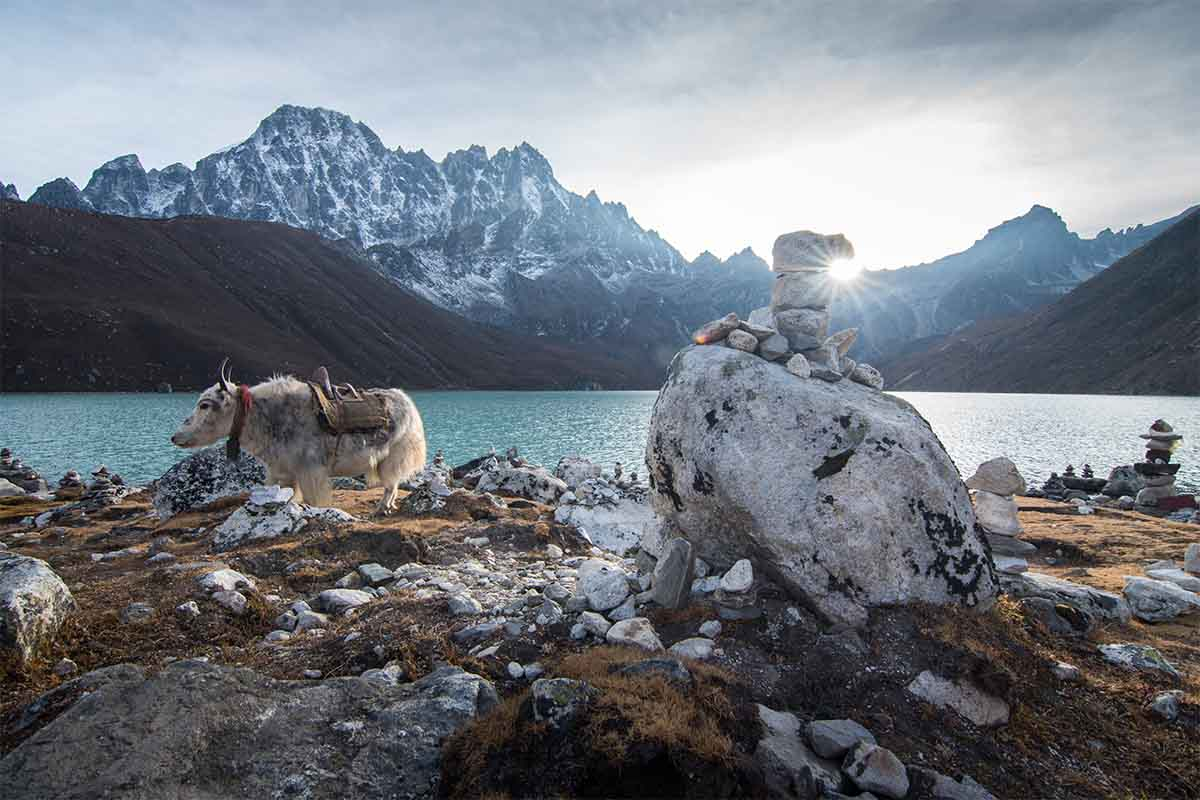
Mountaineering extends beyond standing at the summit. It is a gradual process in which experience develops over time. It requires both body and mind to adjust to thinner air, more severe weather and increased technical difficulty. By building stamina, understanding acclimatization, and improving mental stamina on trekking routes first, aspiring mountaineers can establish a dependable base. The Gokyo Lakes Trek is one of the most challenging and remote trekking destinations in Nepal. It passes through secluded areas with little to no settlements, where medical facilities are almost nonexistent. Likewise, it reaches the maximum elevation of 5,357 meters at Gokyo Ri.
Ama Dablam rises to 6,812 meters and is regarded as one of the most technical yet visually striking peaks below 7,000 meters in the Himalayas. Its steep ridges, exposed rock sections, and ice walls require advanced mountaineering skills, strong acclimatization, and exceptional endurance. Climbers have to complete multiple high camps. Moreover, they need to be skilled with mountaineering tools and extreme altitude while maintaining sharp decision-making abilities. Therefore, before the Ama Dablam Expedition, opting for a journey to the Gokyo Lakes serves as suitable Himalayan training.
Acclimatization And Altitude Awareness
This trek demands around a week-long exposure to the 3,500 meters plus elevation. Similarly, the highest landmark of the journey, Gokyo Ri, is elevated at 5,357 meters. This helps travelers assess how their bodies adapt to the low oxygen and thin air. Additionally, it provides a great evaluation of their pace, which will be helpful for the expedition. The trails comprise significant ascent and descent so carrying heavy trekking bags through them prepares for tougher summit climbs.
As the journey unfolds, trekkers may start to notice the initial signs of Acute Mountain Sickness (AMS). This includes headaches, nausea, unusual tiredness, breathlessness, and disrupted sleep. This teaches them to handle these situations better while climbing Ama Dablam. At the same time, they gain a realistic sense of pacing. This leads to slow and steady walks, keeping a consistent pace and preserving energy instead of forcing a rapid ascent.
They observe their energy levels, recovery patterns, and tolerance to thin air, which helps them manage higher camps better and sustain in harsh mountain weather. In addition, travelers also learn about the impact of proper hydration and balanced nutritional meals.
Mental Conditioning
Completing the journey to Gokyo Lakes prepares mountaineers for the mental challenges they face during the expedition. They get exposure to high altitude and varying terrain that is not just physically but also mentally challenging. Spending long days on the trail in thin air, often under shifting weather and cold conditions, challenges trekkers to remain steady, patient, and focused.
Basic teahouse accommodations and limited daily comforts also require flexibility and self-discipline. This results in climbers strengthening their resilience, which they will rely on later while living in high camps and facing the tougher environment. The solitude along the trails to Gokyo, marked by sweeping glaciers and lightly inhabited villages, mirrors the remoteness climbers are likely to encounter during the expedition. Along the way, trekkers learn to pace themselves effectively, handle mental exhaustion, and sustain a balanced mindset through multiple days of continuous effort.
Terrain Familiarity
The Gokyo Lakes Trek helps climbers to get used to the rugged landscape of the Khumbu before taking on Ama Dablam. Along the trail, you’ll walk across rocky moraines and beside the huge Ngozumpa Glacier. Here, loose stones, uneven paths, and shifting ground test your balance. As you move through this challenging terrain, you naturally improve your footing, stability, and confidence. These skills are extremely helpful later on, especially when you face technical sections and high-altitude camps during a climbing expedition. When you spend days walking on rocky paths and glacial terrain you naturally learn how to save energy while moving over unstable ground. This experience gives you a deeper understanding of how expeditions operate in the region.



Additional Preparation
The Gokyo Lakes Trek is great for building stamina and helping you adjust to high altitude, but it doesn’t train you for the technical challenges of Ama Dablam. Gokyo is a high-altitude trek, which means you hike on rocky trails, cross moraines, and walk near glaciers—but you don’t actually do technical climbing.
You won’t use fixed ropes, climb vertical rock walls, or tackle steep ice sections that require crampons and an ice axe for long stretches. So while the trek strengthens your body and boosts your confidence at altitude, it doesn’t fully prepare you for the serious technical demands of a peak like Ama Dablam. Technical skills like using ropes, correctly donning a harness, jumping up fixed lines, and rappelling down steep sections are all necessary for the climb.
Climbers must be at ease with significant vertical drops and lengthy technical sections. If not, even a minor accident can be fatal very quickly. These abilities simply cannot be acquired on a trekking route alone, they require appropriate training and actual climbing experience. Because of this, climbers should complete proper mountaineering training before attempting Ama Dablam. Take courses in rock climbing, ice climbing, crevasse rescue, and high-altitude expedition skills to prepare yourself properly.
Lastly, but most importantly, climbers should not attempt the expedition independently. They should join a climber’s group with a skilled leader. A leader knows how to handle emergencies and make swift decisions in case of bad weather and injuries. Moreover, they also handle all the logistics and set strategic acclimatization points throughout the climb. They constantly monitor your health conditions and provide immediate care.