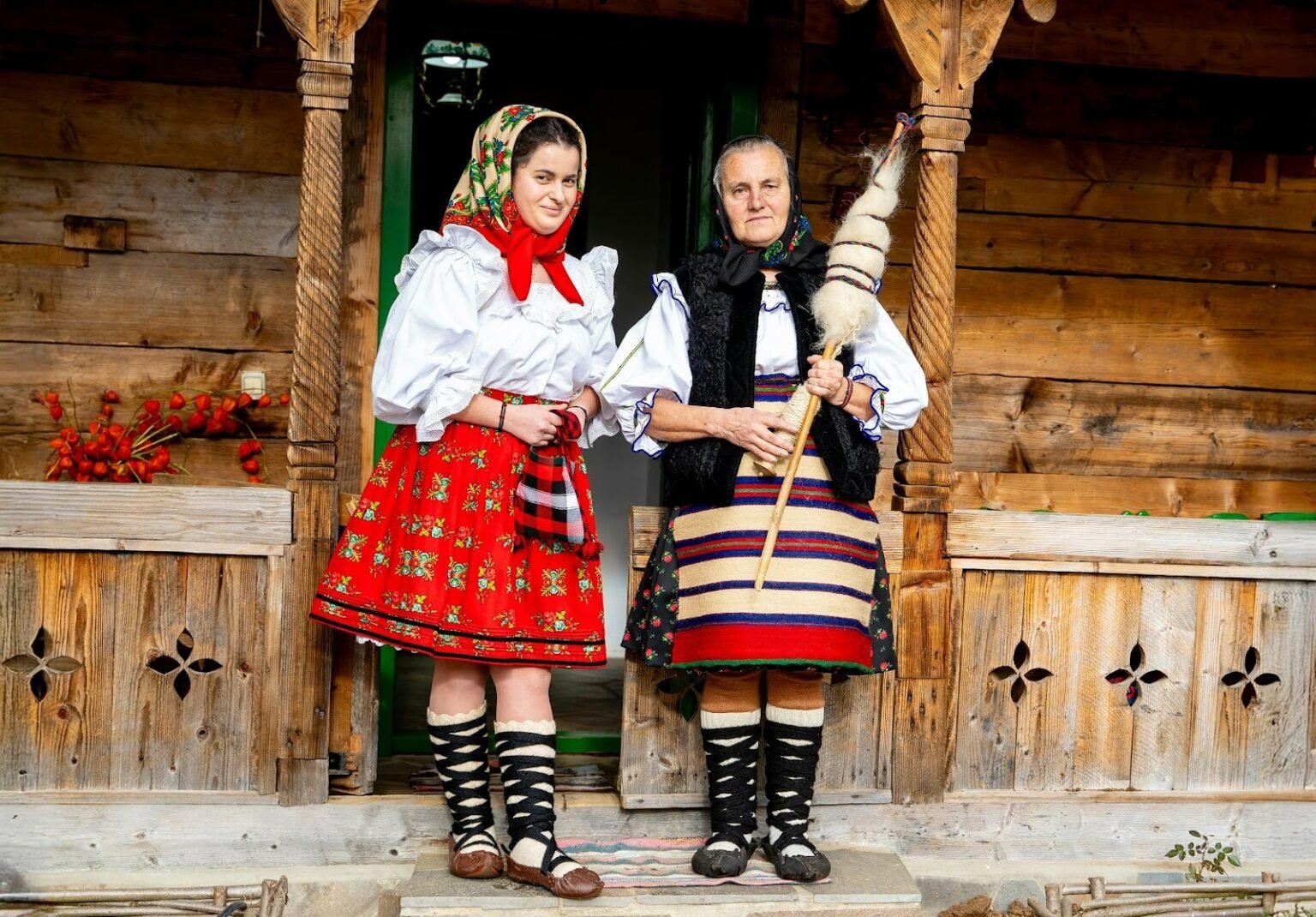
In rural communities, Romanian traditional clothing functioned as a visual language, instantly communicating where someone came from, their age, marital status, and social role. Long before written records or modern identifiers, clothing made identity visible.
Every element carried meaning. The cut of a shirt, the embroidery, the colors, or the way the head was covered marked life stages such as coming of age, marriage, or mourning. Certain garments were worn only during rituals and celebrations, publicly confirming changes in status. At the same time, these clothes were designed for real work and real environments, shaped by climate and occupation. This blend of practicality and symbolism turned Romanian traditional clothing into a living archive of history, values, and community life.
Regional styles and their signature garments
Romanian traditional clothing varies clearly from one region to another, with each area defined by a small number of key garments.
In Transylvania, the women’s ie (traditional blouse) features the ciupag, a trapezoidal embroidered panel placed below the collar and worked along the fabric folds using an archaic technique. It is paired with catrințe, two wool aprons worn front and back. Decoration is mainly geometric, with added cosmic, animal, and plant symbols that signal regional origin and social status.
In Banat, the defining garment is the opreg, an apron with a woven upper panel and long tassels made of wool or silk, often enriched with gold or silver thread. Worn mainly on ceremonial occasions, it is complemented by elaborate headpieces, sometimes decorated with coins, indicating wealth and prestige.
In Oltenia, women wore either aprons or the vâlnic, a long, wide, pleated skirt reserved for holidays and life events. Strong Balkan and Oriental influences appear in the dense floral embroidery and extensive use of metallic thread. The vâlnic traditionally marked the status of married women.
Muntenia, especially Muscel and Argeș, is known for the fotă, a dark wool apron richly embroidered with silk and metal thread, and the maramă, a fine headscarf made of natural silk (borangic). The local ie stands out through dense, raised embroidery techniques that require advanced craftsmanship.
In Moldova, the shirt is structured around the altiță, a heavily embroidered band on the upper sleeve, separated by a gathered section from the rest of the arm. Below it, vertical decorative rows called râuri define the composition. The striped catrință apron signals age and village origin through color rhythm.


In Bărăgan and Dobrogea, the standard outfit combines a straight-cut shirt with two aprons called pestelci. In Dobrogea, these are strictly geometric and always sewn horizontally, following a rigid aesthetic canon preserved over centuries.
Embroidery, colors, and symbols: what the patterns actually mean
Motifs, colors, and their placement formed a symbolic language that conveyed beliefs and life stages.
In traditional Romanian clothing, geometric patterns are the most common, especially the diamond, a symbol of fertility, growth, and the solar cycle. It appears frequently on garments worn by young women and brides.
The tree of life, expressed through stylized plants or floral forms, represents vitality, continuity, and the link between earth and sky, making it central to ceremonial clothing.
Color reinforced these meanings. Red symbolized life, strength, and protection, which is why it dominates festive and wedding garments. Black and darker shades conveyed maturity, restraint, or mourning, while also emphasizing contrast. Gold and silver threads, used in certain regions, indicated prosperity and social prestige.
Embroidery placement was equally intentional. Dense stitching around the shoulders, chest, cuffs, and hem marked areas considered vulnerable, giving the garment a protective role. Through this combination of pattern, color, and structure, traditional clothing became a readable expression of identity.
Why Romanian traditional clothing still matters today
Romanian traditional clothing still matters because it is not just for decoration, but it carries meaning. For those outside Romania who want a real connection to their roots, shops like A&S Market bring Romanian traditional products closer.
Traditional elements are no longer limited to museums or special occasions. They appear in modern outfits, at cultural events, and sometimes in everyday wear. For many Romanians living abroad, traditional clothing becomes a simple but powerful reminder of where they come from.
In the end, the renewed interest in Romanian traditional clothing is not driven by nostalgia, but by a search for authenticity, where materials, symbols, and craftsmanship give value that goes beyond trends.