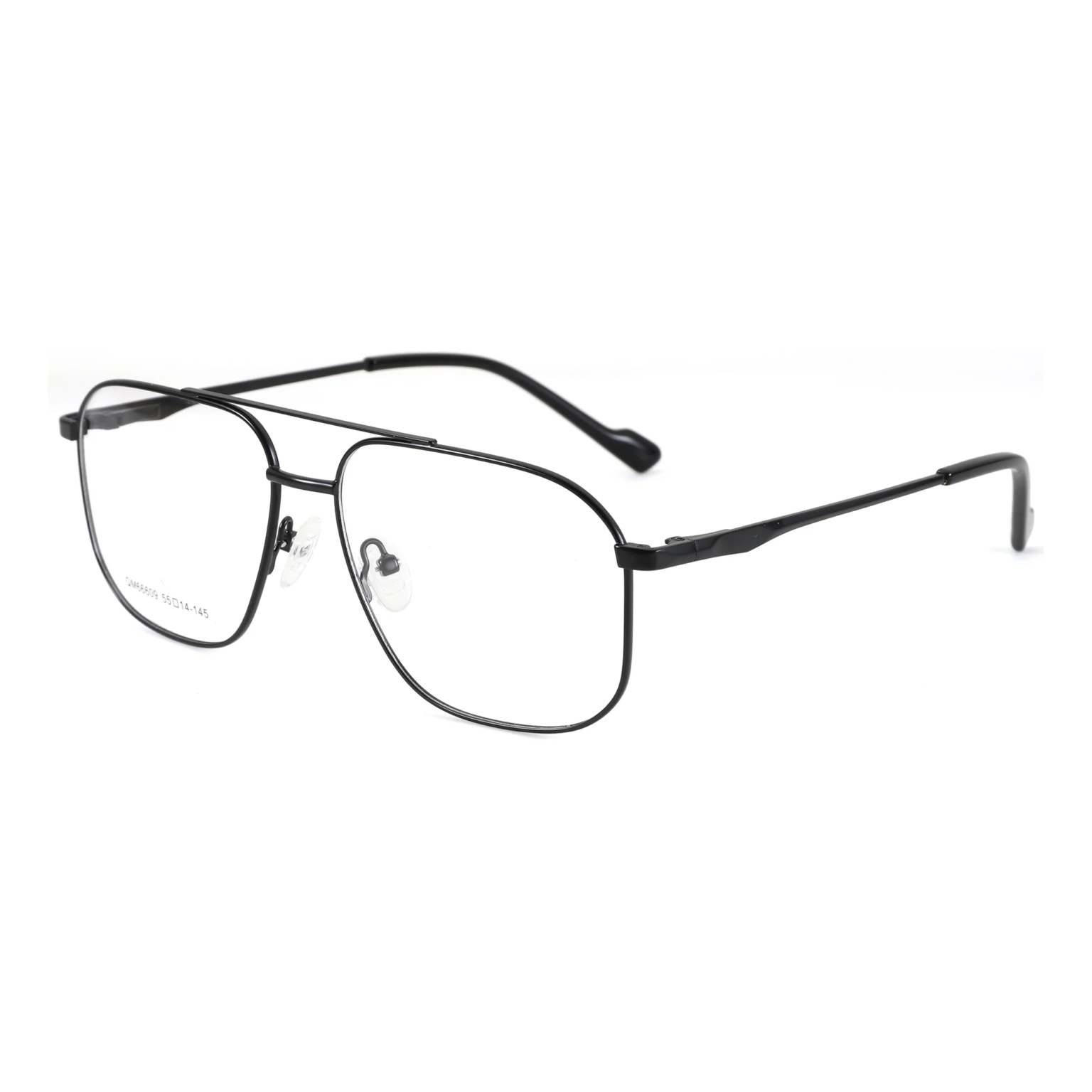
Somewhere in the early forties, print starts moving. A menu that read fine last year now wants to sit at arm’s length, and the phone gets tilted toward a window for better light. The lens inside the eye is gradually losing some of its ability to flex, and that flexing is what once let you shift focus from a road sign to a paperback without thinking about it. Reading glasses solve half of the problem. They sharpen the page and blur everything beyond it, which is why so many people end up with one pair on the desk, one in the car, and a third that is permanently missing. Progressive lenses take a different route. They carry distance, intermediate, and near correction on a single surface, with no visible line and nothing to swap. That convenience comes with a real adaptation period and a fitting process that matters far more than most first-time wearers expect. What follows is a plain account of how these lenses are built, why the measurements are not a formality, and what the first couple of weeks tend to feel like.
One Frame, Three Working Distances
A progressive lens is a single piece of optical material whose power changes gradually from top to bottom. Look through the upper portion and you get your distance correction, the one you need for driving or recognising a face down the hallway. Drop your gaze slightly and the power increases through a transitional zone tuned to arm’s length, roughly where a monitor, a music stand, or a dashboard sits. Look further down, near the bottom of the lens, and you reach the full reading power for small print, stitching, or a phone screen.
The change happens continuously, which is the whole point of the word progressive. Bifocals and trifocals do something comparable, but in steps, and those steps are visible as lines on the lens and felt as a jump in the image when your eyes cross them. Because progressive prescription glasses blend the powers rather than stacking them, the shift reads as smooth movement instead of a switch being flipped. There is no line advertising your age, and no jolt when you glance up from a document to the person across the table. What you trade for that is a lens whose useful zones are arranged vertically, which means your habits have to change slightly to match the geometry.
Inside the Corridor
The blended channel running down the middle of the lens is called the corridor, and understanding it explains nearly every complaint people have about progressives. The corridor is narrow. At reading distance it may be no wider than a few centimetres of clear text, and it tapers as it climbs toward the distance zone. The regions immediately to the left and right of it carry unwanted distortion, sometimes described as soft zones or swim. This is not a defect and not a sign that something was made badly. It is a physical consequence of bending optical power smoothly across a curved surface: a wide reading field and a gentle power transition pull against each other, and every lens design settles that argument somewhere.
Practically, the corridor changes how you aim your eyes. With single-vision lenses you scan a page by moving your eyes alone. With progressives you get noticeably better results by turning your head a little so the corridor stays over whatever you want to read, treating your nose as a pointer. Reading a wide spreadsheet works better with small head movements than with wide eye sweeps. Designs also differ in how they distribute the compromise. Some favour a broader reading area and accept a shorter, steeper corridor; others stretch the corridor over more vertical distance so the transition feels softer but demands a deeper lens. Neither approach is universally better, which is why a conversation with the optician about how you actually spend your day is worth more than a spec sheet.
Why the Measurements Are Not a Formality
A progressive lens only works if the corridor lands in front of your pupil. That sounds obvious, and it is exactly where most disappointing pairs go wrong. The fitting requires the position of each pupil measured separately, since faces are rarely symmetrical, along with the fitting height, which is the vertical position of your pupil within the chosen frame as you naturally hold your head. Get that height a couple of millimetres too low and the reading zone retreats toward the bottom edge, so you find yourself lifting your chin to read. A couple of millimetres too high and the intermediate zone starts intruding on distance vision.
Frame choice feeds directly into this. A shallow lens shape leaves too little vertical room for the power to progress comfortably, so very small or narrow frames tend to be poor candidates unless the lens design is built for them. How the frame sits also counts: the tilt of the front, the curve across the face, and the distance between lens and eye all shift where the corridor projects. This is one reason it helps to select the frame first and take the measurements while it is actually on the face. Ranges such as ZENOTTIC include plenty of shapes with adequate lens depth, but the deciding factor is always how a given frame sits on your own bridge and ears rather than how it looks on a display. If your prescription itself is uncertain or out of date, start with an eye exam; an optometrist should establish the numbers before anyone thinks about lens design.
What the First Two Weeks Feel Like
Most people need somewhere between a few days and two or three weeks to adapt, and the early sensations are consistent enough to predict. Floors can look slightly curved. Doorframes may appear to bow as you walk through them. Stairs deserve genuine caution at first, because looking down at your feet means looking through the reading power, which throws the ground out of focus. Peripheral movement can seem to swim when you turn your head quickly. These effects fade as the visual system learns which part of the lens serves which task, and that learning happens faster with consistent wear than with cautious part-time use.



A few adjustments shorten the process:
- Wear the new pair full time from the first morning instead of alternating with old glasses, which gives your brain a single consistent set of cues to adapt to.
- Point your nose at what you want to see, moving your head rather than sweeping your eyes sideways.
- Take the stairs slowly for the first few days, and tip your head down rather than only your eyes.
- Sit at your usual desk with your usual screen height, since the intermediate zone was fitted for that posture.
If discomfort persists past a couple of weeks, or if the reading zone never seems to arrive where you look, go back to the dispenser rather than pushing through. Frames slip and settle, and a small adjustment to tilt or nose pads can move the corridor back where it belongs. Occasionally the fitting height genuinely needs remaking, and a reputable optician will check that before assuming you simply cannot adapt.
Who Gets the Most Out of Them
The clearest candidates are people with presbyopia who also need distance correction. Wearing contacts or single-vision glasses for distance while balancing readers on top of them is a daily nuisance that progressives remove entirely. The second group is anyone whose work moves constantly between depths: a nurse reading a chart then looking down a corridor, a teacher glancing from notes to the back row, a mechanic switching between a manual and an engine bay. Every one of those transitions is a pair of glasses going on or coming off, and that adds up.
Progressives are less compelling for people who spend nearly all day at one fixed distance. Someone editing text for eight hours may be better served by a dedicated task lens with a wide, undistorted intermediate zone, kept alongside a progressive pair for everything else. People with strong prescriptions, significant astigmatism, or notable differences between the two eyes can still wear progressives successfully, but the fitting tolerances tighten and the design choice matters more. That is a discussion for an eye care professional who can see your measurements, not something to settle from a chart.
Where Convenience Meets Careful Fitting
Progressive lenses solve a specific, ordinary problem: the eye’s shrinking focusing range, and the pile of single-purpose glasses that grows to compensate. They do it by putting distance, intermediate, and reading power on one uninterrupted surface, connected by a narrow corridor that rewards a small change in habit. Turn your head toward what you want to see, give the first two weeks honest full-time wear, and the lens stops announcing itself. The part most worth taking seriously is the fitting. Accurate pupil positions, a sensible fitting height, and a frame with enough depth to hold the progression are what separate a pair you forget about from a pair that lives in a drawer. Begin with a current prescription from a proper eye exam, describe your working distances to whoever dispenses the lenses, and return for adjustment if something feels off. Handled that way, one frame really does cover the whole day.