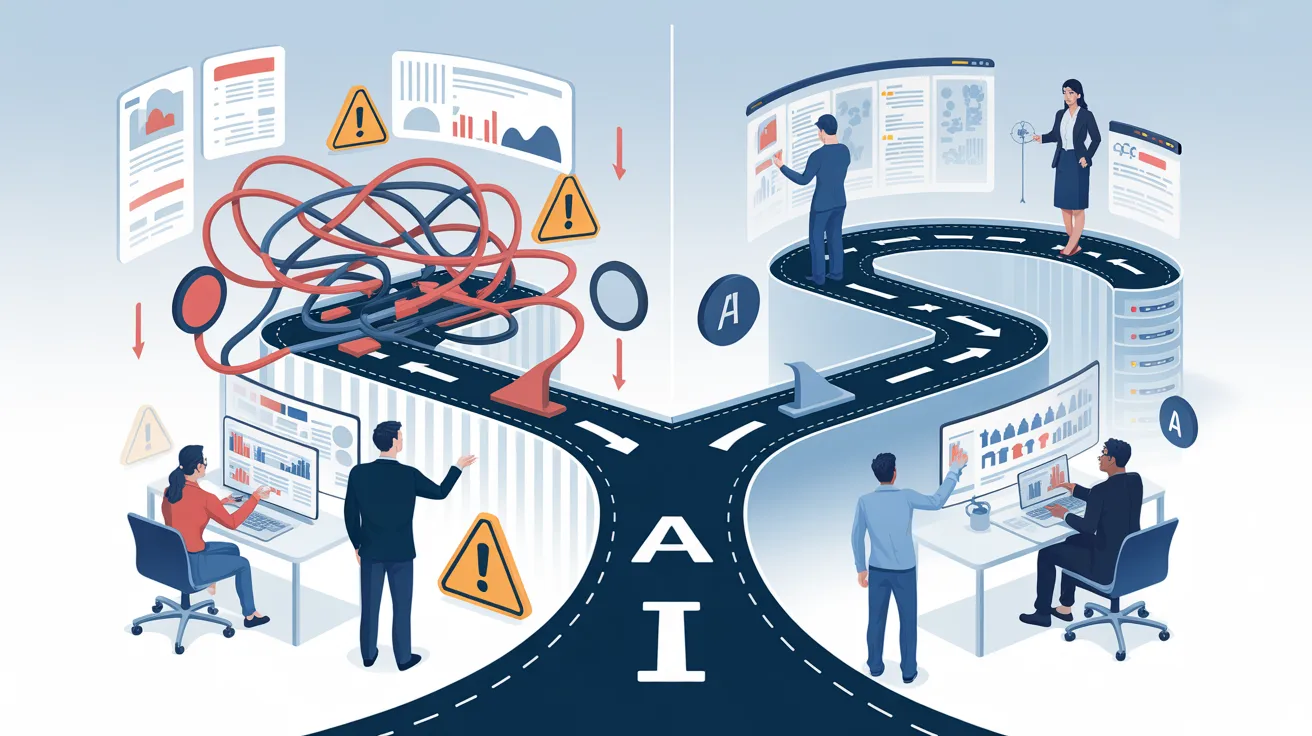
AI adoption is no longer blocked by ambition. It is blocked by execution. Enterprises talk scale while pipelines collapse. Models train but never ship. Compliance teams stall progress. This is where artificial development agencies stop being optional and start acting as operational infrastructure. In the current market, AI failure is rarely about algorithms. It is about fractured ownership, immature data, and zero production discipline. Artificial development companies exist to close that gap with engineering rigor, not hype.
- The Strategy-to-Execution Gap Is the Real Enemy
- Data Readiness Is Worse Than Companies Admit
- Talent Shortages Are Structural, Not Temporary
- MLOps Is Where Most AI Projects Quietly Die
- Security, Compliance, and AI Governance Cannot Be Bolted On
- Why Speed Without Structure Is a Liability
- The Competitive Reality
The Strategy-to-Execution Gap Is the Real Enemy
Most AI initiatives fail before code is written. Leadership buys outcomes while teams deliver experiments. Product managers speak ROI. Data scientists speak accuracy. No one owns deployment. This disconnect kills timelines and budgets fast.
Artificial development agencies step in with cross-functional accountability. Strategy, architecture, data pipelines, and deployment live under one roof. The result is alignment that internal teams struggle to sustain under quarterly pressure. This is not an advisory theater. This is delivery ownership.
Data Readiness Is Worse Than Companies Admit
AI systems do not fail because models are weak. They fail because data is fragmented, biased, ungoverned, or inaccessible. Legacy databases. Inconsistent schemas. Missing audit trails. Security teams blocking access at the worst moment.
Experienced agencies rebuild data foundations before touching models. Data normalization, pipeline orchestration, and governance frameworks come first. That discipline prevents silent model decay and regulatory exposure later. Internal teams often skip this step. Agencies do not.
Talent Shortages Are Structural, Not Temporary
Hiring AI talent in the U.S. market is expensive and slow. Senior ML engineers command $180,000+ USD salaries. Retention is unstable. Institutional knowledge walks out every 18 months.
Artificial development agencies replace fragile hiring strategies with elastic expertise. Architects, ML engineers, MLOps specialists, and security leads arrive as a unit. No onboarding drag. No knowledge silos. This model scales faster and de-risks delivery when timelines matter.
MLOps Is Where Most AI Projects Quietly Die
Training a model is easy. Maintaining it is brutal. Drift detection. Model versioning. Rollbacks. Monitoring. Cost controls. This is where proofs of concept go to die.



Agencies operationalize AI through MLOps pipelines built for production reality. CI/CD for models. Automated testing. Performance monitoring tied to business KPIs. Internal teams rarely prioritize this until systems fail. Agencies build it from day one.
Security, Compliance, and AI Governance Cannot Be Bolted On
Regulated industries feel this pain hardest. Healthcare. Finance. Enterprise SaaS. One compliance miss can shut down an entire AI roadmap.
Artificial development agencies design AI governance frameworks alongside development. Audit logs. Explainability layers. Access controls. Model documentation aligned with SOC 2, HIPAA, and emerging AI regulations. This prevents last-minute legal fire drills that kill launches.
Why Speed Without Structure Is a Liability
Shipping fast without architecture creates technical debt that compounds. AI systems amplify that debt because models degrade silently. What works in month one breaks by month six.
Agencies bring battle-tested architectures that survive scale. Cloud cost controls. Modular pipelines. Vendor-agnostic tooling. This is how AI systems stay profitable instead of becoming sunk costs.
The Competitive Reality
Companies that treat AI as an internal science project fall behind. Those that partner strategically ship faster, safer, and with measurable ROI. Artificial development agencies convert AI from experimentation into durable infrastructure. That shift determines who leads and who explains missed forecasts.
AI adoption is not about believing in the technology anymore. It is about executing it without self-inflicted damage. The market has moved. The winners already understand why artificial development agencies are now central to serious AI deployment.