Picture this: you’ve just been cleared to begin recovery exercises after a knee injury, but your next physical therapy appointment is two weeks away. You’re left at home with a printed sheet of generic exercises, no feedback on whether your form is correct, and no way to know if you’re pushing too hard or not enough. This frustrating gap between clinical visits is something millions of people face every year.
- The Evolution of Home Fitness: Embracing the Gym at Home
- Defining the Smart Home Gym: Technology at Your Fingertips
- AI-Powered Workouts: Tailoring Exercises for Safe Rehabilitation
- Controlled Resistance Training: Precision in Recovery Workouts
- Fitness Tracking: Data-Driven Insights for Rehabilitation Progress
- A Practical Guide: Steps to Achieve Safe Rehabilitation with Your Home Gym
- Step 1: Initial Assessment and Goal Setting
- Step 2: Selecting Smart Home Gym Equipment
- Step 3: Customizing AI-Powered Workout Plans
- Step 4: Executing Controlled Resistance Training Safely
- Step 5: Monitoring and Adjusting with Fitness Tracking
- Why Fitness Enthusiasts Need Smart Home Gym Technology
- Smart Technology: Your Path to Recovery at Home
The demand for safe, guided rehabilitation outside traditional clinical settings has never been greater. Whether recovering from surgery, a sports injury, or chronic pain, people need consistent support that a weekly clinic visit simply cannot provide. That’s where the smart home gym steps in as a genuine game-changer. By combining AI-powered workouts, controlled resistance training, and real-time fitness tracking, today’s home fitness technology can replicate and even enhance the rehabilitation experience. This article explores how embracing these innovations transforms your home into a safe, intelligent recovery space — putting you firmly in control of your healing journey.
The Evolution of Home Fitness: Embracing the Gym at Home
Not long ago, working out at home meant a dusty treadmill in the corner and a set of mismatched dumbbells. For anyone recovering from an injury, these tools offered little more than guesswork. Traditional home workouts lacked the structure, feedback, and progressive design that rehabilitation genuinely requires — leaving users vulnerable to re-injury or stalled recovery. The gap between clinical care and home exercise was wide and, for many, discouraging. Today, that landscape has shifted dramatically. The modern gym at home is no longer a compromise; it’s a sophisticated, connected ecosystem. Smart devices now communicate with apps, track biomechanical data, and respond to your body’s changing needs in real time. For those in recovery, this evolution is particularly meaningful. A gym at home powered by intelligent technology means consistent, guided training between clinical visits — bridging the care gap and making safe, effective rehabilitation genuinely accessible every single day.
Defining the Smart Home Gym: Technology at Your Fingertips
A smart home gym is more than a collection of exercise equipment — it’s an interconnected system where sensors, software, and adaptive hardware work together to guide your training. At its core, this ecosystem typically includes motion-capture sensors, Bluetooth-enabled resistance devices, wearable monitors, and cloud-connected apps that process everything in real time. Fitness tracking sits at the heart of this setup, continuously measuring metrics like heart rate, movement quality, and muscle activation to build a precise picture of your physical state. What makes this genuinely valuable for rehabilitation is the customization layer. These systems don’t deliver one-size-fits-all routines; they adapt based on your input data, daily performance, and recovery milestones. If your range of motion improves, the system responds by incrementally advancing your program. If fatigue signals spike, it dials intensity back. For someone navigating injury recovery, this kind of responsive, data-informed guidance transforms a home workout space into a clinically thoughtful environment — one that supports healing intelligently rather than leaving progress to chance.
AI-Powered Workouts: Tailoring Exercises for Safe Rehabilitation
Artificial intelligence has fundamentally changed what personalized exercise guidance looks like outside a clinical setting. Rather than following a static routine printed on paper, AI-powered workouts analyze your specific injury profile, movement history, and daily performance data to build a program that evolves with you. When you begin a session, the system isn’t just playing a video — it’s actively processing your inputs and adjusting variables like repetition count, range of motion targets, and rest intervals based on how your body is responding right now.
One of the most critical functions AI serves in rehabilitation is re-injury prevention. By continuously monitoring form through motion sensors or camera-based tracking, these systems detect compensatory movements — the subtle shifts people make to avoid pain — that often lead to secondary injuries. When the algorithm identifies a problematic pattern, it intervenes immediately with corrective cues rather than waiting for damage to accumulate. This real-time oversight mirrors what a skilled physical therapist provides in a clinic, except it’s available every single session at home.
Practical applications of this technology are already widespread. Platforms using computer vision can assess joint angles during exercises like squats or shoulder raises, flagging deviations before they become harmful. Others integrate wearable data to detect fatigue-related form breakdown and automatically reduce load. Equipment from brands like AEKE, which pairs adaptive resistance hardware with AI-driven programming, exemplifies how this technology is being purpose-built for exactly these kinds of recovery scenarios. For fitness enthusiasts navigating recovery, AI-powered workouts deliver something traditional home exercise never could: a program that genuinely responds to your body’s condition, making safe progression the default rather than the exception.
Controlled Resistance Training: Precision in Recovery Workouts
When recovering from an injury, not all resistance is created equal. Controlled resistance training refers to exercise where the load, speed, and range of motion are precisely regulated throughout every phase of movement — both the exertion and the return. This precision is what separates rehabilitation-grade training from general fitness work. For someone recovering from a torn ligament or post-surgical weakness, the ability to apply exactly the right amount of force without exceeding tissue tolerance is the difference between healing and setback.

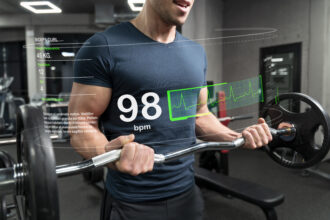

Smart home gym equipment has made this level of control genuinely accessible outside clinical walls. Devices using electromagnetic or servo-based resistance can adjust tension mid-repetition, providing consistent load regardless of your movement speed. This eliminates the momentum-driven spikes that free weights produce — spikes that can stress vulnerable joints before surrounding muscles are strong enough to protect them. The result is a smoother, safer stimulus that encourages tissue remodeling without triggering inflammation or pain flares.
The progressive nature of controlled resistance training is equally important. Recovery isn’t linear, and your equipment shouldn’t assume it is. Smart resistance systems track your output session by session, incrementally increasing challenge only when your performance data confirms readiness. This targeted, gradual progression rebuilds strength in the specific muscles supporting an injured area, reducing compensatory loading on surrounding structures and accelerating functional recovery with far less risk of re-injury.
Fitness Tracking: Data-Driven Insights for Rehabilitation Progress
Recovery is invisible without measurement. Fitness tracking transforms subjective feelings — “my knee feels better today” — into objective, actionable data that both you and your healthcare provider can actually use. Modern tracking systems continuously monitor metrics directly relevant to rehabilitation: joint range of motion, muscle activation symmetry, session-by-session strength output, heart rate recovery, and movement quality scores. This creates a longitudinal record of your progress that no memory or paper log could replicate. When a physical therapist reviews your tracked data remotely, they can make informed adjustments to your program without waiting for your next in-person appointment. For you, seeing measurable improvement week over week provides the motivation to stay consistent through the difficult middle stages of recovery. Critically, fitness tracking also functions as an early warning system — flagging performance dips or asymmetries that signal potential setbacks before they escalate into re-injury. Data-driven rehabilitation removes the guesswork that makes home recovery so risky, replacing it with clarity and confidence.
A Practical Guide: Steps to Achieve Safe Rehabilitation with Your Home Gym
Turning your home into a genuine rehabilitation environment requires more than purchasing smart equipment — it demands a deliberate, sequenced approach that prioritizes safety at every stage. The following steps translate the technology discussed above into a concrete recovery framework, helping you move from injury to restored function with confidence and clinical-grade structure.
Step 1: Initial Assessment and Goal Setting
Before touching any equipment, consult your physician or physical therapist to establish a clear picture of your injury, current limitations, and realistic recovery timeline. Use this conversation to define specific, measurable rehabilitation objectives — such as restoring 90% range of motion within eight weeks — that your smart system can track against.
Step 2: Selecting Smart Home Gym Equipment
Choose devices that combine AI-driven programming with controlled resistance capabilities and integrated fitness tracking. Prioritize equipment offering real-time form feedback, adjustable resistance precision, and compatibility with health apps your care provider can access remotely. Connectivity and adaptability matter more than raw feature count.
Step 3: Customizing AI-Powered Workout Plans
Input your injury profile, assessed baseline metrics, and recovery goals directly into the platform. Allow the AI to generate your initial program, then review it against your clinician’s guidelines. Update your data after each session so the algorithm continuously refines exercise selection, volume, and intensity to match your actual progress.
Step 4: Executing Controlled Resistance Training Safely
Begin every session within your prescribed range of motion, using the equipment’s resistance controls to stay well below your pain threshold. Focus on slow, deliberate movement through both the working and return phases. When the system flags a form deviation, stop and correct immediately rather than pushing through — proper mechanics always take priority over completing repetitions.
Step 5: Monitoring and Adjusting with Fitness Tracking
Review your tracked metrics after each session, watching for asymmetries, performance plateaus, or unexpected fatigue spikes. Share weekly data summaries with your healthcare provider so they can validate progression or recommend program modifications remotely, keeping your recovery on course without requiring constant in-person visits.
Why Fitness Enthusiasts Need Smart Home Gym Technology
For fitness enthusiasts, injury isn’t just a physical setback — it’s a disruption to identity, routine, and long-term performance goals. Smart home gym technology directly addresses this reality by delivering the two things recovering athletes need most: innovative tools that match their commitment level, and a genuinely safe training environment that doesn’t force a choice between progress and protection. AI-powered workouts keep training purposeful and adaptive, controlled resistance eliminates the guesswork that causes setbacks, and fitness tracking provides the objective evidence that recovery is actually moving forward. Together, these technologies don’t just support rehabilitation — they sustain the active lifestyle that defines a fitness enthusiast, making a full, confident return to peak performance not just possible, but measurable.
Smart Technology: Your Path to Recovery at Home
Smart home gym technology has fundamentally redefined what safe, effective rehabilitation looks like outside a clinical setting. AI-powered workouts remove the guesswork by delivering adaptive, personalized programs that respond to your body’s condition in real time. Controlled resistance training provides the precision that vulnerable, healing tissue demands — progressing only when your data confirms readiness. Fitness tracking ties everything together, converting subjective feelings into objective evidence that guides both your decisions and your care provider’s recommendations. For fitness enthusiasts, these aren’t just convenient tools — they’re the infrastructure for reclaiming performance without compromising safety.
The future of home-based recovery is already here, and it’s only growing more sophisticated. As AI algorithms become sharper, wearable sensors more accurate, and remote care integration more seamless, the gap between clinical rehabilitation and home training will continue to narrow. If you’re navigating injury recovery or simply want a safer, smarter approach to training, now is the time to explore what today’s smart home gym technology can do for you. Your recovery doesn’t have to wait for the next appointment — it can start today, in your own space, guided by tools built to help you heal well.