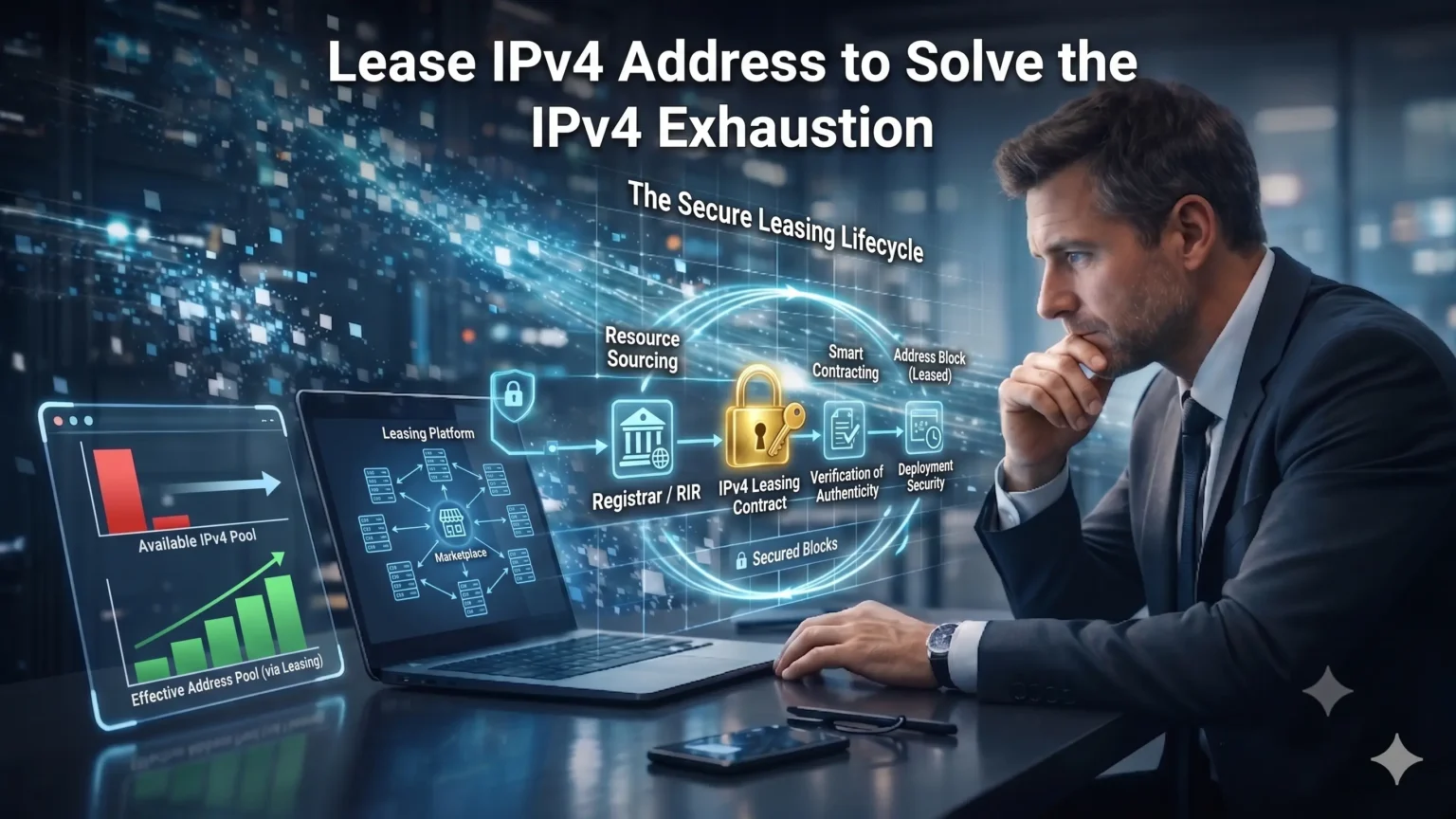
Every serious digital business depends on stability. Not just fast servers. Not just clean dashboards. Stability. The kind that customers never notice because everything simply works.
Behind that smooth experience sits one of the most important, and often underestimated, parts of internet infrastructure: IP addressing. More specifically, IPv4. Even as the industry continues to talk about IPv6 adoption, IPv4 remains deeply embedded in the way companies operate, connect, authenticate, secure, and deliver services. For many businesses, IPv4 is not just a technical resource. It is part of their digital identity.
That is exactly where LARUS One becomes highly relevant.
The concept of IPv4 Continuity Assurance is built around a simple but powerful idea: businesses should be able to maintain stable network identity without being exposed to unnecessary disruption, lock-in, or operational uncertainty. In practice, this means protecting the continuity of IPv4 resources so that organizations can keep serving customers, partners, and internal systems with confidence.
It sounds technical. But the business impact is very real.
When a company changes infrastructure providers, moves workloads, expands into a new region, or restructures its network, IPv4 continuity can become a serious issue. IP changes may trigger access problems. Firewalls need updates. Security teams must review permissions. SaaS platforms may require revalidation. Partners may have to whitelist new ranges. Customers might experience failed connections, blocked access, or service interruptions.
A small IP change can create a large business problem.
LARUS One addresses this challenge by helping organizations treat IPv4 continuity as a strategic layer of infrastructure planning. Instead of viewing IPv4 addresses as temporary technical assignments, companies can approach them as stable assets that support operational trust. This is a more mature way to think about digital infrastructure. It reflects how modern businesses actually work.


Because today, reputation follows the network.
An IPv4 address can carry history. It may be tied to uptime records, email reputation, payment systems, API access, hosting environments, fraud controls, enterprise tools, and compliance frameworks. Over time, that address space becomes familiar to systems and trusted by partners. Losing that continuity can mean more than changing a number. It can mean rebuilding trust from scratch.
That is why IPv4 Continuity Assurance matters.
With LARUS One, businesses gain a stronger path toward predictable operations. They can reduce the risk of sudden renumbering. They can plan provider transitions with more control. They can protect customer-facing services from unnecessary technical turbulence. For organizations running critical applications, this kind of assurance is not a luxury. It is part of responsible infrastructure management.
There is also a financial side to this.
Downtime is expensive. Delayed migrations are expensive. Security reviews are expensive. Support tickets, lost productivity, broken integrations, and emergency engineering work all carry real costs. A company may choose a cheaper infrastructure provider, but if the move causes IPv4 disruption, the total cost can quickly rise far beyond the expected savings.
This is where LARUS One brings clarity. It helps businesses see IPv4 continuity not as a hidden technical detail, but as a measurable business value. The goal is not only to keep services online. The goal is to protect momentum.
That distinction is important.
A company with strong continuity can make decisions faster. It can expand without hesitation. It can negotiate with providers from a stronger position. It can reduce the fear of migration. It can modernize infrastructure without putting its trusted network presence at risk. In a competitive market, that flexibility becomes an advantage.
For service providers, LARUS One also creates a more valuable relationship with customers. Instead of selling only bandwidth, hosting, or connectivity, providers can support long-term continuity. They can help customers protect the IPv4 identity that keeps their business moving. This opens the door to premium service models, stronger retention, and deeper trust between provider and customer.
And trust is what infrastructure is really about.
Most customers do not want to think about IP address continuity every day. They simply want their services to remain reachable. They want their applications to behave normally. They want their integrations to keep working. They want confidence that growth, migration, or provider changes will not create chaos behind the scenes.
IPv4 Continuity Assurance supports that confidence.
The internet may be changing, but IPv4 is still essential for countless systems around the world. Businesses that depend on it need more than availability. They need continuity, control, and a clear strategy for the future. LARUS One responds to that need by giving IPv4 a stronger role in modern infrastructure planning.
In the end, the value of LARUS One is not only technical. It is operational. It is financial. It is strategic.
It helps companies protect their network identity, reduce disruption, and move forward without losing the trust they have already built. For any organization that depends on stable connectivity, customer access, and reliable digital operations, IPv4 Continuity Assurance is no longer just a technical concept.
It is a business necessity.