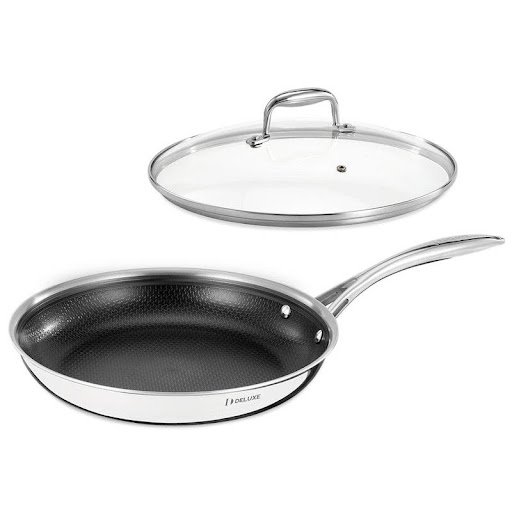
Moving into a new home is thrilling, but setting up your first kitchen can feel overwhelming. Between unpacking boxes and figuring out where everything goes, you’re faced with dozens of decisions about which cookware actually deserves space in your cabinets. Here’s the truth: you don’t need a dozen specialized pans to cook great meals. What you need is one versatile workhorse that handles everything from weeknight dinners to weekend experiments — and that’s where the stir fry pan comes in.
- Why a Stir Fry Pan is Your New Kitchen’s MVP
- Key Features of Quality Cookware for Your First Kitchen
- Comparing Your Options: Stir Fry Pans vs. Other Frying Pans
- Step-by-Step Guide to Choosing Your Essential Stir Fry Pan
- Step 1: Assess Your Cooking Style and Stove Type
- Step 2: Set Your Budget for Quality Cookware
- Step 3: Evaluate Brands and Read Reviews
- Exploring Delivery Options for Your New Cookware
- Online Retailers: Speed and Convenience
- Local Stores with Curbside or In-Home Delivery
- What to Look for in Shipping Policies
- Caring for Your Investment: Maintenance Tips
- Start Cooking in Your New Home Today
A quality stir fry pan serves as the foundation of a well-equipped kitchen, capable of tackling far more than its name suggests. But for new homeowners eager to start cooking, two challenges stand out: choosing the right pan from an overwhelming market, and getting it delivered fast enough to actually use it before resorting to another night of takeout. This guide walks you through both — helping you select the ideal stir fry pan for your needs and navigate delivery options that get it into your hands quickly, so you can start building your culinary confidence from day one.
Why a Stir Fry Pan is Your New Kitchen’s MVP
Think of a stir fry pan as your kitchen’s Swiss Army knife. While the name suggests it’s limited to tossing vegetables over high heat, this pan quietly excels at searing steaks, sautéing garlic and onions for pasta sauce, wilting greens, and even steaming dumplings with a simple lid addition. Its wide, gently sloped sides give you ample cooking surface while making it easy to flip and move food without launching ingredients onto your stovetop.
For new homeowners juggling unpacking schedules and work commitments, the stir fry pan earns its place because it supports fast, healthy cooking. Most stir fry meals come together in under fifteen minutes, requiring minimal oil and maximum fresh ingredients — exactly the kind of eating that keeps energy high during a hectic move-in period. Compare this to a standard flat-bottomed skillet, which lacks the depth for tossing, or a deep saucepan that doesn’t offer enough surface area for proper browning. The stir fry pan bridges that gap, giving you both space and depth in a single piece of cookware. Rather than cluttering your cabinets with multiple pans you’ll rarely reach for, investing in one quality stir fry pan gives you a foundational tool that grows with your cooking skills for years to come.
Key Features of Quality Cookware for Your First Kitchen
Not all stir fry pans perform equally, and understanding what separates a reliable pan from a disappointing one saves you from buyer’s remorse. Before you click “add to cart,” focus on the features that directly affect how your food cooks and how long your pan lasts.
Material Matters: From Carbon Steel to Non-Stick
Carbon steel is the traditional choice for stir fry pans — it’s lightweight, heats up rapidly, and develops a natural non-stick patina over time with proper seasoning. It responds instantly to temperature changes, giving you precise control during high-heat cooking. The trade-off is that it requires regular maintenance and can rust if neglected. Stainless steel offers exceptional durability and dishwasher-safe convenience, though food tends to stick without adequate oil or technique. Cast iron delivers unmatched heat retention for searing, but its weight makes tossing food impractical for most home cooks. Non-stick coated pans provide the easiest cleanup and require the least oil, making them beginner-friendly — however, they typically don’t tolerate the extreme heat that authentic stir frying demands, and coatings degrade over time. For new homeowners who want a balance of performance and low maintenance, carbon steel or a high-quality non-stick with reinforced coating are your strongest starting points.
Size, Shape, and Handle Design
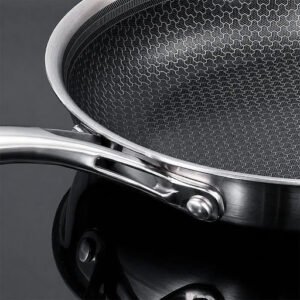
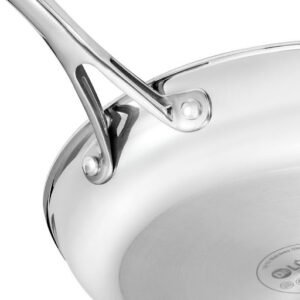
A diameter between 12 and 14 inches works best for most home stoves, providing enough room to cook two to four servings without overcrowding ingredients. The sloped sides are what define a stir fry pan’s usefulness — they create a natural ramp for flipping food and allow you to push cooked items up the sides while new ingredients hit the hot center. Depth matters too; look for at least three inches to contain sauces and tossed ingredients comfortably. Handle design often gets overlooked, but it directly impacts safety and comfort. A long, stay-cool handle keeps your hand away from heat, while a helper handle on the opposite side gives you stability when lifting a full pan. If you plan to finish dishes in the oven, confirm the handle material is oven-safe. Riveted handles generally offer more security than welded ones, and an ergonomic grip reduces wrist fatigue during active cooking sessions.



Comparing Your Options: Stir Fry Pans vs. Other Frying Pans
When you’re standing in the cookware aisle — or scrolling through endless product pages — the differences between pan types can blur together. Understanding what sets a stir fry pan apart from its cousins helps you spend wisely rather than accumulating redundant pieces. A traditional wok features a rounded bottom designed for commercial gas burners with intense, concentrated heat. On a flat home stovetop, a wok loses much of its advantage because only a small area makes contact with the heat source, creating uneven cooking. A stir fry pan solves this by offering a flat bottom wide enough for full burner contact while retaining those characteristic sloped walls that facilitate tossing and stirring.
A standard skillet gives you a flat cooking surface with short, slightly angled sides — excellent for pancakes, eggs, and shallow frying, but too restrictive for moving food quickly or containing sauces. A sauté pan, with its straight vertical sides and lid, excels at braising and cooking in liquid but feels boxy when you need to flip ingredients rapidly. The stir fry pan occupies the sweet spot between these designs: enough depth to hold generous portions and sauces, enough slope to move food freely, and enough flat surface to achieve proper browning. For a new homeowner making their first cookware investment, this versatility means fewer pans needed overall and less cabinet space consumed — a practical win when you’re still organizing your kitchen.
Step-by-Step Guide to Choosing Your Essential Stir Fry Pan
Knowing what features matter is one thing — narrowing down your actual purchase is another. This straightforward process eliminates guesswork and gets you to a confident decision faster.
Step 1: Assess Your Cooking Style and Stove Type
Start by honestly evaluating how you’ll use the pan. If you cook daily and enjoy high-heat techniques, carbon steel rewards that commitment. If you’re more of a twice-a-week cook who values easy cleanup, non-stick makes sense. Next, check your stove. Gas burners work with virtually any pan material, but induction cooktops require magnetic-compatible metals — meaning you’ll need to confirm the pan is induction-ready before buying. Electric coil and glass-top stoves favor flat-bottomed pans with even weight distribution to prevent wobbling and hot spots. Match the pan to your reality, not an aspirational cooking fantasy.
Step 2: Set Your Budget for Quality Cookware
Treat your stir fry pan as a long-term investment rather than a disposable purchase. Budget options might save money upfront but often warp, lose their coating, or conduct heat unevenly within months. Allocating a mid-range budget typically lands you a pan built with thicker gauge metal, better handle construction, and materials that perform consistently over years of regular use. Think cost-per-use rather than sticker price — a durable pan used three times weekly for five years costs pennies per meal.
Step 3: Evaluate Brands and Read Reviews
Focus your research on brands with established reputations in the specific material you’ve chosen. A company known for excellent non-stick may not produce the best carbon steel, and vice versa. Brands like Deluxe Cookware and other established manufacturers often provide detailed specifications that help you match a pan to your stove type and cooking habits. When reading reviews, filter for users who describe stir frying specifically — comments about heat responsiveness, food release at high temperatures, and handle comfort during tossing are more relevant than general praise. Look for patterns across multiple reviews rather than fixating on single outliers, and pay attention to how the manufacturer handles warranty claims, which signals their confidence in the product’s durability.
Exploring Delivery Options for Your New Cookware
You’ve identified the perfect stir fry pan — now the challenge shifts to getting it through your door before dinner tonight. For new homeowners surrounded by empty kitchen drawers, speed matters as much as selection.
Online Retailers: Speed and Convenience
Major platforms like Amazon offer same-day or next-day delivery in many metropolitan areas, especially for members of premium shipping programs. This makes them ideal when you need cookware immediately without leaving your half-unpacked home. Specialty kitchen retailers such as Williams Sonoma and Sur La Table also provide expedited shipping, often with curated selections that simplify decision-making. Some platforms offer subscription services that bundle cookware with accessories like spatulas and oils, arriving on a schedule you set. Check whether your chosen pan qualifies for the fastest tier before assuming standard delivery applies — heavier items sometimes fall outside express eligibility.
Local Stores with Curbside or In-Home Delivery
Don’t overlook brick-and-mortar options. Department stores and dedicated kitchenware shops frequently offer same-day curbside pickup when you order online, letting you hold the pan in your hands within hours. The added benefit of shopping locally is the ability to feel the weight, test the handle grip, and confirm the size fits your stove before committing. Many local retailers now provide home delivery within a tight radius, sometimes free above a modest purchase threshold.
What to Look for in Shipping Policies
Before finalizing any order, verify the estimated delivery window — “ships in two days” and “arrives in two days” mean very different things. Confirm that cookware ships in protective packaging to prevent dents or coating damage during transit. Review the return policy carefully; a hassle-free return window of at least 30 days gives you time to test the pan under real cooking conditions. Free shipping thresholds often sit just above the price of a single pan, so adding a heat-resistant spatula or bottle of seasoning oil can save you delivery fees entirely.
Caring for Your Investment: Maintenance Tips
Getting your stir fry pan home quickly is only half the equation — keeping it performing well ensures you won’t need a replacement anytime soon. If you chose carbon steel, season it before first use by heating a thin layer of oil until it smokes, then wiping it clean and repeating two or three times. This builds the protective patina that improves with every cook. After each use, wash carbon steel with hot water and a soft sponge — skip the soap, which strips seasoning — and dry it immediately on the burner to prevent rust. For non-stick pans, use wooden or silicone utensils exclusively and wash by hand with mild dish soap to preserve the coating’s integrity. Regardless of material, avoid stacking pans directly on top of each other; slip a cloth or felt liner between them to prevent scratches. Store your pan in an accessible spot rather than burying it behind other cookware — the easier it is to grab, the more you’ll actually use it, and regular use is the best maintenance of all.
Start Cooking in Your New Home Today
Setting up a new kitchen doesn’t require filling every cabinet with specialized cookware you’ll barely touch. A well-chosen stir fry pan serves as the cornerstone of your cooking life, handling everything from quick weeknight vegetables to weekend searing experiments with equal confidence. By focusing on the right material for your habits — whether that’s low-maintenance non-stick or performance-driven carbon steel — and matching the size and handle design to your stove and cooking style, you’ll land on a pan that genuinely earns its place in your kitchen for years.
The selection process becomes straightforward when you approach it methodically: assess your stove compatibility, commit to a budget that prioritizes durability over disposability, and lean on reviews from cooks who actually stir fry. Once you’ve made your choice, fast delivery options abound — from same-day shipping through major online retailers to same-afternoon curbside pickup at local stores. There’s no reason to wait days or weeks to start cooking real meals in your new home. Make the decision, get it delivered, and begin building the kitchen confidence that transforms a house into a home you actually live in.