Building an online course is the work most creators understand. Marketing the course, managing student questions, tracking enrollment and completion rates, following up with students who have gone quiet, sending the right communications at the right points in the student journey: this is the operational work that most course creators significantly underestimate before they launch their first program. The creative work is what drew them to the model. Operational work is what determines whether the business around that creative work is sustainable. Creators who are running successful course businesses in 2026 are almost universally doing so with some level of operational automation, because the volume of student interactions and the complexity of the communication workflows that make a course business work are too high to manage manually without it consuming all of the time that should go to creating.
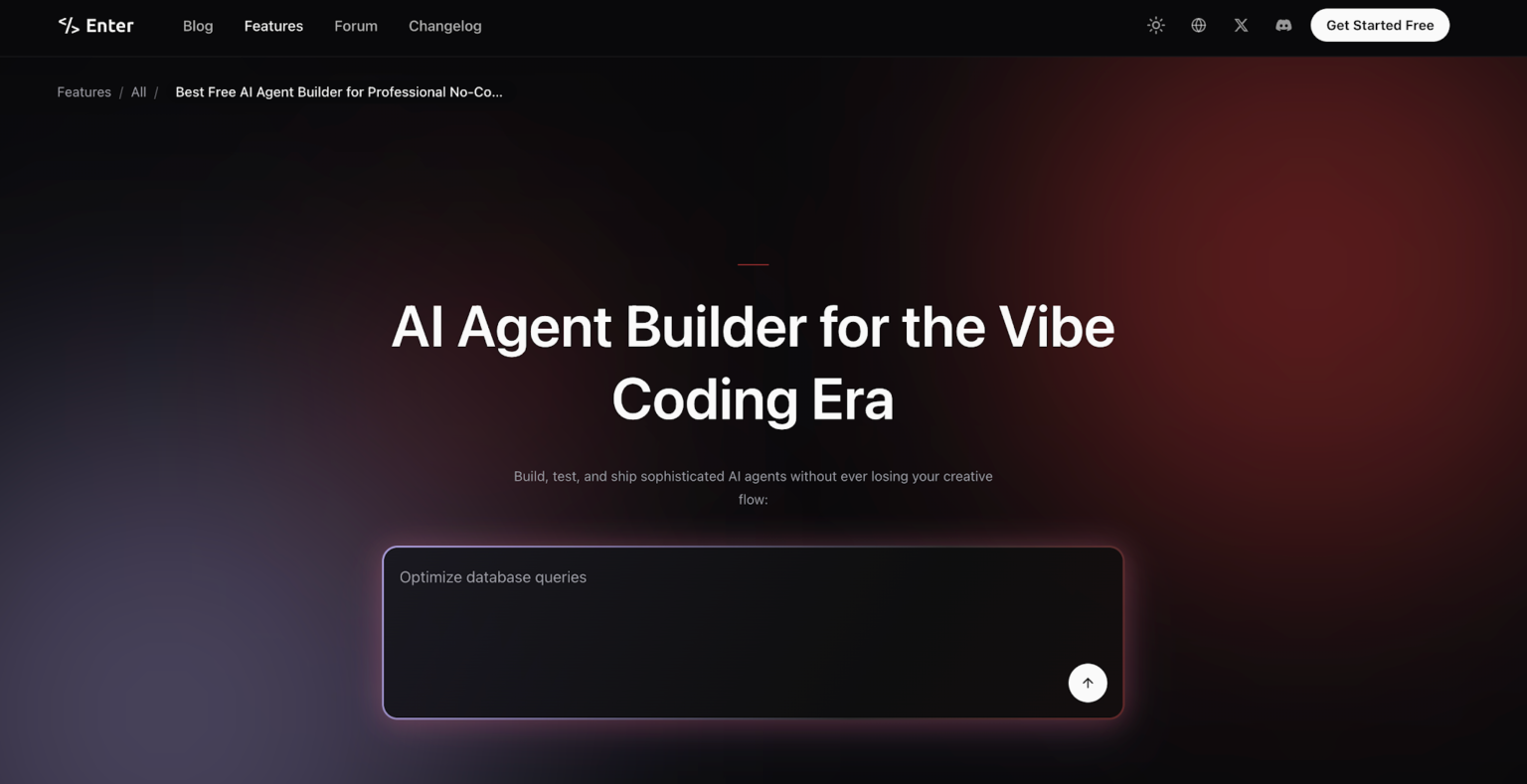
Using an Enter Pro AI agent builder as a course creator can help you handle specific, defined operational tasks automatically, from enrollment onboarding sequences to completion tracking to re-engagement campaigns for students who have stalled. It provides a complete development environment that makes it possible for creators who are not programmers to build these kinds of automated systems. The platform handles the technical infrastructure of building and running intelligent agents, from the backend logic to the deployment and monitoring, leaving the creator to focus on designing workflows that serve their students well. For a creator whose income depends on enrollment numbers, completion rates, and student satisfaction, operational automation is not a back-office efficiency. It is a core part of the product.
The student journey in an online course has several predictable points at which timely communication significantly affects outcomes. The moment of enrollment, when enthusiasm is high and the right welcome experience can set the tone for the entire course. The first few days, when students either establish a learning habit or begin the drift toward becoming one of the people who bought but never started. The mid-course point, which is where completion rates typically drop most sharply. And the post-completion stage, where satisfied students are most likely to leave reviews, refer others, or enroll in the next program if the follow-up is done well.
Enrollment Onboarding That Actually Works
The welcome experience for a new student is one of the highest-leverage communication moments in a course business. A well-designed onboarding sequence that delivers the right information in the right order, builds excitement for the content ahead, and establishes the habits that lead to completion is worth far more than the time it takes to build it.
Most course creators either have no onboarding sequence or use a generic email sequence from their email marketing platform that was not designed with course-specific onboarding in mind. An agent built specifically for onboarding a new student in a specific course can deliver content that reflects the actual structure of the course, the specific habits that lead to success with this material, and the creator’s authentic voice in a way that a generic template cannot.
Using AI code generation, the creator can build the logic that drives this onboarding: what gets sent when, what conditions trigger different paths, and how the sequence adapts based on what the student has and has not engaged with. Enter Pro handles technical construction, so the creator designs the student experience rather than configuring software.
Completion Tracking and Intervention
Completion rates are the metric that honest course creators pay the most attention to and that the course business model generally handles poorly. Students enroll with genuine intentions, and then life intervenes. The course sits in a tab somewhere. The habit never forms. And the creator either does not notice until months later or notices but has no systematic way to respond.
An automated completion tracking agent can monitor student progress through the course, identify the specific point where each student has stalled, and trigger a re-engagement communication that is relevant to where they are in the material rather than a generic reminder. A student who completed module three two weeks ago and has not returned receives a different message than a student who watched the first video and never came back. The specificity of the outreach is what makes it land rather than feel like a bulk email blast.



Review and Referral Generation
Student reviews drive enrollment. Referrals from satisfied students are the highest-quality lead source most course businesses have. Both of these outcomes are most likely to happen in a specific window after a student completes the course, when the satisfaction is fresh, and the value delivered is most clearly in mind.
An automated post-completion sequence can reach students at exactly this window with a request that is specific, easy to fulfill, and framed in a way that reflects the relationship the creator has built with them through the course experience. A well-timed, well-worded review request generates significantly more responses than a generic email sent weeks after completion when the experience has already faded.
Upsell and Next Program Enrollment
For course creators who have multiple programs, the path from completing one course to enrolling in the next is where a significant amount of potential revenue is left uncollected. Students who have completed a program and had a good experience are the warmest possible audience for a next offer, but they are only warm for a limited window before the momentum dissipates.
An automated sequence that recognizes course completion, acknowledges the achievement, and introduces the natural next step in the curriculum at the right moment is more effective than waiting for the student to discover the next program on their own. The timing is the key, and an agent that tracks completion and triggers the follow-up at the optimal moment handles the timing automatically.
Conclusion
Course creators who build operational automation around their programs are not taking shortcuts on the student relationship. They are building systems that serve students more consistently and more attentively than manual management can. The communication that happens automatically because a student hit a specific milestone is more timely and more relevant than the communication that happens when the creator gets around to checking in manually. In a business where student outcomes determine reputation and reputation determines enrollment, that consistency is the foundation of sustainable growth. The tools to build it are accessible to creators without technical backgrounds in 2026, and the creators who use them are building course businesses that run more professionally with less personal operational load.