Contract manufacturers face mounting pressure to deliver complex, high-quality plastic components that meet increasingly demanding specifications. As products grow more sophisticated across industries, traditional single-material molding often falls short—requiring costly secondary assembly, compromising part integrity, or slowing production timelines. These challenges directly impact profitability and competitiveness in a market where precision and speed determine success.
- What is 2K Plastic Injection Molding?
- Why 2K Molding is Ideal for Contract Manufacturing
- Addressing Manufacturer Needs with 2K Technology
- Implementing 2K Molding: A Step-by-Step Guide
- Real-World Applications: From Medical to General Manufacturing
- Strategic Advantages of 2K Molding for Future-Ready Contract Manufacturers
2K plastic injection molding offers a powerful answer to these manufacturing hurdles. By combining two different materials or colors within a single molding cycle, this advanced process eliminates assembly bottlenecks while producing superior multi-material components. Whether the goal is integrating a soft-touch grip onto a rigid housing or combining transparent and opaque sections seamlessly, 2K molding transforms what’s possible in contract manufacturing. This article explores how manufacturers can leverage 2K injection molding technology to achieve better part performance, reduce production costs, and streamline operations—delivering the quality and efficiency that today’s markets demand.
What is 2K Plastic Injection Molding?
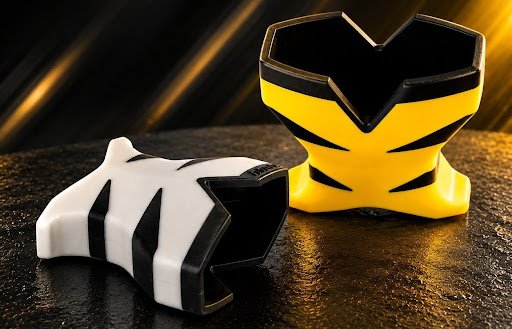
2K plastic injection molding is a specialized manufacturing process that combines two distinct materials or color variants into a single finished part during one production cycle. Unlike conventional single-shot molding, which forms components from one material and often requires secondary bonding or assembly, 2K molding integrates both materials at the molecular level within the mold itself. The process relies on sophisticated multi-material molds engineered with separate cavities or rotating platens, paired with precision machinery equipped with dual injection units.
Each unit delivers its respective material in a carefully timed sequence, ensuring proper adhesion and structural integrity between layers. Originally developed to meet growing demands for multi-functional components, 2K plastic injection molding has evolved significantly over the past two decades. Advances in mold design, material science, and machine control have made the technology more accessible and reliable, positioning it as a cornerstone capability in modern plastic injection molding operations serving diverse industries.
Why 2K Molding is Ideal for Contract Manufacturing
Contract manufacturing thrives on delivering versatile, cost-effective production solutions at scale—and 2K plastic injection molding aligns perfectly with this mission. The technology creates a natural synergy by addressing the core challenges contract manufacturers face when producing complex multi-material components for diverse clients.
The most immediate advantage is the elimination of secondary assembly steps. Traditional approaches require molding individual components separately, then bonding, welding, or mechanically fastening them together. Each additional step introduces labor costs, quality risks, and production delays. With 2K molding, contract manufacturers consolidate what previously required multiple operations into a single automated cycle, dramatically reducing per-part costs while improving consistency across high-volume runs.
Beyond cost savings, 2K molding enhances part functionality in ways single-material approaches cannot match. Combining rigid structural substrates with flexible seals, soft-touch surfaces, or chemically resistant overlays creates components that perform multiple functions without weak points at assembly joints. This capability allows contract manufacturers to offer clients superior products without adding complexity to their production lines.
The process also supports scalable production seamlessly—once tooling is validated, manufacturers can ramp volumes quickly while maintaining tight tolerances and repeatable quality. For plastic injection molding operations seeking competitive differentiation, 2K capability represents a strategic investment that attracts higher-value contracts and strengthens long-term client relationships.



Addressing Manufacturer Needs with 2K Technology
For contract manufacturers, success hinges on two fundamental capabilities: producing components that meet exacting quality standards and doing so at volumes and speeds that satisfy client delivery schedules. 2K plastic injection molding directly addresses both imperatives, offering a technology platform that elevates part performance while simultaneously streamlining the production workflow.
Ensuring High-Quality Plastic Components
2K molding fundamentally improves component quality by creating chemical and mechanical bonds between materials during the molding process itself, rather than relying on adhesives or fasteners that degrade over time. This molecular-level integration produces parts with superior durability—seals that won’t separate from housings, overmolded grips that resist peeling, and multi-color components with flawless transitions.
Material compatibility is engineered into the mold design phase, ensuring that substrate and overmold materials achieve optimal adhesion without delamination risks. The enclosed, automated nature of the process also minimizes contamination and human handling errors, resulting in measurably lower defect rates compared to multi-step assembly approaches. Contract manufacturers leveraging 2K technology consistently report improved first-pass yield rates and fewer customer rejections, building the reliability reputation that secures long-term partnerships.
Optimizing Efficient Mass Production Processes
The efficiency gains from 2K molding compound significantly at production scale. By consolidating two or more manufacturing steps into a single cycle, manufacturers eliminate transfer time between workstations, reduce work-in-progress inventory, and cut the floor space dedicated to assembly operations. Cycle times for 2K parts are only marginally longer than single-shot molding, yet they deliver a finished multi-material component ready for packaging or final integration.
Material waste decreases because runners and sprues serve dual purposes, and reject rates from assembly misalignment disappear entirely. For manufacturers managing tight delivery windows across multiple client programs, this streamlined workflow means faster changeovers, more predictable scheduling, and the capacity to take on additional projects without proportional increases in labor or equipment investment.
Implementing 2K Molding: A Step-by-Step Guide
Successfully integrating 2K plastic injection molding into contract manufacturing operations requires a structured approach that balances technical precision with practical project management. Each phase builds upon the previous one, and collaboration between the contract manufacturer, tooling partners, and material suppliers proves essential throughout the process.
The journey begins with a thorough needs assessment. Manufacturers must evaluate the target component’s functional requirements, production volumes, and material performance criteria. This phase determines whether 2K molding is the right fit and identifies the specific material combinations needed—rigid-to-flexible, opaque-to-transparent, or chemically distinct pairings. Teams should document critical tolerances, surface finish expectations, and any regulatory compliance requirements that will influence downstream decisions.
Once requirements are locked, mold design and mold manufacturing become the project’s critical path. Engineers develop multi-cavity or rotary mold concepts that accommodate both materials while ensuring proper gate placement, cooling channel routing, and ejection sequences. Experienced manufacturers like WEILAN MFG understand that the mold manufacturing process demands tight coordination between designers and toolmakers, as tolerances in the micron range directly affect material flow and bond quality. Prototype molds or steel-safe designs allow for iterative refinement before committing to hardened production tooling.
Material selection runs parallel to tooling development. Engineers evaluate candidate resin pairs for chemical compatibility, shrinkage rates, and processing temperature windows. Successful 2K molding depends on selecting materials that bond reliably under process conditions without thermal degradation or warping. Suppliers often provide compatibility matrices and recommended processing parameters that accelerate this evaluation.
With tooling complete and materials qualified, process setup involves installing the mold, calibrating dual injection units, and establishing shot sizes, pressures, temperatures, and timing sequences for each material. Initial trials focus on achieving complete fill, proper material interface bonding, and dimensional accuracy. Testing protocols should include destructive bond-strength analysis, dimensional verification against CAD specifications, and accelerated aging tests where applicable. Once validation confirms consistent quality across multiple production runs, manufacturers can confidently scale to full production volumes, knowing the process delivers repeatable results that satisfy client specifications.
Real-World Applications: From Medical to General Manufacturing
The versatility of 2K plastic injection molding shines across diverse industries where multi-material components deliver critical functional advantages. In medical solutions, the technology produces devices combining rigid structural elements with soft, biocompatible seals—think surgical instrument handles with ergonomic grips, drug delivery devices requiring precise material interfaces, or diagnostic housings integrating transparent viewing windows with opaque protective shells.
These applications demand absolute material integrity and consistent bonding, making 2K molding the preferred manufacturing method over manual assembly approaches that introduce contamination risks. Beyond healthcare, consumer electronics benefit from seamlessly integrated soft-touch buttons within rigid casings, while automotive manufacturers leverage the process for multi-color interior trim and weatherproof connector assemblies.
General manufacturing applications range from power tool housings with vibration-dampening overlays to industrial valve components combining chemical-resistant cores with flexible sealing surfaces. As material science advances and new resin combinations become available, the range of feasible 2K applications continues expanding—positioning contract manufacturers who invest in this capability to capture emerging opportunities across sectors demanding increasingly sophisticated multi-material components.
Strategic Advantages of 2K Molding for Future-Ready Contract Manufacturers
2K plastic injection molding represents a transformative capability for contract manufacturing operations seeking to meet today’s demands for complex, high-performance plastic components. By integrating two materials within a single molding cycle, this technology directly addresses the twin imperatives of quality and efficiency that define successful manufacturing partnerships. The benefits are clear and measurable—eliminated assembly steps translate to lower per-part costs, molecular-level material bonding delivers superior durability over traditional joining methods, and streamlined workflows enable faster delivery without sacrificing consistency.
For contract manufacturers evaluating their next strategic investment, 2K molding capability opens doors to higher-value contracts across medical, automotive, electronics, and industrial sectors. The technology rewards those who commit to proper implementation—from rigorous material selection and precision mold manufacturing through disciplined process validation. As material science continues advancing and client expectations grow more demanding, manufacturers equipped with 2K injection molding will hold a decisive competitive edge. The path forward is clear: embrace multi-material molding today to build the manufacturing partnerships and product innovation that will define tomorrow’s market leaders in plastic injection molding.