When a building goes up, most people notice the walls, the roof, or the finished floor. What they do not see is everything that happens beneath the surface. Drainage is one of those things. It is easy to overlook, but without it, even a well-built structure can run into serious problems.
Whether you are dealing with a new home, a commercial site, or a large infrastructure project, getting drainage right from the start can save a lot of time, money, and stress later on.
What Does Drainage Actually Do?
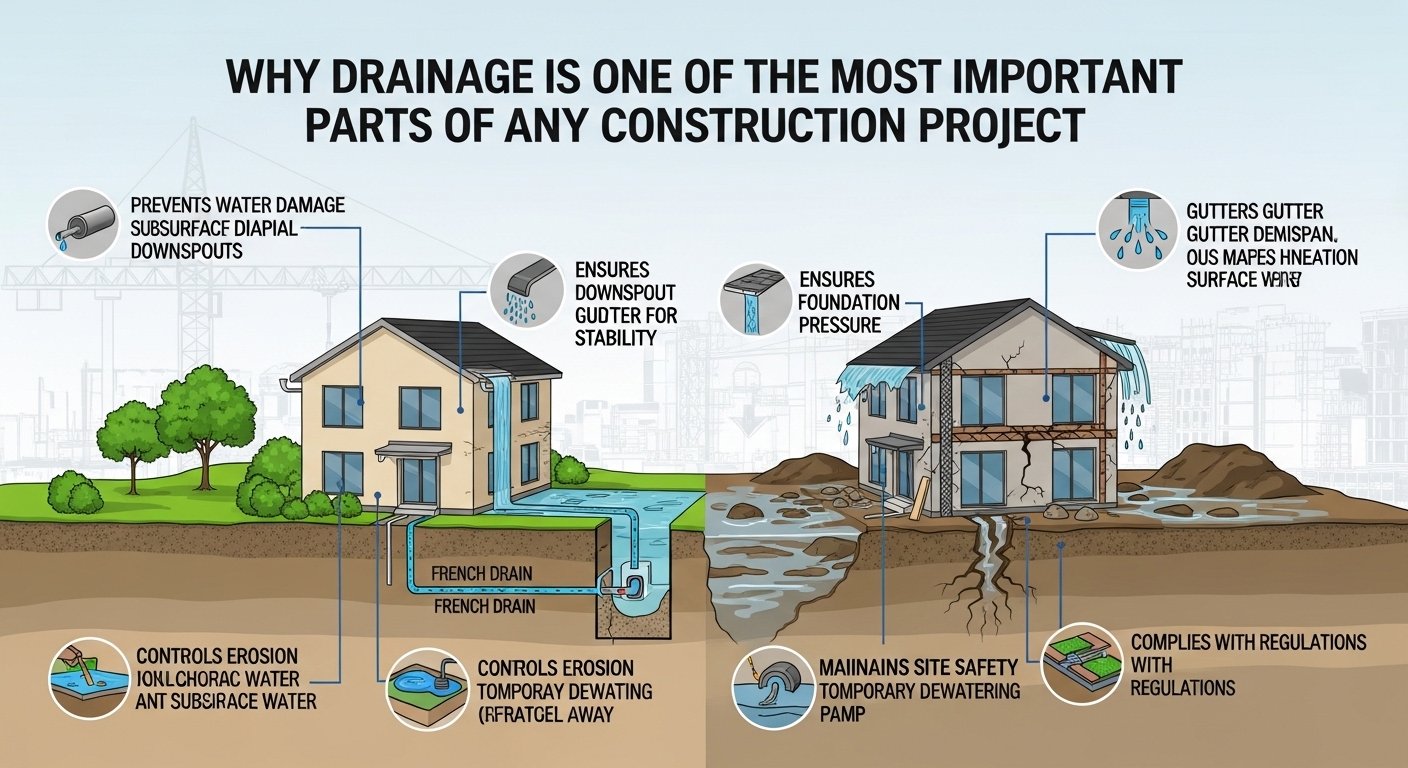
Drainage systems control where water goes. Rain, groundwater, and surface water all need somewhere to move to. If they do not, water sits where it should not. That can mean flooding, waterlogged ground, damage to foundations, and even structural failure over time.
A good drainage system guides water safely away from a site, whether that is into the public sewer network, a soakaway, or a sustainable drainage system designed to manage water more naturally.
Why It Matters on Construction Sites
On a construction site, drainage is not just something to think about at the end. It has to be planned early. Poorly drained ground is harder and more expensive to build on. It can delay groundwork, make excavation more difficult, and cause problems with laying solid foundations.
In some cases, a site with bad drainage can cause a project to stall entirely while the issue is resolved. That is why experienced contractors tend to look at drainage as part of the initial site assessment, not as an afterthought.
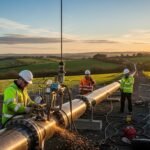
Working with a qualified drainage contractor at the start of a project means these issues are spotted early and designed out before they become costly problems.
Types of Drainage Used in Construction
There are several different types of drainage used depending on the site, the soil, and what is being built.


Surface water drainage deals with rainwater that falls on roads, roofs, and hard surfaces. It needs to be channelled away quickly to prevent flooding.
Foul water drainage carries wastewater from toilets, sinks, and other facilities to the public sewer or a treatment system.
Land drainage manages water in the soil itself. This is especially important on agricultural land or sites where the ground is heavy clay and does not drain naturally.
Sustainable Drainage Systems (SuDS) are designed to mimic how water would move through the ground naturally, slowing it down and letting it soak away gradually. They are now required on many new development sites in the UK under planning policy.
The Rules Around Drainage in the UK
Drainage on construction sites is not just a practical concern. It is a legal one too. The UK has strict rules about how water is managed on development sites. The Environment Agency and local planning authorities both have a say in how drainage is designed and installed.
Under the Flood and Water Management Act 2010, most new developments in England need to use sustainable drainage systems where possible. Planning applications for new developments often cannot be approved without a drainage strategy in place.
Getting this right requires technical knowledge. A specialist drainage contractor will understand the regulations that apply to a specific site and help ensure that all the required approvals are in place.
What Happens When Drainage Goes Wrong
Poor drainage causes problems that go well beyond a puddle in the garden. Foundations can be undermined if water is allowed to pool around them. Roads and paved surfaces can break up. Buildings can suffer from damp, mould, and structural cracking. In severe cases, properties become difficult to sell or insure.
The cost of fixing drainage after the fact is almost always higher than the cost of getting it right in the first place.
Final Thoughts
Drainage is not a glamorous topic, but it is one of the most important elements of any construction or civil engineering project. It protects the structure, the site, and the people who use it. Whether it is a small residential extension or a large commercial development, treating drainage as a priority from day one is always the smarter choice.
If you are planning a project, make sure drainage is part of the conversation from the very beginning.