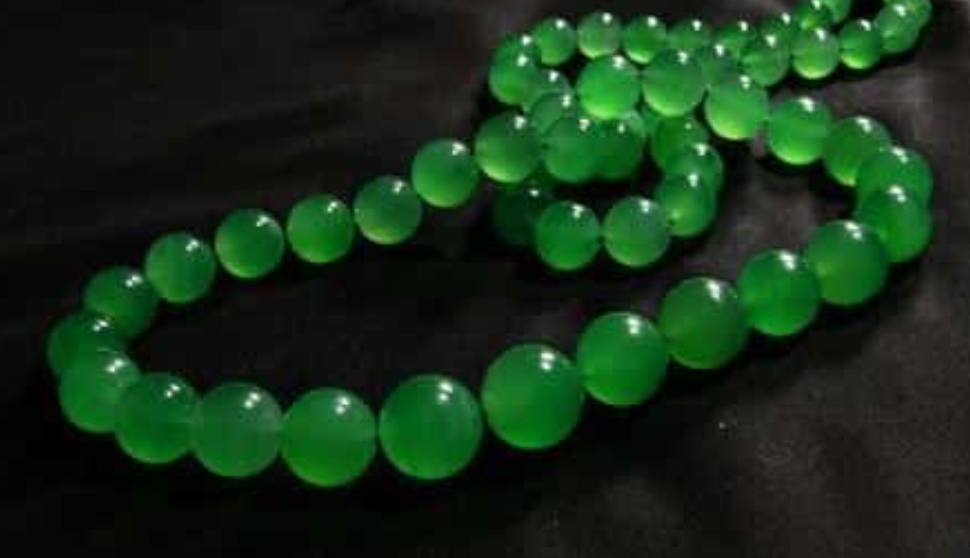
Jade has held a place of honor in Asian traditions for thousands of years. More than a decorative stone, it has long been associated with purity, protection, wisdom, harmony, and status. Across different regions of Asia, jade has appeared in royal courts, religious rituals, family heirlooms, burial objects, and everyday adornment. Its importance goes far beyond fashion or material value. In many traditions, jade is seen as a bridge between beauty and belief, connecting the physical world with moral virtue, spiritual meaning, and cultural identity.
- Jade as More Than a Gemstone
- Jade in Chinese Tradition
- Jade and Confucian Values
- Jade in Chinese Spiritual and Protective Beliefs
- Jade in Burmese and Southeast Asian Traditions
- Jade in Japanese Tradition
- Jade in Korean Tradition
- Jade as a Symbol of Family and Inheritance
- Jade in Ritual, Ceremony, and Life Milestones
- Why Jade Still Matters Today
- Final Thoughts
Even in the modern era, jade remains deeply respected. People continue to wear it not only for its elegance, but also for the symbolism and heritage it represents. Whether someone is collecting fine jade pieces, gifting symbolic jewelry, or exploring curated selections through platforms such as https://bmjade.com/, understanding jade’s cultural background adds a much deeper layer of appreciation. To understand why jade still matters today, it is essential to look at the role it has played across Asian traditions for centuries.
Jade as More Than a Gemstone
In many cultures, gemstones are admired primarily for rarity, color, or monetary worth. Jade is different. In Asian traditions, its value has often been measured not only by appearance, but also by what it represents. It has been treated as a moral symbol, a spiritual object, and a sign of continuity between generations.
This deeper meaning comes partly from jade’s natural qualities. It is smooth yet strong, refined yet durable. These characteristics led many ancient thinkers to connect jade with ideal human virtues. Rather than being valued simply because it is beautiful, jade came to symbolize the kind of beauty that reflects character, balance, and inner worth.
Because of this, jade was often seen as a material worthy of reverence. It was carved into objects of ceremony, offered in rituals, worn by nobles, and passed down within families. It became part of daily life and sacred life at the same time.
Jade in Chinese Tradition
No discussion of jade in Asia can begin anywhere other than China. Jade occupies an extraordinary place in Chinese history and culture, with a legacy stretching back several millennia. In ancient China, jade was often considered more precious than gold because it represented not only wealth, but virtue and cosmic order.
Chinese tradition has long linked jade to qualities such as benevolence, righteousness, wisdom, courage, and purity. Classical thinkers saw the stone as a model of noble character. Its gentle luster was associated with kindness, its strength with integrity, and its translucence with sincerity. In this way, jade became more than an ornamental material. It became a philosophical symbol.
Jade was also closely tied to status and ritual. It appeared in court objects, ceremonial vessels, pendants, belt ornaments, and burial items. Members of the elite wore jade to signal refinement and moral standing. Important ritual objects carved from jade were used in offerings to heaven, earth, and ancestors. The presence of jade in both public and private life showed that it was not simply decorative. It played a role in how society understood order, hierarchy, and virtue.



In traditional Chinese families, jade also became a symbol of protection and blessing. Jade bangles, pendants, and amulets were often given to children or loved ones with the hope of bringing safety, peace, and good fortune. This belief continues today, which is one reason jade jewelry remains so meaningful in Chinese communities around the world.
Jade and Confucian Values
One of the most important reasons jade became so culturally powerful in China is its connection to Confucian thought. Confucian traditions emphasize moral cultivation, proper conduct, and the development of character. Jade fit naturally into this worldview because its physical qualities could be read as lessons in virtue.
A polished jade surface suggested refinement through discipline. Its toughness represented strength that did not need aggression. Its beauty was calm rather than flashy, which aligned with the Confucian preference for modesty and dignity over excess. A person who valued jade was, in a sense, also declaring respect for these ideals.
This is why jade was not only admired by rulers and collectors, but also by scholars and educated elites. It symbolized the aspiration to become a better person. In this context, wearing or owning jade was not merely an aesthetic choice. It reflected a philosophical outlook.
Jade in Chinese Spiritual and Protective Beliefs
Alongside philosophical meaning, jade also carried spiritual significance. Many traditional beliefs held that jade could protect the body and spirit, absorb negative energy, and preserve harmony. People wore jade pendants and bangles not just to look elegant, but to invite blessing and ward off misfortune.
These ideas influenced how jade was given and worn. A jade bracelet might be offered to a child for protection. A pendant might carry symbolic motifs such as a phoenix, dragon, Buddha, or gourd, each adding another layer of meaning. Jade was also sometimes associated with health, balance, and longevity, making it especially valued among elders and within family traditions.
Because jade was believed to embody purity and life energy, it often appeared in important life moments such as births, weddings, and family ceremonies. This is one of the reasons jade continues to be viewed not just as jewelry, but as an heirloom material tied to memory and continuity.
Jade in Burmese and Southeast Asian Traditions
Jade is also deeply important in Myanmar, especially because Burma has long been one of the world’s most important sources of high-quality jadeite. In Burmese tradition, jade carries both economic and cultural significance. It is admired for beauty and prestige, but it is also closely tied to beliefs about luck, merit, and personal fortune.
In many Southeast Asian communities influenced by Chinese culture, jade is regarded as a protective and auspicious material. It may be given during important celebrations or worn as a sign of blessing and well-being. The meanings of prosperity, harmony, and spiritual protection often overlap, which helps explain why jade remains widely respected throughout the region.
Jade’s role in these traditions also reflects trade and cultural exchange across Asia. As jade moved through markets, courts, and family networks, it carried ideas with it. This helped expand its significance far beyond the places where it was originally carved or mined.
Jade in Japanese Tradition
In Japan, jade has ancient roots as well, though its role differs somewhat from the Chinese tradition. Archaeological findings show that jade was used in early Japanese ornaments and ceremonial objects, especially in the form of curved beads known as magatama. These objects held ritual and symbolic importance and were associated with spiritual power, authority, and sacred identity.
Magatama became part of the visual and symbolic language of early Japan. They were connected to ritual life, mythology, and status. Although modern Japanese jewelry culture does not center on jade in the same way as Chinese tradition, jade still carries historical significance as a material tied to sacred objects and ancient identity.
This shows an important point: jade’s cultural role in Asia is not uniform. Different societies developed different meanings around it. Yet in many of them, jade came to symbolize something enduring, elevated, and spiritually charged.
Jade in Korean Tradition
Korean traditions also include a long history of jade use, especially in ancient ornaments and royal objects. Jade-like green stones were used in crowns, pendants, and burial artifacts, particularly during early Korean kingdoms. These pieces reflected status, ritual importance, and the connection between rulers and the sacred order.
In Korea, jade was associated with refinement and elevated rank, much as it was elsewhere in East Asia. It also reflected broader regional influences, showing how materials, artistic forms, and symbolic ideas moved between neighboring cultures over time.
Although jade may not dominate modern Korean jewelry in the same way it does in Chinese communities, its historical role remains important in understanding Asia’s broader relationship with the stone.
Jade as a Symbol of Family and Inheritance
One of the most powerful aspects of jade in Asian traditions is its role within the family. Jade is often passed down from generation to generation, turning it into more than an object of beauty. It becomes a carrier of memory.
A jade bangle from a grandmother, a pendant gifted at birth, or a ring given at marriage can hold emotional meaning far beyond its material worth. In many families, jade represents continuity, care, and blessing. It is worn not only as adornment, but as a reminder of ancestry and belonging.
This helps explain why jade remains culturally significant even in modern settings where lifestyles and fashion preferences have changed. A jade piece can still connect someone to parents, grandparents, language, heritage, and family values. That emotional continuity gives jade unusual staying power.
Jade in Ritual, Ceremony, and Life Milestones
In many Asian traditions, jade appears during important milestones. It may be given at birth as a protective object, worn at weddings to symbolize harmony and blessing, or gifted during festivals and family celebrations. In some cases, jade objects are chosen for housewarmings, birthdays, or major transitions in life because they are believed to carry good energy.
This ceremonial role reinforces jade’s meaning as a material of blessing. It is not just worn because it is precious. It is worn because it is thought to mark important moments with dignity and hope. The stone becomes part of the emotional and symbolic language of life passages.
Why Jade Still Matters Today
In today’s world, jade continues to matter because it speaks to values that many people still care about: balance, heritage, authenticity, and meaning. In a fast-moving consumer culture, jade offers something slower and deeper. It is not only stylish, but also rooted in story.
Modern buyers may be drawn first by its color, texture, or timeless elegance. But many stay interested because they discover its cultural depth. Jade can be worn with contemporary fashion, yet still carry ancient symbolism. It can function as fine jewelry, but also as a statement of identity and continuity.
This combination of beauty and meaning is rare. It is one reason jade has survived changing empires, religions, artistic trends, and fashion cycles. It remains relevant because it offers more than surface appeal.
Final Thoughts
The cultural significance of jade in Asian traditions is profound because jade has never been just a stone. It has served as a symbol of virtue, protection, harmony, status, ancestry, and spiritual meaning across centuries of history. In China, it became a moral ideal and a family treasure. In Japan and Korea, it played roles in ritual and sacred ornament. Across Southeast Asia, it has remained linked to luck, blessing, and prestige.
What makes jade so enduring is its ability to hold many meanings at once. It is beautiful, but also ethical in symbolism. It is luxurious, yet deeply personal. It is ancient, but still relevant. Whether worn as jewelry, given as a gift, or preserved as an heirloom, jade continues to carry the weight of tradition with unusual grace.
For anyone interested in jade today, understanding this cultural background transforms the experience. A jade bracelet or pendant is no longer just an accessory. It becomes part of a much larger story, one shaped by history, family, belief, and identity across Asia.