New York City operates on compressed timelines. Whether you are coordinating a product launch in Midtown, staffing a trade show at the Javits Center, or preparing branded materials for a corporate event in Brooklyn, the margin for error in procurement is narrow. Custom promotional products sit at the intersection of brand presentation and operational logistics, and in a market as demanding as New York, the ordering process carries real consequences if it is mismanaged.
This guide is written for marketing coordinators, event managers, procurement leads, and business owners who need to move from concept to delivery without surprises. It addresses the practical realities of ordering branded merchandise in New York City, including how timelines actually work, what drives cost, how to evaluate vendors, and where things tend to go wrong.
Understanding What You Are Actually Ordering
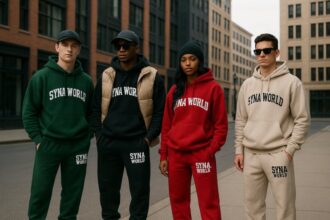
Custom promotional products are physical items imprinted with a company’s branding, typically used at events, in direct mail campaigns, as employee gifts, or as part of sales outreach. The category is broad and includes apparel, drinkware, office supplies, bags, technology accessories, and hundreds of other product types. Each product category carries its own production method, minimum order requirement, and lead time, which means that what appears to be a simple request often involves multiple interdependent decisions before production can begin.
For anyone new to sourcing these materials, a reliable starting point is a structured Custom Promotional Products In Nyc guide that organizes vendor options and product categories specific to the New York market. Having that foundation makes it easier to compare vendors with consistency rather than starting from scratch with each inquiry.
Decoration Methods Determine More Than You Think
The method used to apply your branding to a product affects the final appearance, durability, production timeline, and cost per unit. Screen printing, embroidery, laser engraving, pad printing, and full-color digital printing each have different setup requirements and are appropriate for different product types and quantities.
Embroidery, for example, requires digitizing your logo into a stitch file before any production begins. That step takes time and costs money, but the result is permanent and premium-looking on apparel. Screen printing is cost-effective at volume but requires separate setup for each color in your artwork. If your logo contains gradients or complex color transitions, screen printing may not be the right method, and that conversation needs to happen before you commit to a product or quantity.
Understanding decoration methods upfront prevents a common situation where a buyer commits to a product, submits artwork, and then learns mid-process that the print method cannot accommodate their design without significant revision or cost increase.
How Timelines Actually Work in NYC Promotional Ordering
Lead times for custom promotional products are frequently underestimated. The production clock does not start when you place an order. It starts after artwork has been approved, payment has been confirmed, and any proof review has been completed. In practice, that pre-production phase can add several business days to the total timeline, even before manufacturing begins.


Standard production for most promotional items runs between seven and fourteen business days depending on the product and the supplier’s current capacity. Rush options exist, but they carry premium costs and are not available for every product type. Items that are customized overseas may have longer production windows regardless of rush requests.
The Artwork Approval Stage Is Where Delays Accumulate
Most timeline problems in promotional product orders are not caused by production delays. They are caused by slow or unclear artwork approval cycles. When a buyer submits a logo file that is low resolution, in the wrong color format, or sized incorrectly for the imprint area, the vendor must request a revision. That exchange can repeat multiple times, and each round adds at least a day to the process.
To avoid this, provide artwork in vector format whenever possible. Vector files scale without quality loss and are the standard requirement for most print and embroidery setups. Understand the imprint area dimensions for your chosen product before submitting artwork, and make sure your brand colors are specified in Pantone or CMYK values rather than described by name or approximated in RGB.
Shipping Within NYC Has Its Own Complexity
Even when production is completed on time, delivery within New York City introduces variables that do not exist in other markets. Building access requirements, freight elevator scheduling, loading dock restrictions in commercial districts, and signature requirements for large orders all affect when materials actually arrive in usable condition. If your event is in a Manhattan hotel or a high-rise office building, the receiving process alone can add hours to your delivery window.
Build delivery buffer into your timeline rather than treating the estimated delivery date as the actual availability date. For high-stakes events, having materials arrive two to three days early is not excessive planning. It is standard risk management.
Budget Realities for Custom Promotional Products in NYC
Cost in the custom promotional products category is driven by several factors: product base cost, decoration method, quantity ordered, number of imprint colors or locations, and any rush fees applied. The relationship between quantity and unit cost is significant. Ordering larger quantities almost always reduces the per-unit price because setup costs are distributed across more items.
What many buyers do not account for is the full landed cost. That includes production, shipping, any applicable rush charges, and in some cases, storage or fulfillment fees if orders are being shipped to multiple locations. When comparing vendor quotes, confirm what is and is not included before making a decision based on the top-line number.
Rush Charges and Their Real Cost
Rush production is available from many vendors, but it is not a straightforward markup. Some vendors apply a flat percentage to the total order. Others charge a fixed rush fee per piece or per setup. When shipping is also expedited to meet a deadline, those combined costs can push the total significantly above the standard order price.
The most effective way to avoid rush charges is to plan the ordering process backwards from the event date. Identify the date you need materials on-site, subtract the delivery window, subtract the production lead time, and then subtract the pre-production and artwork approval phase. That final date is when you need to initiate the order, not when you need to start thinking about it.
Evaluating Vendors in the New York Market
New York has a large and competitive market for custom promotional products in nyc, which means buyers have access to a wide range of suppliers. That range includes national distributors with local representatives, regional specialty shops, online-first platforms, and local print shops with promotional merchandise capabilities. Each model has trade-offs in terms of pricing, turnaround flexibility, product selection, and customer support.
The Promotional Products Association International, which operates as a major trade body for the industry, provides standards and resources that help define what professional-grade service and product quality should look like in this category. Vendors who operate within established industry standards are generally more predictable in terms of what they deliver.
What to Look For Beyond Price
When evaluating a vendor, pricing matters, but it is not the most reliable indicator of whether an order will be completed correctly and on time. More useful signals include the vendor’s responsiveness during the inquiry phase, their willingness to provide physical samples before large orders, the clarity of their proof and approval process, and whether they can speak specifically about the products they are recommending rather than offering only a catalog of options.
Vendors who ask about your use case, your audience, and your event context before quoting are generally more reliable partners than those who immediately return with pricing before understanding what you need. The former approach reduces the likelihood of receiving products that are technically correct but functionally unsuitable for your purpose.
Online Platforms vs. Local Vendors
Online platforms offer convenience and competitive pricing for straightforward orders with standard timelines. They work well when the product selection is clear, the artwork is ready, and the buyer understands what they are ordering. Where online platforms tend to fall short is in complex orders, tight timelines, or situations where a buyer needs guidance on product selection or artwork preparation.
Local or regionally focused vendors often provide more direct communication, faster resolution when problems arise, and in some cases, the ability to pick up orders or receive same-day proof review. For buyers ordering custom promotional products in nyc repeatedly across multiple events, building a vendor relationship locally can reduce friction significantly over time.
Managing Repeat Orders and Long-Term Sourcing
Organizations that order promotional products consistently benefit from building a more deliberate sourcing approach. Rather than treating each order as a standalone transaction, establishing a preferred vendor relationship allows for pre-approved artwork files, stored imprint specifications, negotiated pricing tiers, and faster reorder cycles.
Maintaining a centralized record of past orders, including product names, quantities, vendor contacts, timelines, and total costs, gives procurement teams a reference point that eliminates repeat research. It also makes budget forecasting more accurate, since historical data provides a realistic baseline for future event planning.
Standardizing Your Artwork Library
One of the most practical steps any organization can take is building and maintaining a clean artwork library for promotional use. This means keeping vector versions of all current logos, approved color values in the formats vendors require, and any brand usage guidelines that apply to imprinted products. When these materials are organized and accessible, the pre-production phase moves faster, and the risk of artwork-related errors decreases substantially.
This is particularly relevant for organizations that work with multiple departments or external agencies, where the risk of inconsistent logo versions being submitted to vendors is higher.
Closing: Making the Process Work in a Demanding Market
Ordering custom promotional products in nyc is not inherently complicated, but it does require more structure and earlier planning than most buyers initially expect. The city’s operational pace compresses deadlines, and the consequences of a failed or delayed order in a high-visibility context are real.
The buyers who consistently get good outcomes in this category share a few common practices. They start the ordering process earlier than feels necessary. They have their artwork ready before they contact vendors. They understand what they are ordering and why, rather than defaulting to whatever is available at the lowest price. And they treat vendor relationships as ongoing rather than transactional.
Custom promotional products in nyc will remain a competitive and active market. The vendors, product options, and delivery capabilities in New York are genuinely strong. The differentiating factor for most buyers is not access to good suppliers. It is the internal process they use to engage those suppliers with enough time, clarity, and preparation to get what they actually need.