Glass Before Canvas
The Louvre does not begin with paintings. It begins with space.
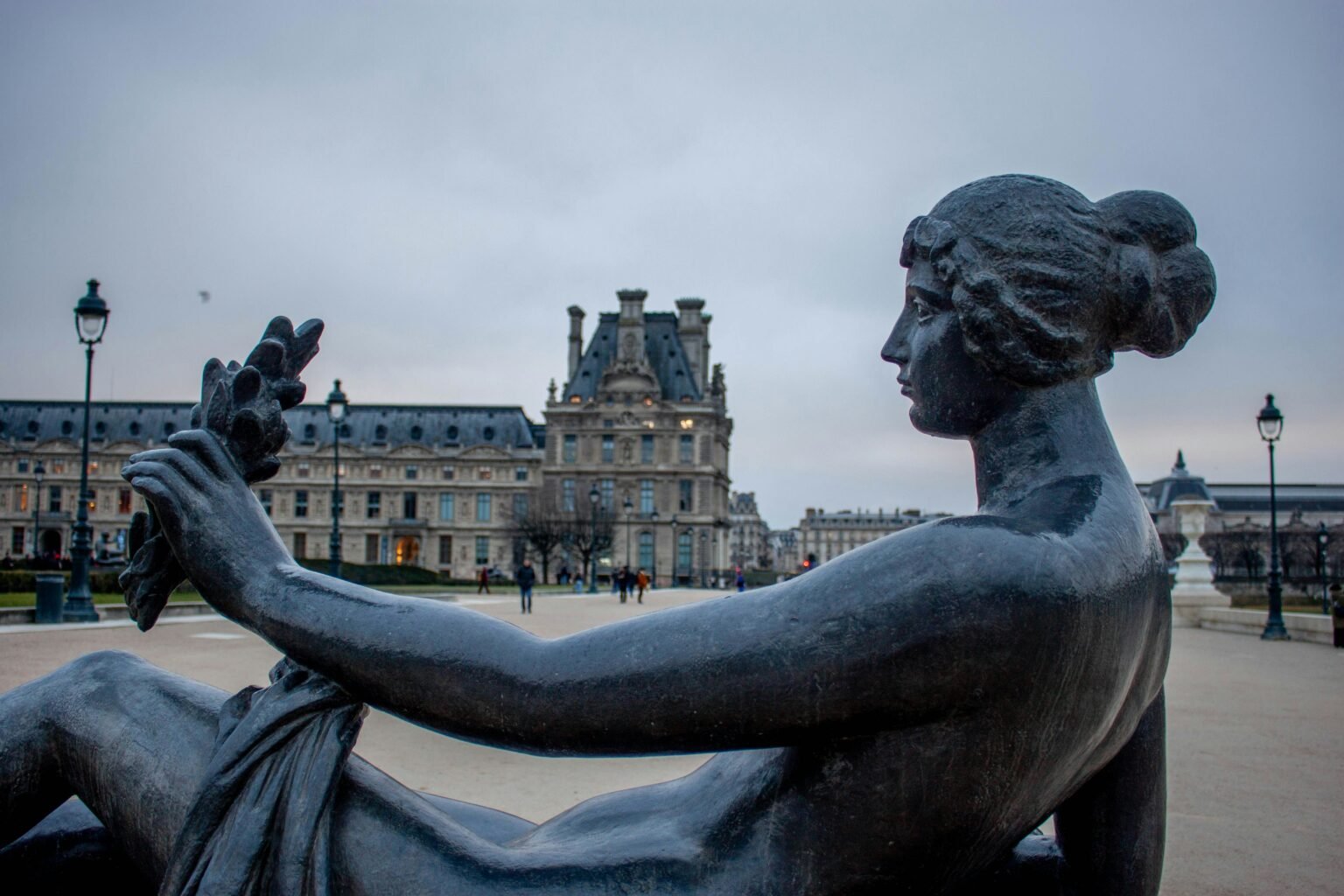
The courtyard opens wide before you reach the galleries. The glass pyramid gathers light rather than blocking it. Stone façades stretch in long lines that feel more administrative than artistic at first glance. The scale is broad, horizontal, deliberate.
Inside, the air shifts. Sound softens beneath vaulted ceilings. Footsteps slow almost automatically. Paintings hang in repetition — gold frames, darker walls, the steady murmur of visitors moving between rooms.
The Mona Lisa is smaller than the crowd that surrounds it. Other canvases, less photographed, seem to breathe more freely. Marble statues hold their posture without urgency.
The museum feels less like a collection and more like a sequence of rooms holding light differently.
North Without Drama
Later, as the train from Paris to Amsterdam moves through flat stretches of northern countryside, the density of framed masterpieces gives way to open fields and low horizons that feel almost unfinished.

Inside the carriage, nothing feels urgent. A book closes quietly. A reflection settles in the window. Outside, canals appear in narrow lines. Farmhouses sit low against sky.
Amsterdam gathers itself gradually — brick façades leaning slightly toward water, windows reflecting grey light without glare. Art here shifts from gallery to street. Canals become frames. Bridges create perspective.
The transition feels lateral rather than vertical.
Water Holding Stone
Venice approaches differently.
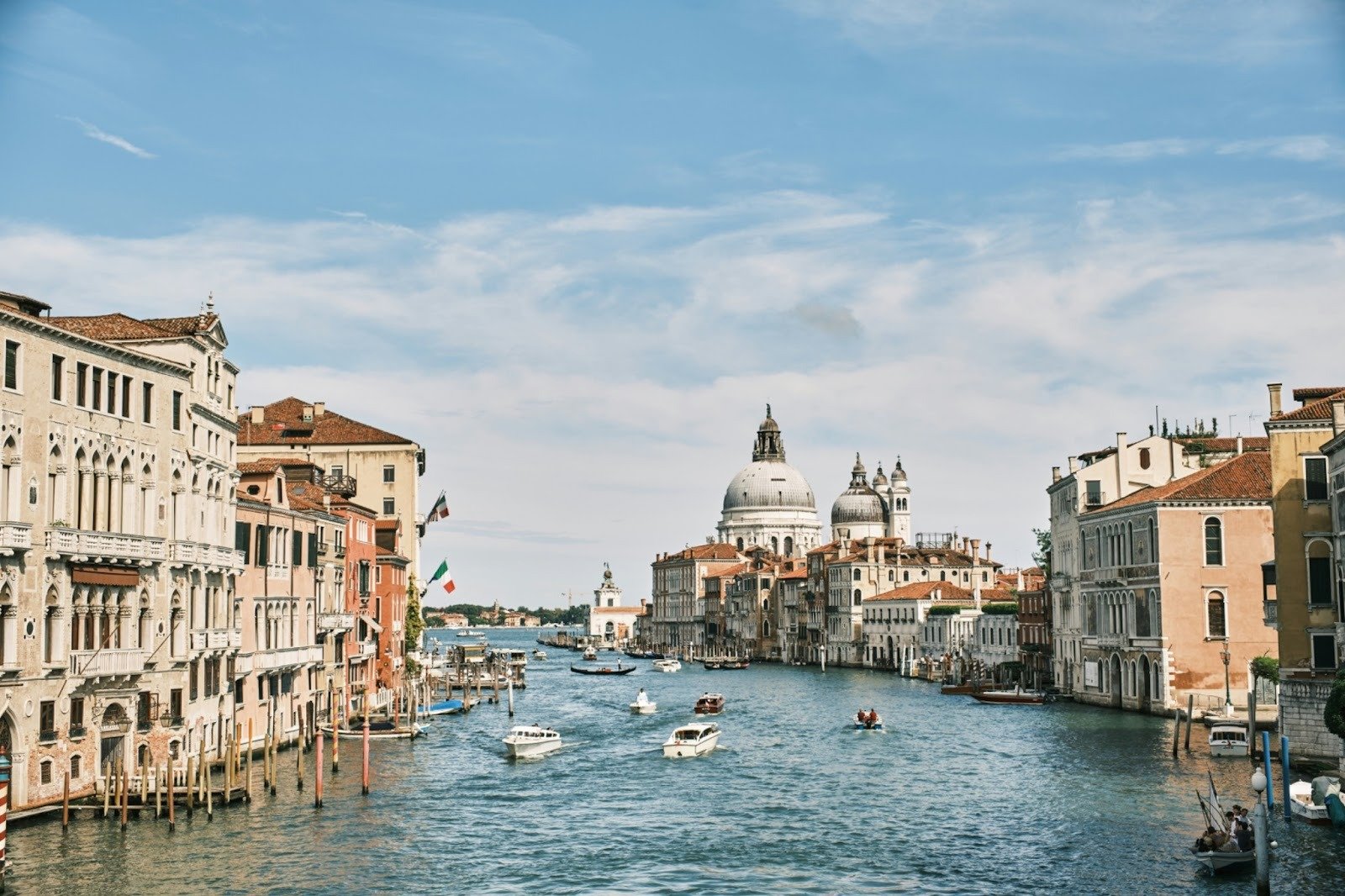
The idea of Italy high-speed trains fades somewhere before the tracks give way to lagoon and arrival becomes slower, more deliberate. The city rises from water in layered façades — palaces aligned along canals, their stone softened by humidity and time.
No single building dominates. Instead, repetition creates rhythm. Arched windows reflect light in uneven bands. Paint peels in places. Boats move steadily without noise.
Art here does not hang on walls alone. It rests in surfaces — marble, stucco, water.
You stand near the edge of a canal and notice how façades tilt faintly, as if adjusting to the tide.
Between Frame and Reflection
The Louvre gathers art inward. Venice disperses it outward.
In Paris, paintings are protected by glass and distance. In Venice, architecture meets water directly, allowing reflection to complete the image.
Yet both rely on containment. One through galleries. The other through canals that limit expansion.
Travel between them compresses centuries into hours. Stations open and close. Fields pass. Borders dissolve without announcement.
The art remains where it has been placed.
After the Rooms Empty
Later, the memory of a painted canvas overlaps faintly with a Venetian façade reflected in water. A museum corridor resembles a narrow canal in recollection — both guiding the eye forward.
What remains is surface — varnish catching light, limestone absorbing moisture, steel rails extending across countries without preference.
The journey does not resolve into comparison. It continues.
Somewhere beyond the final stop, galleries still hold quiet air. Palaces still lean toward water. And the line between them remains open, carrying frame and reflection forward along the same unhurried passage.
Where Images Begin to Drift
As distance grows, the details loosen. A painted sky from the Louvre merges faintly with the pale haze above a Venetian canal. The edge of a gilt frame resembles the outline of a balcony seen from across water. What once felt separate — canvas and façade — begins to overlap in recollection, not competing, simply coexisting in softer focus.
Beyond the Final Gallery
Eventually, what remains is not a masterpiece or a palace, but the movement between them — the quiet passage through fields, the slowing approach across lagoon, the subtle shift from enclosed halls to open water. Art lingers in fragments: a brushstroke, a carved cornice, a reflection trembling slightly at the canal’s edge. And somewhere beyond sight, the route continues, linking rooms and rivers without deciding where the work truly ends.