Stone That Refuses to Disappear
In Rome, the past is not placed behind glass. It interrupts traffic.
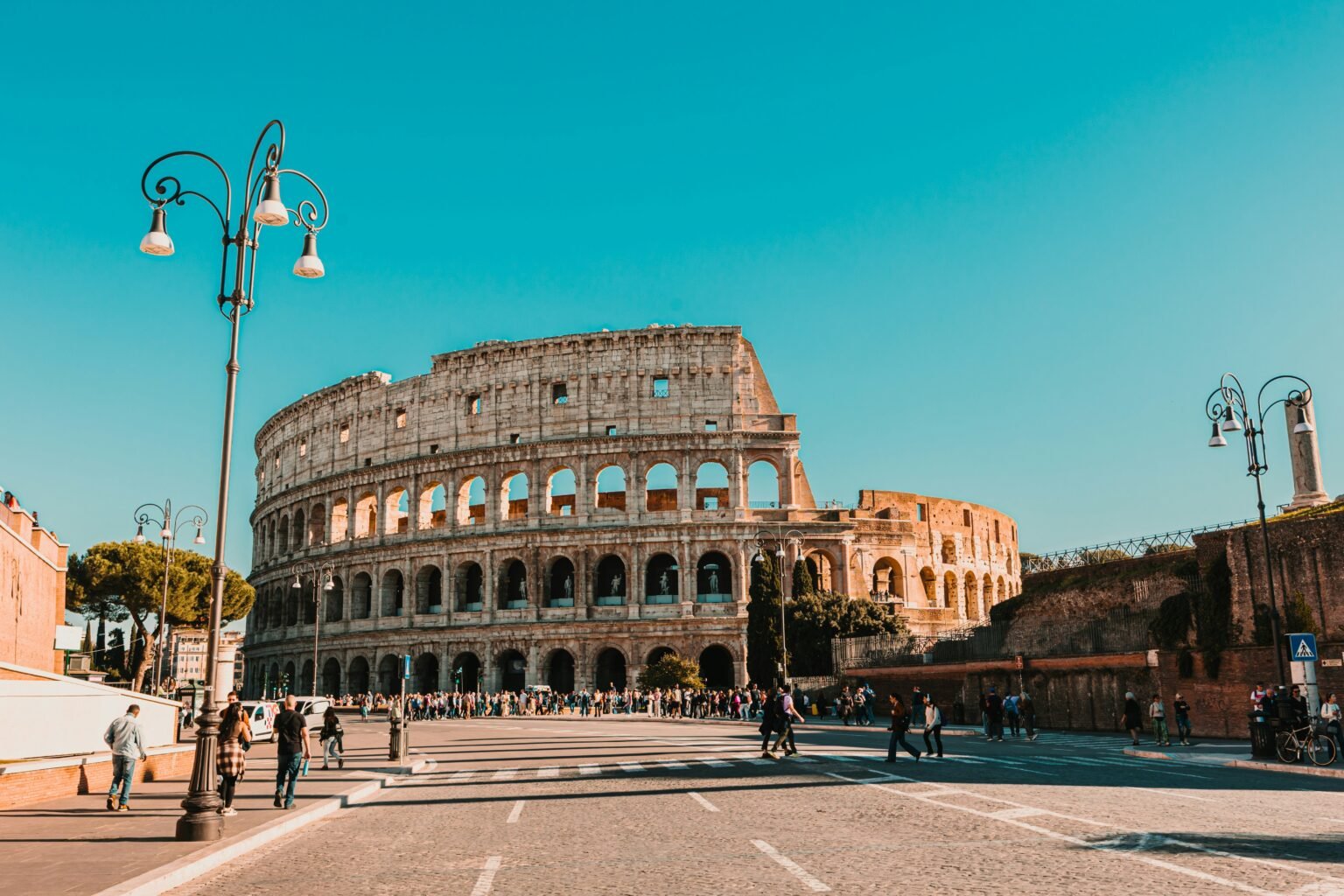
A fragment of column stands beside a café terrace. An arch frames the sky beyond a busy intersection. The Colosseum rises in worn curves, less golden than photographs suggest, more uneven, more textured. Its surface carries weather rather than polish.
You walk without deciding whether you are inside a monument or simply crossing a street. Ruins lean against apartment buildings. Excavated foundations sit below modern railings. Nothing feels isolated.
The city moves around the stone rather than away from it.
Light shifts across marble and brick in narrow intervals. The air carries dust and diesel. The layers remain visible, never fully resolved.
Northbound Without Announcement
At some point, while the Rome to Florence trains carry the capital’s layered density into open countryside, the ruins begin to thin without fully disappearing.


Inside the carriage, the rhythm remains steady. A bottle rests on a tray. Someone folds a newspaper and looks out the window. Outside, farmland stretches in muted greens and browns. Hills rise softly rather than abruptly.
Rome does not feel left behind. It dissolves into terrain.
The transition happens without spectacle. Stations appear briefly. Platforms empty and refill. The horizon shifts.
Between Water and Stone
Further north, the idea of a Venice to Florence train ticket feels less like a purchase and more like a line drawn across shifting architectural memory — water-bound façades dissolving into Tuscan brick and Renaissance proportion.
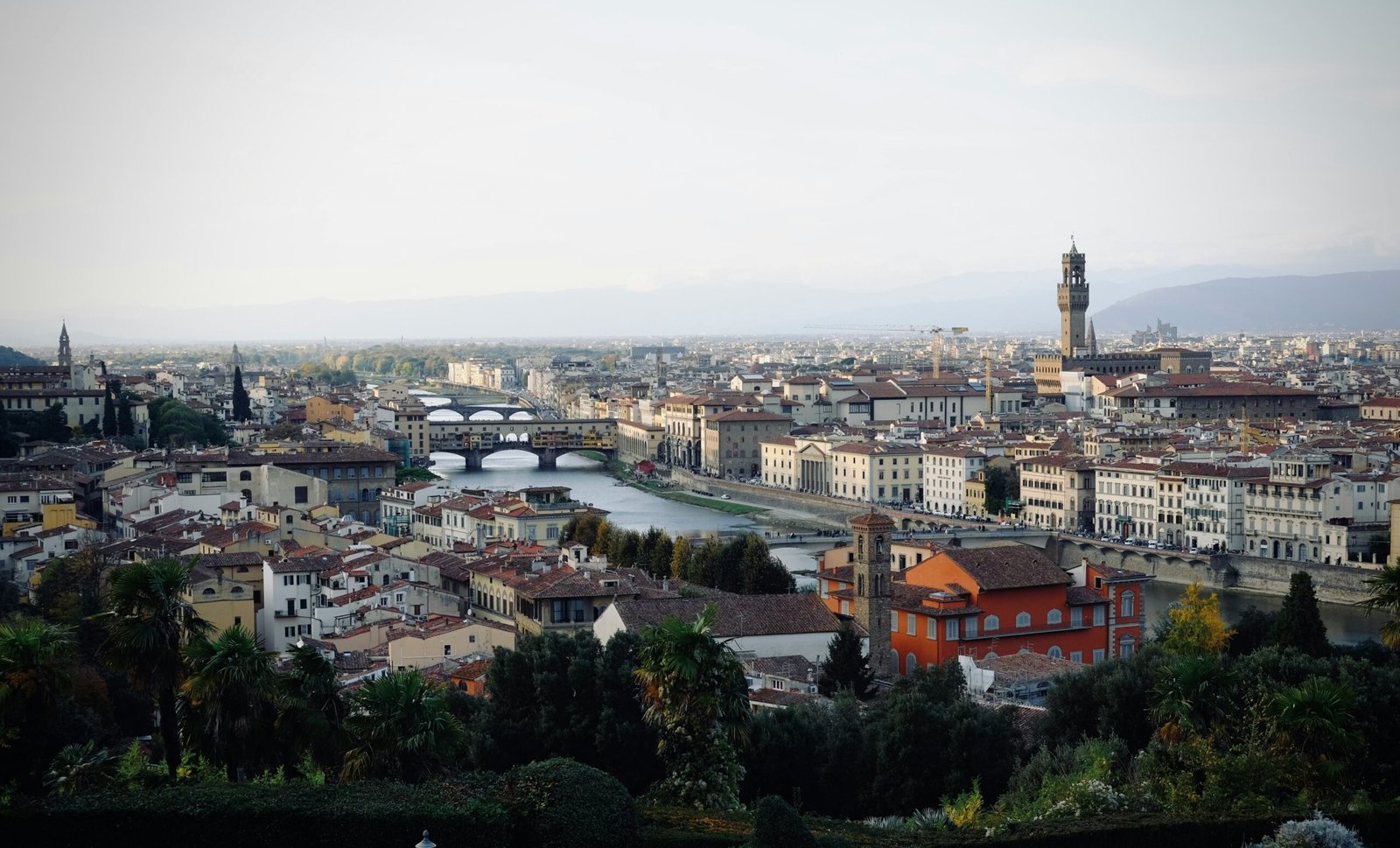
Florence gathers itself inward. Streets narrow, then open into squares that feel intentional rather than accidental. The Duomo’s dome rises steadily against sky, engineered centuries ago yet still precise in outline.
Piazza della Signoria holds statues in deliberate arrangement. Palazzi align in measured rhythm. The stone here feels unified rather than fragmented.
The city appears composed, though not rigid.
Squares That Hold Light
Florence’s squares feel less like remnants and more like spaces designed to remain intact. Proportion governs movement. Windows repeat in quiet intervals. The pavement reflects afternoon light evenly.
Sound carries differently here than in Rome. Footsteps echo more clearly across open piazzas. Conversations gather beneath arcades rather than scattering into traffic.
You pause in the centre of a square and notice how the façades create enclosure without confinement.
The skyline does not interrupt. It completes.
From Ruin to Alignment
Rome accumulates. Florence arranges.
In Rome, fragments remain embedded within the present. In Florence, geometry feels deliberate, sustained across centuries.
Yet the difference softens during travel. Rail lines stitch the cities together without commentary. Fields pass in quiet sequence. Hills absorb the change in scale.
The architecture shifts from endurance to proportion, but the movement between them remains constant.
After the Edges Blur
Later, the arc of the Colosseum resembles the curve of the Duomo in recollection. A Roman column echoes faintly in a Florentine façade.
What remains is surface — brick warmed by sun, marble cooling in shade, steel rails extending between them without preference.
The journey does not resolve into comparison. It continues.
Somewhere beyond the final platform, ruins still lean into modern streets. Squares still gather afternoon light. And the corridor between them stays open, carrying fragment and symmetry forward along the same quiet line of motion.
Under Changing Sky
As the light tilts, the stone in both cities shifts character. In Rome, arches lose their sharp outline and begin to merge with surrounding buildings. In Florence, the dome absorbs the last brightness before settling into dusk. The air cools unevenly along narrow lanes and wider squares. What felt architectural in daylight becomes atmospheric — surfaces responding quietly to shadow rather than to history.
In the Space the Journey Leaves Behind
Later, what lingers is not a monument but a transition — the brief moment when countryside replaced ruin, when ordered façades followed scattered columns. The memory arranges itself loosely: brick beside marble, fragment beside proportion. Somewhere beyond sight, rails continue across open land, holding both cities in sequence without weighing one against the other.