You’re driving down a rain-slicked highway when traffic suddenly grinds to a halt. Your foot slams the brake pedal, and instead of skidding out of control, your car comes to a controlled stop. That split-second response? It’s your anti-lock braking system (ABS) at work.
- How ABS Signal Triggering Works
- The Electronic Control Unit: Your Vehicle’s Safety Brain
- Common Causes of ABS Activation
- Diagnostic Troubleshooting for ABS Issues
- Real-World Safety Benefits of ABS
- Maintenance Tips for Reliable Brake System Performance
- Regular Brake Inspections
- Keep Sensors Clean
- Address Warning Lights Immediately
- Use Quality Brake Fluid
- Choose Appropriate Tires
- Understanding ABS Limitations
- The Evolution of Braking Safety
- Keeping Your ABS Road-Ready
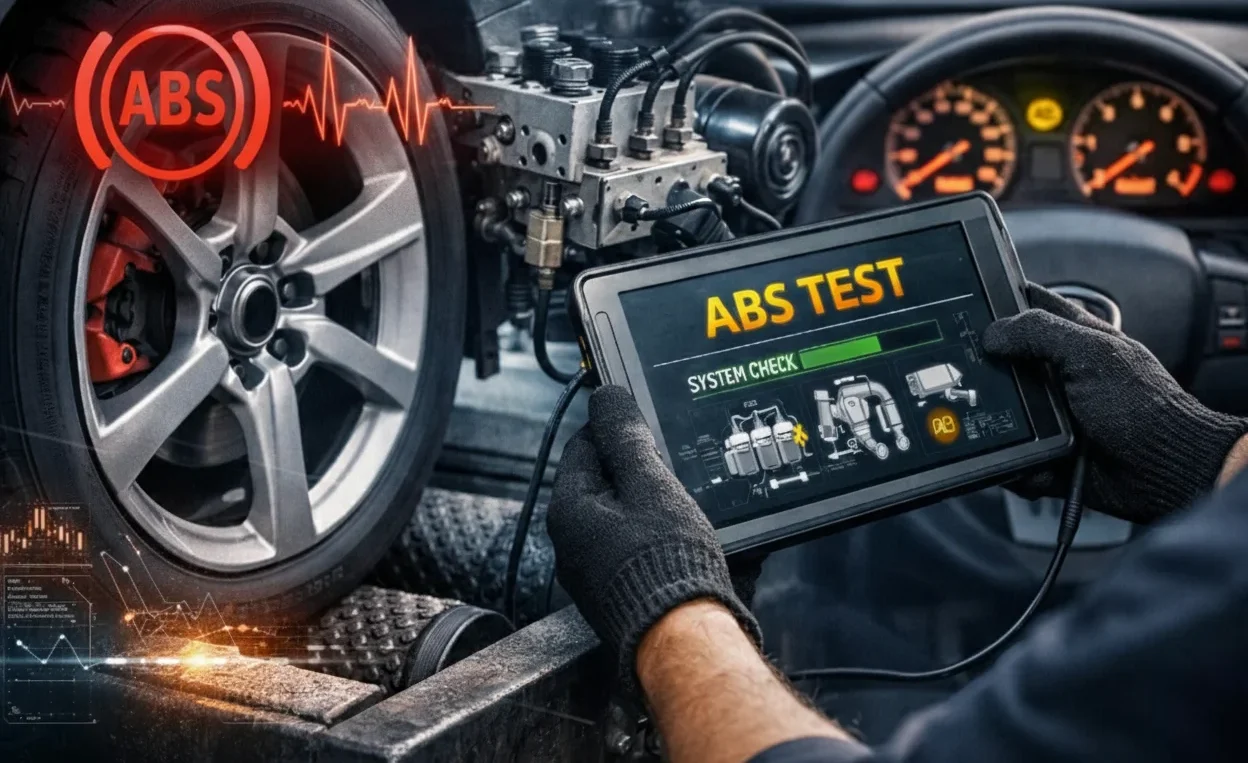
ABS testauslösung—or ABS test triggering—refers to the diagnostic process that ensures your vehicle’s ABS is functioning correctly. This system has become standard in modern vehicles for good reason: it can mean the difference between a close call and a collision. Understanding how ABS triggers, what signals it sends, and how to maintain it properly gives you insight into one of your vehicle’s most important safety features.
This guide breaks down the mechanics behind ABS signal triggering, explains the role of the electronic control unit, identifies common activation causes, and provides practical maintenance advice to keep your braking system reliable when you need it most.
How ABS Signal Triggering Works
At its core, the ABS prevents your wheels from locking up during heavy braking. When wheels lock, they lose traction with the road surface, causing your vehicle to skid. ABS maintains that crucial contact between tire and pavement, allowing you to steer while braking hard—a capability that can help you avoid obstacles during emergency stops.
The Role of Wheel Speed Sensors
ABS relies on wheel speed sensors mounted at each wheel. These sensors continuously monitor how fast each wheel is rotating, typically using magnetic or optical technology. They send this rotational data to the ABS control module dozens of times per second.
When you apply the brakes normally, all four wheels should decelerate at roughly the same rate. But during hard braking on slippery surfaces, one or more wheels may begin to slow down much faster than the others—a sign that wheel lockup is imminent. The moment a sensor detects this abrupt deceleration, it triggers the ABS.
Sensor Technology: Magnetic vs. Optical
Most vehicles use one of two sensor types. Magnetic sensors work with a toothed ring (tone wheel) attached to each wheel hub. As the wheel rotates, the teeth pass by the sensor, generating electrical pulses. The frequency of these pulses indicates wheel speed.
Optical sensors use light instead of magnetism. A perforated disc rotates with the wheel, and a light beam shines through the perforations. An optical sensor on the other side counts interruptions in the light beam to calculate speed.



Both technologies are reliable, but they require clean, undamaged components to function accurately. Corrosion, debris, or physical damage to the tone wheel or sensor can disrupt signal quality and trigger false ABS activations—or worse, prevent the system from working when needed.
The Electronic Control Unit: Your Vehicle’s Safety Brain
The electronic control unit (ECU) serves as the command center for your ABS. This sophisticated computer receives signals from all wheel speed sensors simultaneously, comparing their data in real time to determine if intervention is necessary.
Real-Time Decision Making
When the ECU detects that a wheel is decelerating too quickly, it responds within milliseconds. It sends commands to the hydraulic control unit to reduce brake pressure at that specific wheel, allowing it to spin again and regain traction. Once the wheel speed normalizes, brake pressure is reapplied. This cycle of pressure release and reapplication can happen up to 15 times per second.
This rapid pulsing is what you feel through the brake pedal during ABS activation—a stuttering sensation accompanied by a grinding or buzzing sound. These are normal indicators that your ABS is working as designed.
Integration with Other Safety Systems
Modern ECUs don’t work in isolation. They communicate with other vehicle systems including electronic stability control (ESC), traction control, and even advanced driver assistance features like automatic emergency braking. This integration allows your vehicle to coordinate multiple safety responses during complex driving situations.
For example, if you’re cornering hard and need to brake suddenly, the ECU can adjust brake pressure at individual wheels to help maintain your intended path while still slowing the vehicle. This coordinated approach to vehicle dynamics represents a significant evolution from early ABS systems that only prevented wheel lockup.
Common Causes of ABS Activation
Understanding when and why your ABS activates helps you distinguish between normal operation and potential system issues.
Emergency Braking Situations
The most obvious trigger is hard braking during emergencies. Whether you’re avoiding a collision, responding to a pedestrian stepping into traffic, or dealing with an unexpected road hazard, aggressive brake application can activate ABS—especially on wet, icy, or loose surfaces where traction is compromised.
This is exactly when you want your ABS working. The system allows maximum braking force while maintaining steering control, giving you the best chance of avoiding an accident or reducing impact severity.
Low-Traction Surfaces
Even moderate braking can trigger ABS on surfaces with poor grip. Packed snow, ice, gravel, wet leaves, and oil-slicked pavement all reduce the friction between your tires and the road. Your ABS may activate at relatively low speeds on these surfaces as it works to prevent wheel lockup.
If you notice frequent ABS activation during normal driving conditions, your tires may be worn or unsuitable for the weather. Bald tires or summer tires used in winter conditions dramatically reduce available traction, causing premature ABS triggering.
System Malfunctions and False Triggers
Sometimes ABS activates when it shouldn’t, or the ABS warning light illuminates on your dashboard. Common culprits include:
Dirty or damaged sensors: Road debris, brake dust, or corrosion can interfere with sensor readings, causing erratic signals that confuse the ECU.
Faulty tone wheels: Physical damage to the toothed ring that works with magnetic sensors can create gaps in the signal, triggering false activation.
Low brake fluid: While not directly part of the ABS, insufficient brake fluid can affect hydraulic pressure throughout the system, potentially causing ABS malfunctions.
Electrical issues: Damaged wiring, corroded connections, or failing sensors can send incorrect signals to the ECU or prevent it from receiving data altogether.
ECU problems: Though rare, the control unit itself can malfunction due to internal component failure or water damage.
Diagnostic Troubleshooting for ABS Issues
When your ABS warning light comes on, it indicates the system has detected a fault and may have disabled itself. This doesn’t affect normal braking, but you won’t have anti-lock protection until the issue is resolved.
Reading Diagnostic Trouble Codes
Modern vehicles store diagnostic trouble codes (DTCs) when the ABS detects a problem. These codes can be read using an OBD-II scanner, which plugs into your vehicle’s diagnostic port. The codes point to specific sensors, circuits, or components that need attention.
Common ABS trouble codes include sensor circuit malfunctions, wheel speed sensor correlation errors, and hydraulic pump motor failures. While these codes narrow down the problem area, proper diagnosis often requires specialized equipment to test individual components and circuit integrity.
Visual Inspection
Before diving into complex diagnostics, a thorough visual inspection can reveal obvious issues:
- Check each wheel speed sensor for physical damage, loose mounting, or excessive debris buildup
- Inspect sensor wiring for cuts, abrasions, or disconnected plugs
- Look for corrosion on electrical connectors
- Examine tone wheels for missing teeth, cracks, or excessive rust
- Verify brake fluid level is within the recommended range
Professional Diagnosis
ABS systems are safety-critical and complex. While checking for obvious issues is reasonable, diagnosing and repairing ABS problems is best left to qualified technicians with proper diagnostic equipment. Incorrect repairs can compromise your vehicle’s braking performance and put you at risk.
Real-World Safety Benefits of ABS
The effectiveness of ABS has been proven through decades of research and real-world data. Understanding these benefits reinforces why maintaining your ABS system matters.
Reduced Stopping Distance on Most Surfaces
On dry pavement, ABS typically reduces stopping distance by maintaining optimal slip ratio—the balance between tire rotation and vehicle speed that generates maximum friction. Studies show ABS can reduce stopping distances by 10-20% compared to locked wheels in emergency situations.
The advantage becomes even more pronounced on wet or slippery surfaces. On wet asphalt, ABS can cut stopping distances by up to 30%. This difference of several car lengths can be the margin between safety and collision.
Maintained Steering Control
Perhaps more important than shorter stopping distances is ABS’s ability to preserve steering control. When wheels lock, your vehicle becomes a sliding sled that won’t respond to steering inputs. With ABS preventing lockup, you can steer around obstacles while braking hard—a capability that has prevented countless accidents.
This is particularly valuable in scenarios where stopping in time isn’t possible, but steering to a safer impact point or avoiding collision entirely remains an option.
Accident Statistics
Research from the Insurance Institute for Highway Safety (IIHS) and National Highway Traffic Safety Administration (NHTSA) demonstrates ABS effectiveness. Vehicles equipped with ABS show significant reductions in certain crash types, particularly multi-vehicle crashes on wet roads and run-off-road accidents.
While ABS doesn’t eliminate all accidents—driver behavior and road conditions still play crucial roles—it provides an additional margin of safety that has saved lives and prevented injuries.
Maintenance Tips for Reliable Brake System Performance
Like all vehicle systems, ABS requires proper maintenance to function reliably. These practical steps help ensure your system is ready when you need it.
Regular Brake Inspections
Have your entire brake system, including ABS components, inspected during routine maintenance. Technicians should check:
- Brake pad and rotor condition
- Brake fluid level and condition
- Wheel speed sensor operation
- Absence of ABS warning lights or stored trouble codes
- Proper function during test drives
Most manufacturers recommend brake inspections every 12,000 miles or annually, whichever comes first.
Keep Sensors Clean
Road grime, brake dust, and salt can accumulate on wheel speed sensors, potentially interfering with their operation. During tire rotations or brake service, ask your technician to clean the sensors and inspect them for damage. If you’re comfortable with basic car maintenance, you can carefully clean accessible sensors using a soft brush and brake parts cleaner.
Address Warning Lights Immediately
The ABS warning light exists for a reason. When it illuminates, your anti-lock braking system may be disabled. While your regular brakes still work, you’ve lost an important safety feature. Have the system diagnosed and repaired promptly rather than driving for extended periods without functional ABS.
Use Quality Brake Fluid
Brake fluid absorbs moisture over time, which lowers its boiling point and can lead to reduced braking performance and internal corrosion. Follow your vehicle manufacturer’s recommended brake fluid change intervals—typically every 2-3 years—and use the specified fluid type.
Contaminated or degraded brake fluid can damage ABS components, particularly the hydraulic control unit, leading to expensive repairs.
Choose Appropriate Tires
Your ABS can only work with the traction your tires provide. Maintain proper tire pressure, replace tires before they become severely worn, and use tires appropriate for your climate. Winter tires in snowy regions, for example, dramatically improve ABS effectiveness by providing the grip the system needs to prevent lockup at higher speeds.
Understanding ABS Limitations
While ABS is highly effective, it’s not a miracle device. Understanding its limitations helps set realistic expectations and encourages safe driving practices.
ABS doesn’t reduce stopping distances on all surfaces. On loose gravel or deep snow, locked wheels can actually stop a vehicle shorter by allowing the tires to “dig in.” ABS prevents this, potentially increasing stopping distance on these specific surfaces. However, the maintained steering control typically outweighs this drawback.
ABS also can’t overcome the laws of physics. If you’re driving too fast for conditions, no safety system can guarantee you’ll stop in time. ABS works best when combined with attentive driving, appropriate speeds, and adequate following distances.
The Evolution of Braking Safety
ABS technology has evolved significantly since its introduction. Early systems were mechanical and prone to failure. Modern electronic ABS is remarkably reliable and has paved the way for advanced safety technologies like electronic stability control and automatic emergency braking.
As vehicles become more sophisticated, ABS continues to play a foundational role in active safety systems. The basic principle—preventing wheel lockup to maintain control—remains as relevant as ever, even as the technology around it grows more complex.
Keeping Your ABS Road-Ready
Your anti-lock braking system represents decades of engineering focused on a single goal: keeping you safe during emergency braking. From the wheel speed sensors that detect potential lockup to the ECU that responds in milliseconds, every component works together to give you the best chance of stopping safely and maintaining control.
Regular maintenance, prompt attention to warning lights, and understanding how your ABS functions ensure this critical safety system is ready when you need it most. Your brakes are your vehicle’s most important safety feature—and ABS makes them significantly more effective.
The next time you feel that pulsing sensation through your brake pedal during a hard stop, you’ll know your ABS is doing exactly what it was designed to do: helping you stop safely while keeping control of your vehicle. That’s safety worth maintaining.