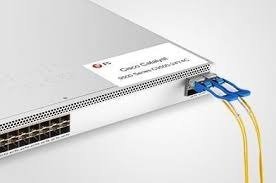
As data center networks continue to evolve toward higher speeds such as 100G, 400G, and even 800G, it is easy to assume that 40G technologies are becoming obsolete. However, in real-world deployments, 40GBASE-PSM4 QSFP+ optical modules remain an active and practical choice in many scenarios. Rather than being a transitional technology left behind by faster standards, 40GBASE-PSM4 occupies a unique position where cost efficiency, infrastructure compatibility, and operational stability intersect. Understanding why organizations still choose 40GBASE-PSM4 requires examining not only raw bandwidth requirements, but also network architecture, fiber resources, and long-term operational considerations.
Understanding the Role of 40GBASE-PSM4
What Is 40GBASE-PSM4?
40GBASE-PSM4 is a parallel single-mode optical transmission standard that delivers 40 Gb/s by splitting the signal into four parallel 10 Gb/s lanes, all operating at a wavelength of 1310 nm. Each lane is transmitted over a dedicated single-mode fiber, typically using an MTP/MPO connector. With a reach of up to 10 km, 40GBASE-PSM4 is designed to bridge the gap between short-reach multimode solutions and more complex wavelength-division multiplexing technologies such as LR4.
Unlike serial transmission approaches that rely on sophisticated optical multiplexing, PSM4 uses a relatively straightforward architecture. This simplicity reduces optical complexity and makes the technology easier to deploy and troubleshoot, especially in environments where parallel fiber infrastructure already exists.
Positioning Between SR4 and LR4
In the 40G ecosystem, PSM4 sits between SR4 and LR4 in both performance and cost. SR4 is limited to short distances over multimode fiber, while LR4 extends reach to 10 km using wavelength multiplexing over duplex single-mode fiber. PSM4 achieves the same 10 km reach as LR4 but avoids the need for complex WDM optics. For networks that already use single-mode fiber but prefer a simpler optical design, PSM4 provides a balanced alternative.
Cost Efficiency in Existing Infrastructure
Maximizing the Value of Parallel Fiber Deployments
One of the strongest reasons for continuing to choose 40GBASE-PSM4 is its ability to leverage existing parallel single-mode fiber infrastructure. Many data centers and metro networks deployed MTP/MPO-based fiber trunks during earlier 10G and 40G expansion phases. Replacing these fiber plants with duplex architectures optimized for LR4 or newer standards would require significant capital expenditure and operational disruption.
By using PSM4 modules, organizations can extend the life of their existing cabling systems while still meeting current bandwidth requirements. This approach allows network operators to defer large-scale infrastructure upgrades and allocate budget to areas where higher speeds are truly necessary.
Lower Optical Complexity, Predictable Costs
Compared with LR4, which relies on multiple wavelengths and more advanced optical components, PSM4 modules are generally simpler in design. This simplicity translates into more predictable manufacturing costs and, in many cases, a more attractive price point. For cost-sensitive deployments such as enterprise data centers, regional interconnects, or incremental capacity upgrades, PSM4 offers a compelling balance between performance and expenditure.
Practical Bandwidth for Real-World Applications
Not All Networks Need 100G Everywhere
While hyperscale data centers often push aggressively toward 100G and beyond, many enterprise and service provider networks operate under very different traffic patterns. For aggregation layers, backup links, disaster recovery paths, or legacy system interconnections, 40 Gb/s remains sufficient. Deploying higher-speed modules in these scenarios may increase cost and power consumption without delivering proportional benefits.



40GBASE-PSM4 allows organizations to right-size their networks. Rather than overengineering every link, network designers can reserve higher-speed technologies for core or spine layers while maintaining 40G links where traffic demand is stable and predictable.
Smooth Coexistence with 10G Architectures
Because PSM4 is based on four parallel 10G lanes, it aligns naturally with existing 10G ecosystems. This architectural continuity simplifies network planning and makes it easier to integrate 40G links into environments that still rely heavily on 10G switching and routing platforms. In transitional networks, PSM4 can serve as an effective aggregation layer without forcing a complete architectural redesign.
Deployment Simplicity and Operational Stability
Straightforward Optical Design
From an operational perspective, simplicity matters. PSM4 does not require wavelength management, optical multiplexers, or complex tuning mechanisms. Each lane operates independently at the same wavelength, which simplifies diagnostics and fault isolation. When issues arise, engineers can often trace problems back to specific fibers or lanes without dealing with wavelength-related variables.
This straightforward design reduces operational risk, particularly for organizations with limited optical expertise or smaller network operations teams. In such environments, stability and ease of maintenance are often valued more highly than maximum achievable bandwidth.
Mature Technology with Proven Reliability
40GBASE-PSM4 is not an experimental or emerging standard. It has been deployed for years in data centers and metro networks, and its performance characteristics are well understood. This maturity translates into predictable behavior, broad vendor support, and established best practices for installation and maintenance. For organizations that prioritize reliability over early adoption of new technologies, PSM4 remains a safe and trusted choice.
Strategic Transition Rather Than Immediate Replacement
Supporting Phased Network Upgrades
Network evolution rarely happens in a single step. Many organizations adopt a phased upgrade strategy, gradually introducing higher-speed technologies while maintaining existing links. In this context, 40GBASE-PSM4 serves as a stable intermediate layer that supports current workloads while leaving room for future expansion.
By continuing to deploy PSM4 where appropriate, network planners can avoid rushed migrations and ensure that future upgrades to 100G or 400G are driven by actual demand rather than technological pressure.
Extending the Lifecycle of QSFP+ Platforms
Another practical consideration is hardware compatibility. A large installed base of QSFP+ switches and line cards still exists in enterprise and service provider networks. Replacing these platforms solely to support newer optical modules can be costly and operationally disruptive. 40GBASE-PSM4 allows organizations to fully utilize their existing QSFP+ infrastructure while maintaining acceptable performance levels.
Conclusion
Choosing 40GBASE-PSM4 today is not about resisting progress, but about making informed, rational decisions based on real network needs. Its combination of adequate bandwidth, cost efficiency, infrastructure compatibility, and operational simplicity makes it a relevant solution in many deployment scenarios. While higher-speed technologies will continue to dominate new builds at the core of large data centers, 40GBASE-PSM4 remains a practical and valuable option where stability, cost control, and efficient use of existing resources matter most.
In this sense, 40GBASE-PSM4 is not merely a legacy technology—it is a strategic choice that reflects the realities of modern network design.