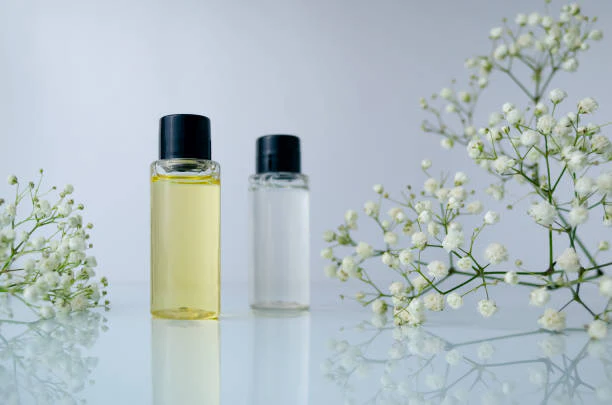
Conventional perfume has barely changed in a century: aromatic compounds dissolved in ethanol, sprayed onto skin, evaporating fast. It works. But for a growing number of people, the alcohol-based spray is no longer the default it once was. They are reaching instead for alcohol-free perfume — oil-based, longer-lasting, closer to the skin, and free from the drying and sensitising effects that ethanol brings.
- What Is Alcohol-Free Perfume, Exactly?
- Why Alcohol in Perfume Is Worth Questioning
- The Skin Benefits of Switching
- How Alcohol-Free Perfume Wears: A Practical Guide
- Alcohol-Based vs. Alcohol-Free Perfume: At a Glance
- What to Look for in an Alcohol-Free Natural Perfume
- Final Thoughts
- Frequently Asked Questions
This guide covers the science, the practical differences, and what actually matters when choosing a formulation — so the decision can be made with clarity rather than marketing noise.
What Is Alcohol-Free Perfume, Exactly?
It is a fragrance that behaves differently on the skin, interacts more deeply with body chemistry, and creates a more personal scent experience. Alcohol-free perfume uses a plant-derived or synthetic carrier oil — typically jojoba, fractionated coconut oil, or sweet almond oil — instead of ethanol as the base for the fragrance concentrate. In a conventional eau de parfum, ethanol makes up 70–95% of the formula; it acts as a solvent and propellant, causing the scent to evaporate outward on application.
In an oil perfume, the fragrance compounds are dissolved directly in the carrier. There is no rapid evaporation. The scent sits closer to the skin, warms with body heat, and unfolds more slowly — more intimate in character, and significantly longer-lasting.
Why Alcohol in Perfume Is Worth Questioning
Ethanol is not harmful in isolation, but it does have real effects on skin. It is a known desiccant — applied repeatedly to the same areas (wrists, neck, décolletage), it strips the skin’s natural lipid barrier and reduces moisture retention. For those with eczema, rosacea, or dry skin, this compounds existing sensitivity.
Alcohol also acts as a penetration enhancer, temporarily increasing skin permeability and allowing other compounds, including fragrance allergens, to absorb more readily.
Beyond skin, there is an experiential difference worth noting. The rapid evaporation of ethanol delivers an intense top-note opening that fades quickly. In an alcohol-free perfume, the fragrance unfolds from application with fuller complexity — and many who switch find they prefer the slower, more layered experience.
The Skin Benefits of Switching
The carrier oil in an alcohol-free natural perfume does more than hold the fragrance.



- Jojoba oil is structurally similar to the skin’s own sebum, absorbs without greasiness, and has mild anti-inflammatory properties.
- Fractionated coconut oil is lightweight and clean-absorbing.
- Sweet almond oil is more emollient, suited to drier skin types.
The base of an alcohol-free perfume is inherently skin-conditioning — the act of applying fragrance becomes part of a skin-care ritual rather than a departure from one.
According to the British Skin Foundation, skin conditions affect more than half of the UK population at some point in their lives, with contact dermatitis — often triggered by fragranced products — among the most common. Reducing alcohol-based fragrance application is a practical and evidence-informed step for this substantial group.
How Alcohol-Free Perfume Wears: A Practical Guide
Switching from spray to oil is simple, but a few practical differences are worth knowing upfront.
Apply to pulse points
Wrists, inner elbow, base of the throat, behind the ears. Body heat warms the oil and encourages diffusion throughout the day.
Do not rub
Rubbing breaks down aromatic compounds and alters the scent profile. Apply, press lightly if needed, and leave it.
Expect a different sillage
Oil perfume projects softly and close to the skin — an intimate scent bubble rather than a room-filling trail. For everyday and professional use, many people prefer this.
Less is more
A well-concentrated oil formula requires a fraction of the volume of a spray. One to two pulse points is typically sufficient.
Longevity improves
Most users report six to twelve hours of wear compared to three to five hours from an equivalent EDT — often with better economy per application over time.
Alcohol-Based vs. Alcohol-Free Perfume: At a Glance
The table below summarises the key practical differences across the criteria that matter most when making a choice.
| Criteria | Alcohol-Based (EDT/EDP) | Alcohol-Free Perfume Oil | Best Choice For… |
| Longevity on skin | 3–6 hours typically | 6–12+ hours | Oil: all-day wear without reapplication |
| Sillage (scent trail) | Strong projection; noticeable at distance | Intimate; close-range presence | Spray: occasions requiring presence; Oil: everyday and professional |
| Skin impact | Can dry and sensitise with repeated use | Carrier oil conditions and nourishes | Oil: sensitive, dry, or reactive skin types |
| Fragrance evolution | Distinct top/heart/base arc; top notes dominant initially | Slower unfold; fuller complexity from application | Oil: those who enjoy a more nuanced wear experience |
| Portability | Spray mechanism; good for quick application | Rollerball or stopper vial; very portable | Oil: travel, handbag, on-the-go use |
| Suitability for sensitive skin | Variable; alcohol can exacerbate sensitivity | Generally better tolerated | Oil: eczema, rosacea, reactive skin |
| Economy of use | Larger volumes; some loss through overspray | Smaller volume; very precise application | Oil: better value per application over time |
| Skin chemistry interaction | Limited — evaporates before deep interaction | High — warms and evolves with body heat | Oil: personalised, unique scent expression |
What to Look for in an Alcohol-Free Natural Perfume
Not every oil-based fragrance marketed as alcohol-free natural perfume delivers what the label implies. These markers distinguish a genuinely well-formulated product from one that has simply swapped ethanol for oil without thinking carefully about the rest of the formula.
- A named carrier oil. The carrier matters. Jojoba, fractionated coconut oil, and sweet almond oil all have different skin profiles. A brand that names its carrier and explains the choice has formulated with intention.
- IFRA compliance at leave-on concentrations. Leave-on skin products have stricter fragrance usage thresholds than rinse-off products. IFRA compliance at the correct category level is a meaningful safety indicator.
- Full ingredient transparency. Every component — carrier, fragrance compounds, antioxidants — should be disclosed and accountable. Vitamin E (tocopherol) is a common benign antioxidant used in oil formulations; its presence signals thoughtful formulation.
- Honest sillage expectations. A brand claiming spray-level projection from an oil formula is either misrepresenting the product or using ethanol derivatives. The two are inherently in tension — and integrity means naming the trade-off.
- Rollerball or stopper applicator. These ensure precise, controlled application directly to pulse points — no overapplication, better economy, and fragrance concentration stays in the intended range.
Final Thoughts
Choosing an alcohol-free perfume is about asking whether a product that spends all day on your skin is formulated with that in mind. Whether the carrier nourishes rather than depletes. Whether the fragrance concentration is appropriate for skin contact. Whether the brand can account honestly for what it has put in the bottle.
For people with sensitive skin, those who prefer an intimate scent character, and those for whom the ritual of application matters — the oil is often the better choice. Not because it is natural. Because it is thoughtful.
Frequently Asked Questions
What is alcohol-free perfume and how is it different from regular perfume?
Alcohol-free perfume uses a carrier oil instead of ethanol to dissolve and deliver fragrance compounds. Regular perfumes rely on ethanol to project the scent outward through rapid evaporation; oil perfumes warm with body heat, unfold more slowly, and sit closer to the skin. The result is a more intimate scent character and significantly longer wear time.
Is alcohol-free perfume better for sensitive skin?
For many people with sensitive, dry, or eczema-prone skin, yes. Ethanol strips the skin’s lipid barrier with repeated use and increases the absorption of other compounds, including allergens. A well-formulated alcohol-free natural perfume in a nourishing carrier oil avoids these effects — and may actively support skin condition in the areas of application.
Does alcohol-free perfume last longer than regular perfume?
Generally, yes — often significantly. Oil-based free from alcohol perfumes release fragrance slowly throughout the day, held by the carrier and warmed by body heat, typically achieving six to twelve hours of wear compared to three to five hours from an equivalent EDT.
Can alcohol-free perfume be natural and clean at the same time?
Yes, but the two standards are distinct. ‘Natural’ refers to ingredient origin; ‘clean’ refers to safety and transparency — IFRA-compliant formulation, no known harmful compounds, honest disclosure. A genuinely alcohol-free natural perfume that is also clean will name its carrier, confirm IFRA compliance for leave-on use, and account for every ingredient. Natural origin alone does not guarantee safety.
Are there any downsides to alcohol-free perfume?
Alcohol-free perfume has a more intimate sillage — it does not project across a room the way a spray does. Oil formulations may also feel slightly different on application, though jojoba absorbs cleanly for most people. Shelf life requires attention: look for vitamin E (tocopherol) in the formula as an antioxidant, and store away from direct heat and light.