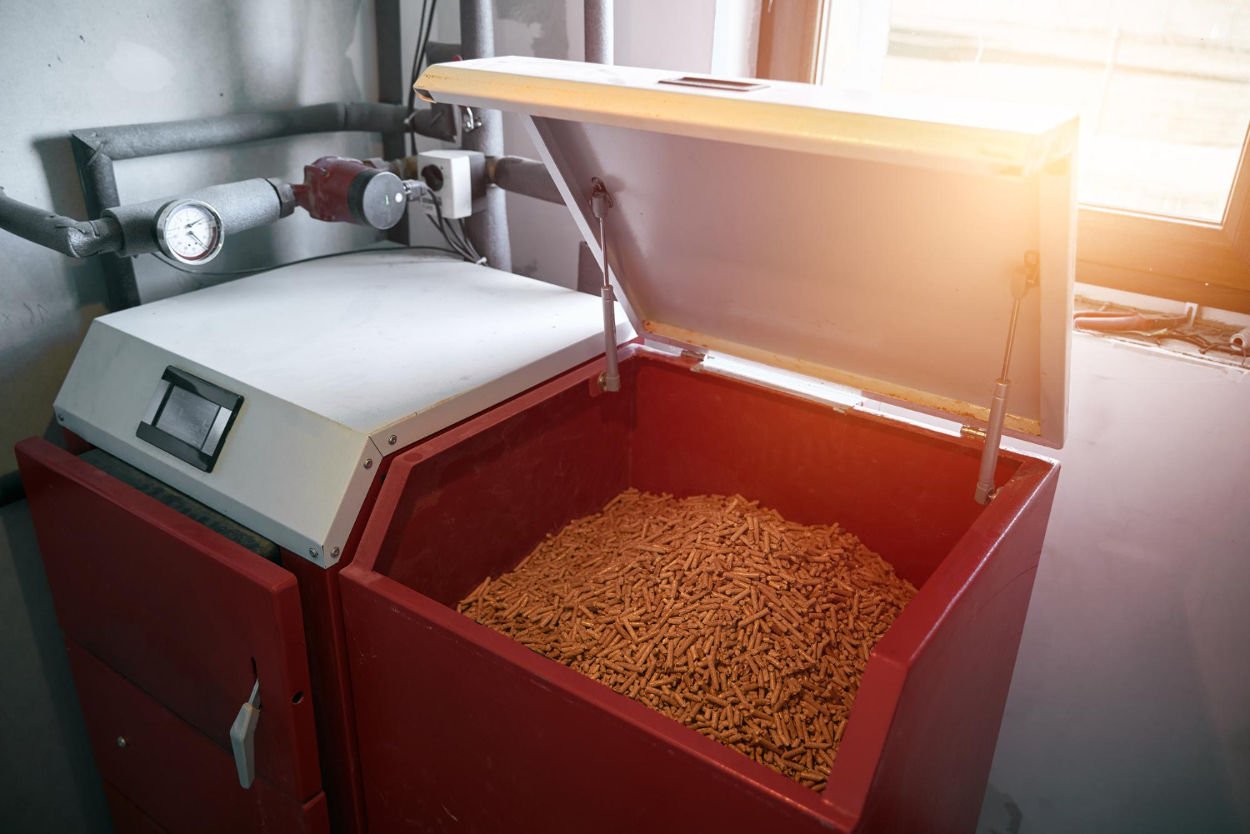
As the world shifts its focus toward sustainable living and reducing carbon footprints, homeowners are increasingly looking for alternatives to traditional fossil fuel heating systems. Gas and oil boilers, while familiar, are becoming less attractive due to volatile prices and environmental concerns. Enter the biomass boiler—a heating solution that combines modern technology with the oldest fuel source known to man: wood.
But what exactly is a biomass boiler? Is it just a glorified wood stove, or is it a sophisticated piece of engineering? And more importantly, is it the right choice for your home?
In this comprehensive guide, we will explore the inner workings of biomass technology, the different types available for residential use, the installation process, maintenance requirements, and the costs involved.
What Is a Biomass Boiler?
At its simplest, a biomass boiler is a heating system that burns organic material—biomass—to generate heat for your home. While “biomass” can technically refer to any organic matter, including agricultural waste or manure, residential biomass boilers almost exclusively use wood in the form of pellets, chips, or logs.
Unlike a traditional wood-burning stove which heats a single room via radiation, a biomass boiler is connected to your home’s central heating and hot water system. It does exactly the same job as a gas or oil boiler: it heats water that is then pumped through your radiators, underfloor heating, and into your hot water cylinder.
The Carbon Neutral Question
One of the primary selling points of biomass boilers is that they are considered a low-carbon or “carbon-neutral” energy source. Critics often ask, “Doesn’t burning wood release carbon dioxide?”



The answer is yes, but there is a crucial distinction. When a tree grows, it absorbs carbon dioxide from the atmosphere. When that wood is burned, it releases the same amount of carbon back into the air. This creates a closed carbon cycle. In contrast, burning coal, oil, or gas releases carbon that has been locked underground for millions of years, adding new greenhouse gases to the current atmosphere. Provided the wood fuel is sourced from sustainably managed forests (where new trees are planted to replace those harvested), biomass is a sustainable, renewable energy source.
How Do Biomass Boilers Work?
Modern biomass boilers are far removed from the labor-intensive coal furnaces of the past. They are highly sophisticated, automated machines designed for efficiency and ease of use. While specific mechanisms vary by model, the general working principle follows these five steps:
- Fuel Delivery and Storage
The process begins with fuel storage. For automated systems (like pellet boilers), the fuel is stored in a large hopper or silo. An automated feed mechanism—usually a screw auger (a large rotating screw) or a vacuum suction system—transports the pellets from the storage area into the boiler itself. This means the user does not have to manually feed the fire; the boiler controls its own fuel supply based on the thermostat demand.
- Ignition
Once the fuel enters the combustion chamber, the ignition process begins. You do not need matches or firelighters. The boiler utilizes an electric ignition probe or hot air blower to light the fuel automatically. Internal sensors monitor the flame to ensure combustion is established.
- Combustion and Fan Assistance
To burn efficiently and cleanly, a fire needs the perfect ratio of fuel to oxygen. Biomass boilers use variable-speed fans to control the airflow into the combustion chamber. If the house needs more heat, the fan speeds up, and more fuel is added to create a hotter fire. If the house warms up, the system modulates down. This “modulating” capability ensures that fuel isn’t wasted.
- Heat Exchange
The burning fuel creates hot gases. These gases are passed through a heat exchanger—a complex system of tubes surrounded by water. The heat from the gas is transferred to the water without the two actually mixing. This heated water is what circulates through your home.
- The Buffer Tank (Thermal Store)
Most efficient biomass systems are installed alongside a buffer tank or thermal store. This is a very large, insulated cylinder of water. The boiler heats the water in this tank, and your radiators draw heat from the tank rather than directly from the boiler.
This is crucial for efficiency. Biomass boilers work best when they run at full power for a long period, rather than turning on and off rapidly (cycling) like a gas boiler. The buffer tank acts as a battery for heat, allowing the boiler to burn a full load of fuel efficiently, store the energy, and then shut down while your home draws from the stored hot water.
Types of Biomass Boilers for Home
Not all biomass boilers are created equal. Depending on your property type, available space, and willingness to handle fuel, there are three main types to consider.
- Wood Pellet Boilers
Pellet boiler is the most popular choice for residential properties.
- The Fuel:Pellets are made from compressed sawdust and wood shavings (industrial waste). They are uniform in size, very dense, and have a low moisture content.
- How it works:Because pellets are uniform, they flow like a liquid. This allows for fully automated feeding systems. You simply fill a hopper (or have a truck blow pellets into a silo), and the boiler does the rest.
- Best for:Standard family homes looking for a direct replacement for gas or oil with minimal manual labor.
- Log Boilers (Gasification Boilers)
These are the closest relative to the traditional wood stove but with high-tech efficiency.
- The Fuel:Standard seasoned logs.
- How it works:These are manually fed. You must load the firebox by hand. However, they use a process called gasification, where the wood is burned at very high temperatures to release gases, which are then burned again in a secondary chamber. This extracts nearly all available energy from the wood.
- Best for:People with their own supply of wood (e.g., farms, rural properties) who don’t mind the daily physical labor of loading the boiler.
- Wood Chip Boilers
These are the heavyweights of the biomass world.
- The Fuel:Wood chips are literally trees that have been put through a chipper. They are cheaper than pellets but less energy-dense and physically bulkier.
- How it works:Similar to pellet boilers, they use an auger feed system. However, the machinery must be much more robust (and larger) to handle the uneven size of wood chips without jamming.
- Best for:Large manor houses, farms, or district heating schemes where there is ample space for a large fuel store and machinery.
The Installation Process of a Biomass Boiler
Installing a biomass boiler is significantly more complex than swapping out a gas combi-boiler. It requires planning, space, and professional expertise. Here is what the installation journey typically looks like:
Phase 1: Site Survey and Feasibility
A certified installer will visit your property to assess heat loss and demand. They will look for:
- Space:Do you have room for the boiler (which is the size of a fridge-freezer) and the fuel store?
- Flue Access:A biomass boiler requires a specific stainless steel flue (chimney) that usually must rise above the roofline to disperse particulates safely.
- Delivery Access:If you want bulk delivery of pellets, a delivery truck needs to get within a specific distance of your fuel store.
Phase 2: System Design
The installer designs the system, calculating the size of the boiler (in kW) and the size of the buffer tank needed. An undersized boiler will leave you cold; an oversized one will run inefficiently.
Phase 3: The Install
The physical installation usually takes between 2 to 5 days.
- Removal:The old boiler is removed (unless you are keeping it as a backup).
- Placement:The biomass unit and buffer tank are moved into position. Note: These units are heavy and may require wide door access.
- Plumbing:The system is plumbed into your existing central heating. This often involves installing new pumps and valves.
- Flue Installation:The twin-wall insulated flue is erected.
- Electrical:The boiler is wired into the mains and the thermostat controls.
Phase 4: Commissioning
Once installed, the engineer configures the software settings to match your home’s heating curve. They will test the ignition, the auger feed, and safety sensors. Finally, they will teach you how to operate the interface and perform basic checks.
Biomass Boiler Services and Maintenance
Unlike a gas boiler which you can largely ignore between annual services, a biomass boiler requires a relationship between the machine and the owner. While modern systems are reliable, they deal with solid fuel, which creates ash and dust.
User Maintenance (Weekly/Monthly)
- Ash Removal:Even the most efficient boilers produce ash. Most modern units have an automatic ash compaction system that deposits ash into a bin. You will need to empty this bin every few weeks or months, depending on usage.
- Cleaning the Heat Exchanger:Some boilers have a lever you pull to scrape the heat exchanger tubes clean of soot; others do this automatically.
- Checking Fuel Levels:You must ensure the hopper doesn’t run dry, or the system will need to be re-primed (which can be a hassle).
Professional Servicing (Annual)
Just like a car, a biomass boiler needs an annual service by a qualified engineer to maintain efficiency and warranty. This service includes:
- Deep Cleaning:Removing soot from the combustion chamber and flue pathways.
- Safety Checks:Testing safety release valves, overheating sensors, and carbon monoxide detectors.
- Component Inspection:Checking the igniter probe (which wears out over time), the fan bearings, and the condition of the fire bricks.
- Software Updates:Ensuring the boiler is running the latest combustion algorithms.
Neglecting maintenance is the number one cause of biomass boiler failure. Soot buildup acts as an insulator, stopping the heat from getting into the water and lowering efficiency, while ash buildup can block airflow.
Costs of Installing a Biomass Boiler
The financial aspect of biomass is often the biggest barrier to entry. The upfront capital cost is significantly higher than fossil fuel equivalents, though the running costs can be lower.
Note: Costs vary by country and region. The figures below are estimates based on average Western markets (US/UK/Europe).
Upfront Hardware and Installation Costs
- Manual Log Boiler:$4,000 – $10,000 (£3,000 – £8,000). This is the cheapest option but requires a large buffer tank.
- Automatic Pellet Boiler:$10,000 – $20,000 (£8,000 – £16,000). This includes the boiler, the hopper, the flue, and installation labor.
- Plant Room Construction:If you do not have space inside, you may need to build an external plant room or cabin, which can add another $3,000 – $5,000 to the bill.
Running Costs (Fuel)
The cost of wood pellets fluctuates, but it generally remains more stable than oil or gas.
- buying pellets in bulk (blown delivery)is cheaper than buying them in bags.
- Generally, heating a home with wood pellets is cheaper than using electricity or heating oil (LPG), and roughly comparable to natural gas, depending on current market rates.
- However, if you have access to free or cheap wood (for a log boiler), your running costs can drop to near zero.
Government Grants and Incentives
Because governments want to encourage renewable heating, there are often financial incentives available to offset the high installation costs.
- United Kingdom:The Boiler Upgrade Scheme (BUS) currently offers significant grants (up to £5,000 or more) off the upfront cost of biomass boilers in certain rural properties.
- United States:The federal government offers tax credits (such as the biomass stove tax credit) which can cover a percentage of the purchase and installation costs (capped at a certain amount annually).
It is vital to check the current grants available in your specific region before purchasing, as these can reduce the Return on Investment (ROI) period from 10 years down to 5 or 6 years.
Summary: Is a Biomass Boiler Right for You?
A biomass boiler is a serious commitment to a sustainable lifestyle. It is not a “fit and forget” appliance like a gas boiler. It requires space for the unit and the fuel, and it requires a homeowner willing to empty an ash bin and monitor fuel levels.
You should consider a biomass boiler if:
- You currently use expensive heating fuels like Oil, LPG, or Electricity.
- You live in a rural area (off the gas grid) with space for fuel storage.
- You want to significantly reduce your household carbon footprint.
- You are eligible for government grants that subsidize the installation.
You might want to avoid it if:
- You live in a small urban apartment with no storage space.
- You want a heating system that requires zero interaction or maintenance.
- You have access to cheap mains natural gas (the financial savings might not justify the installation cost).
In conclusion, biomass boilers represent a fantastic fusion of nature and technology. They provide a warmth that feels genuine, knowing it comes from a renewable cycle. By understanding the types, installation requirements, and maintenance needs, you can make an informed decision on whether moving to biomass is the right step for your home’s energy future.