Where the Mountain Waits
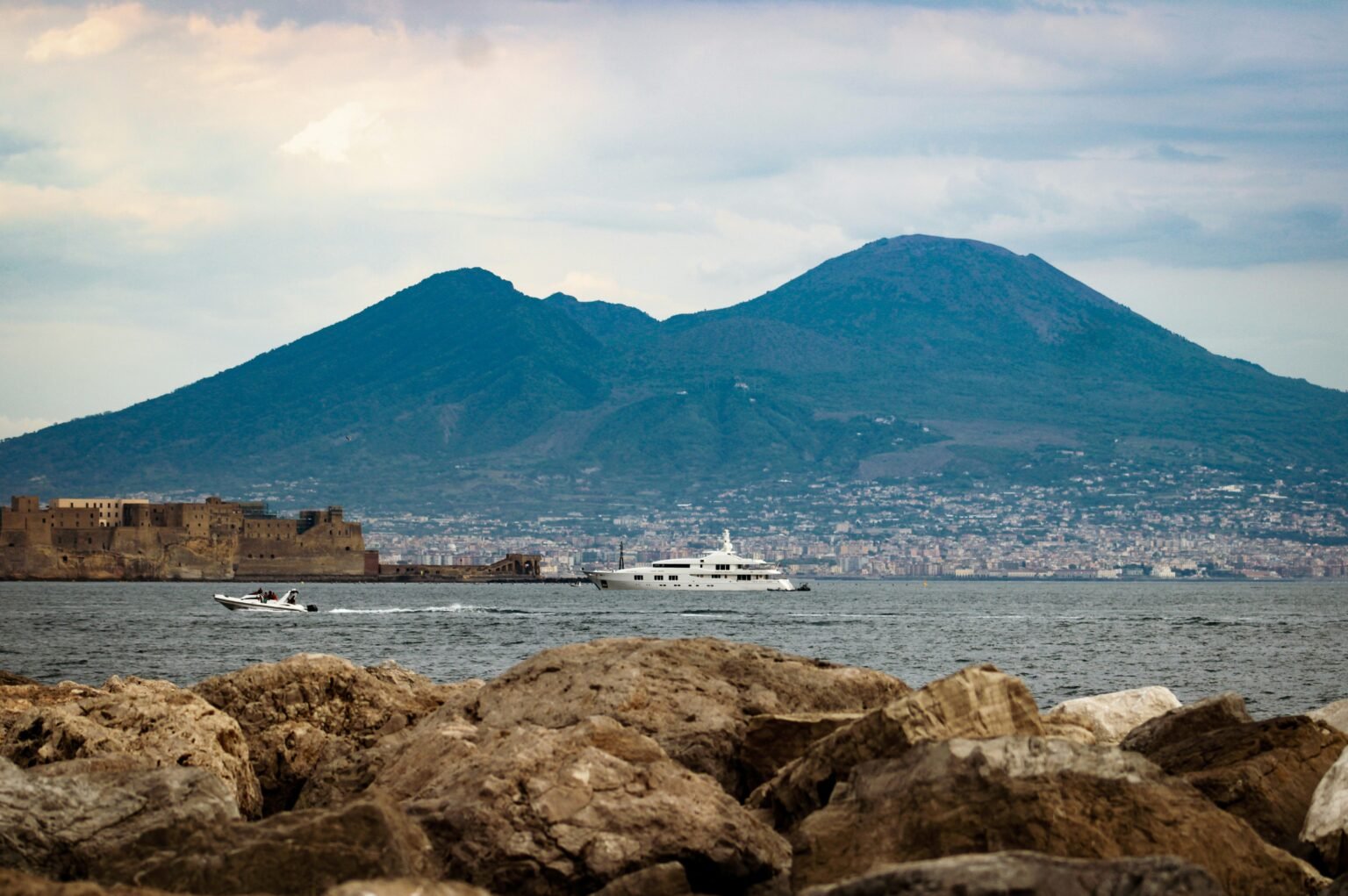
Mount Vesuvius does not dominate Naples in the way postcards suggest. It rests behind the city, its slope visible between buildings, sometimes softened by haze, sometimes sharply outlined against pale sky.
From the waterfront, the volcano feels almost still. Ferries cross the bay. Laundry shifts between balconies. Scooters pass along narrow streets. The mountain remains where it has always been, neither threatening nor theatrical.
Its shadow moves more than the mountain itself. Afternoon light stretches across the lower slopes and then withdraws slowly. The city continues without reacting.
You notice it most when you stop looking directly at it.
North Along the Coast
Later, while the Italian train follows the Tyrrhenian coastline in long, measured stretches, Vesuvius slips in and out of view between clusters of apartments and brief tunnels cut through rock.
Inside the carriage, nothing feels abrupt. A window reflects the sea in faint layers. Someone closes a book and looks outward. The track runs parallel to water for a while, then bends inland without announcement.

Naples thins gradually. The coastline softens into fields and smaller towns. The mountain recedes, though its shape lingers faintly against memory.
The movement feels steady rather than directional.
Between Bay and Plain
As the train from Naples to Rome continues north, the density shifts again. The sea falls behind. Open land widens in muted greens and browns. Olive groves appear in uneven rows. Hills gather more gently than the volcanic slope you left behind.
Inside, the rhythm remains unchanged — seatbacks aligned, overhead racks still. Outside, the horizon stretches flatter. Rome approaches without a single defining outline.
There is no mountain announcing arrival.
The City That Accumulates
Rome does not rise from a bay. It accumulates inward.
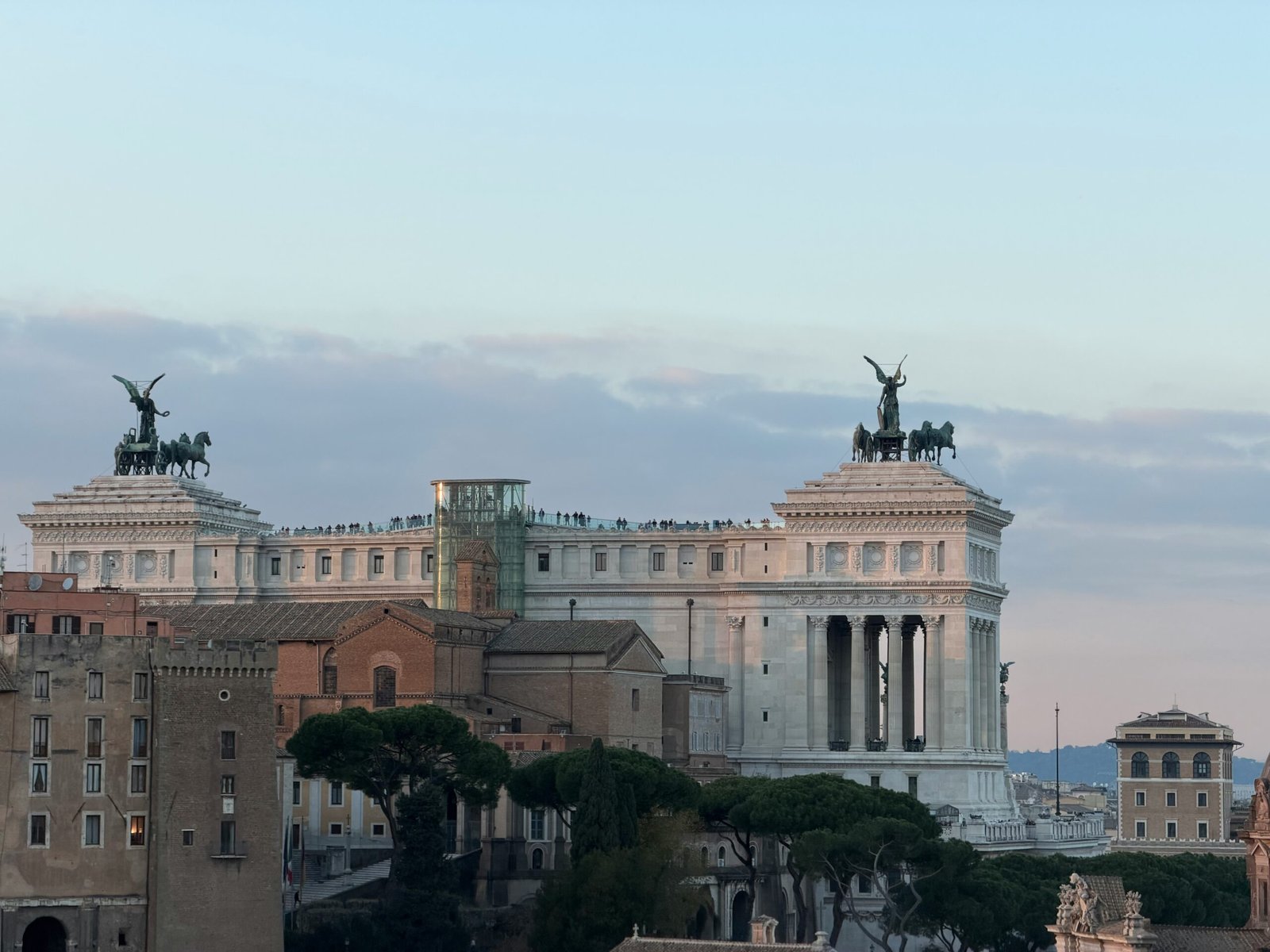
Domes lift gradually above rooftops. Church spires punctuate the skyline in irregular intervals. The Colosseum appears between streets almost unexpectedly, its curve softened by age.
The Eternal City feels less vertical than layered. Ancient walls lean against newer façades. Marble columns frame traffic rather than ceremonies. The skyline spreads across hills that feel older than the structures built upon them.
Light moves differently here. It catches on travertine and brick rather than on sea.
You walk and the city rearranges itself around corners.
From Shadow to Silhouette
Vesuvius casts a long, singular outline. Rome casts many.
In Naples, the mountain defines the horizon even when hidden. In Rome, no single structure holds that position for long. The skyline becomes sequence rather than symbol.
The Tyrrhenian coast connects both, its water reflecting sky in broad strokes that neither city fully controls. Travel between them compresses volcanic edge and imperial stone into hours.
Fields absorb the transition. Stations open and close without ceremony.
After the Outline Softens
Later, the mountain’s slope resembles a distant Roman hill in recollection. A dome echoes faintly against memory of volcanic curvature. The sea’s horizon overlaps with the line of the Tiber.
What remains is contour — shadow across rock, light against marble, steel rails extending quietly between them.
The journey does not resolve into comparison. It becomes echo instead.
Somewhere beyond the final platform, Vesuvius still waits in profile. Rome still layers itself across hills. And the line between them continues along the coast, carrying shadow and skyline forward in the same steady motion.
Contours in Recollection
With time, the difference between volcano and dome becomes less precise. The curve of Vesuvius settles into the same mental space as a Roman rooftop seen at dusk. Edges blur. Light flattens surfaces that once felt sharply defined. What seemed singular begins to overlap — stone recalling ash, ash recalling marble.
Along the Same Latitude
Far from the platforms and stations, what lingers is alignment rather than contrast. The Tyrrhenian light falls across both cities in similar tones. Rails trace a path that neither mountain nor skyline interrupts for long. Somewhere between coast and capital, the motion continues quietly, carrying slope and silhouette along the same line without asking which one anchors the view.