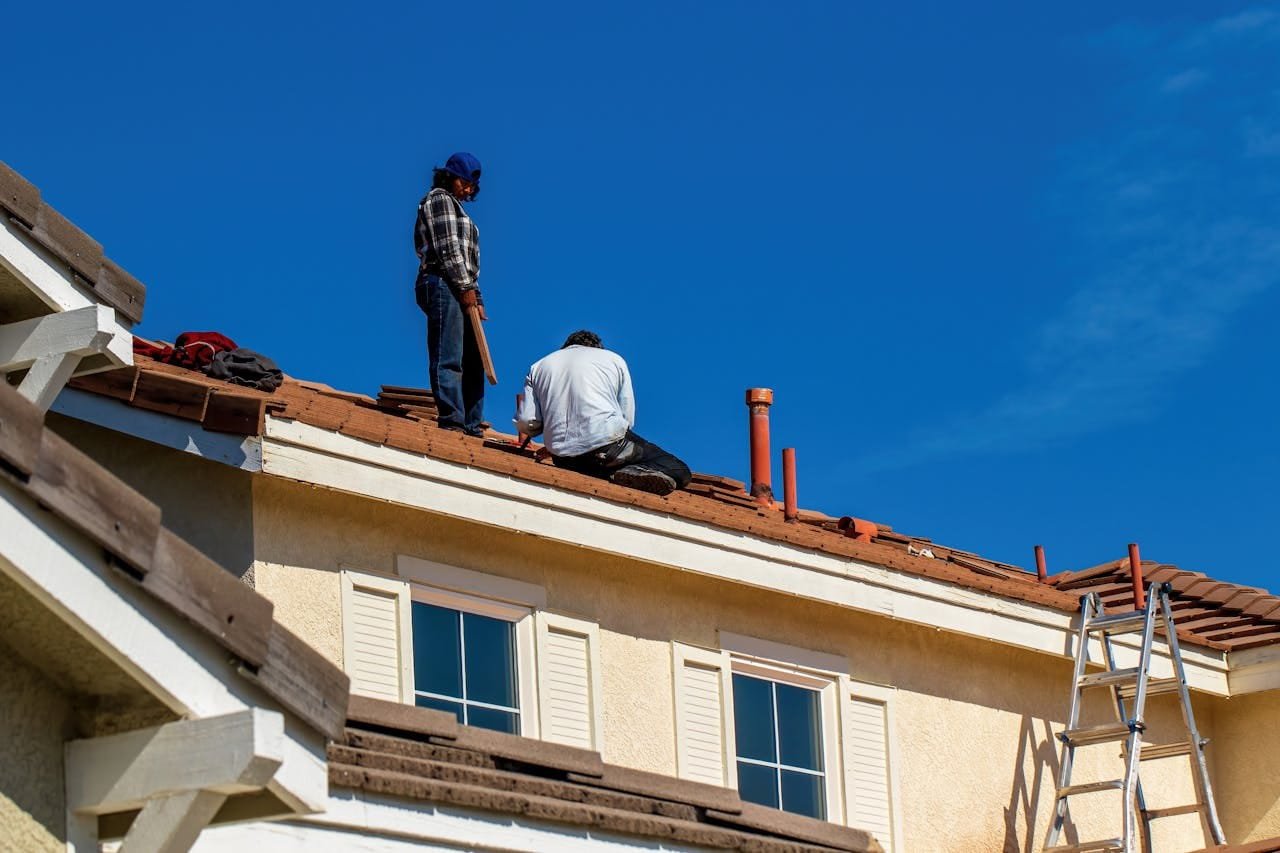
Making the call between repairing or replacing your roof isn’t just about fixing what’s broken, it’s about protecting one of your biggest investments, notes Sisters Property Management. When you spot signs of roofing damage, that sinking feeling in your stomach is completely understandable. The decision you make now can either save you thousands or cost you dearly down the road. What makes this choice particularly tricky? You’re balancing immediate costs against long-term protection, and nobody wants to spend more than necessary while also avoiding cheap fixes that won’t last.
- Assessing the Age and Lifespan of Your Roof
- Evaluating the Extent and Location of Damage
- Calculating Cost-Effectiveness and Long-Term Value
- Identifying Warning Signs That Demand Immediate Attention
- Understanding How Climate and Weather Impact Your Decision
- Consulting Professionals and Making Your Final Decision
- Conclusion
Assessing the Age and Lifespan of Your Roof
Here’s something most homeowners don’t realize until it’s too late: your roof’s age matters more than almost any other factor when deciding between repair and replacement. Asphalt shingle roofs typically hang in there for 20 to 25 years, while metal roofs can push 40 to 70 years with proper care. Tile and slate? They might outlast your mortgage by decades. But here’s the thing, if your roof is creeping toward the end of its expected lifespan, even seemingly minor damage is waving a red flag.
Evaluating the Extent and Location of Damage
Not all roof damage is created equal, and location matters just as much as severity. Got a small section damaged by a fallen branch? That’s usually a straightforward repair situation. But when damage spreads across multiple areas, or when it’s concentrated in vulnerable spots like valleys and ridges, you’re likely looking at bigger problems lurking beneath the surface. Scattered missing shingles all over your roof aren’t random bad luck, they’re telling you the entire system is breaking down.
Pay attention to what’s happening inside your home too. Water stains popping up in multiple rooms? Sagging sections you can spot from the ground? Can you actually see daylight peeking through when you’re up in the attic? These aren’t minor inconveniences you can patch over. They’re serious warnings that your roof has stopped doing its job. Here’s a helpful rule of thumb: when damage affects more than 30 percent of your roof’s surface, replacement usually makes more financial sense than trying to piece together repairs that might not solve the underlying issues anyway.
Calculating Cost-Effectiveness and Long-Term Value
Take a minute to add up what you’ve spent on roof repairs over the past few years. Now project what you’ll likely spend over the next five years if you keep patching things. Starting to see replacement in a different light? There’s more to consider too. A new roof typically recoups 60 to 70 percent of its cost in increased home value. It improves energy efficiency through better insulation and ventilation, which means lower utility bills month after month. When homeowners face widespread deterioration that’s affecting their entire protective system, roof replacement from Ace Roofing delivers long-term value that repairs simply can’t match. Plus, many insurance companies offer rate reductions for newer roofs, and you can finally stop worrying about the next big storm.
Identifying Warning Signs That Demand Immediate Attention
Some roofing problems don’t give you the luxury of waiting and weighing your options, they demand action now. When shingles start curling, cupping, or buckling, that’s not just cosmetic damage. Your roof’s waterproofing system is failing, and every day you wait increases the risk of water infiltration and structural damage. Notice bare spots on your shingles or find yourself cleaning excessive granules out of your gutters? Those protective granules aren’t just for show, once they’re gone, your shingles can’t effectively shield your home from the elements.
Moss and algae might look like simple cosmetic issues, but they often signal trapped moisture eating away at your roofing materials from underneath. The real alarm bells, though, are what’s happening inside your home. Persistent leaks that keep coming back despite repairs? Mold growth in your attic? Energy bills that keep climbing even though you haven’t changed your habits? Your roof is trying to tell you it’s done. And if you notice sagging in your roof decking, that’s beyond urgent, it’s a structural safety issue that needs professional eyes on it immediately, and probably a complete replacement.
Understanding How Climate and Weather Impact Your Decision
Where you live shapes your roof’s lifespan more than you might think. Homes in areas that get pounded by heavy snow, baked by intense summer heat, or battered by frequent severe storms experience accelerated wear that can shorten a roof’s life by years. That recent hailstorm or hurricane might have caused damage you can’t see from the ground, but it’s there, slowly compromising your roof’s integrity and waiting to become tomorrow’s emergency.



Consulting Professionals and Making Your Final Decision
Here’s the truth: you can research all day, but nothing replaces a thorough inspection by someone who knows what they’re looking at. Professional roofers spot problems the average homeowner would never notice, issues with ventilation, failing flashing, structural concerns that might not seem connected to your roof but absolutely are. These details make the difference between a repair that actually solves your problem and one that just postpones the inevitable.
Don’t settle for a single opinion, though. Get multiple estimates from licensed, insured contractors with solid local reputations. Check their references, read their reviews, and don’t be shy about asking pointed questions. How extensive is the damage really? If you repair now, how long will that fix realistically last? Would replacement actually save money over the next five to ten years? Watch out for high-pressure sales tactics or recommendations that seem designed to empty your wallet, but also remember that the cheapest bid rarely delivers the best value.
Conclusion
Choosing between roof repair and replacement isn’t a simple calculation, it’s about understanding your roof’s current condition, your home’s long-term needs, and your financial reality. While repairs might look more budget-friendly on paper, replacement often delivers better value when you factor in ongoing maintenance costs and the benefits of modern, energy-efficient roofing systems that actually work the way they’re supposed to. Listen to what the professionals tell you during inspections, but trust your gut too. You know your home, your budget, and what makes sense for your situation.