The home fitness revolution has transformed spare rooms, garages, and conservatories into personal training spaces across the UK. But whilst buying gym equipment online is straightforward, getting heavy, awkward machinery safely delivered or moved to a new property presents challenges that catch many fitness enthusiasts off guard.
- Why Gym Equipment Presents Unique Transport Challenges
- Assessing What You’re Actually Moving
- Equipment-Specific Moving Considerations
- Protecting Property and Equipment During the Move
- Vehicle Requirements and Loading Strategies
- Safety Considerations You Cannot Ignore
- Reassembly and Setup Considerations
- When to Consider Professional Help
- Final Thoughts
Whether you’re relocating a home gym to a new house, upgrading your equipment, or collecting a secondhand bargain, understanding how to move these substantial items safely can save you from injury, property damage, and expensive mistakes.
Why Gym Equipment Presents Unique Transport Challenges
Unlike ordinary furniture, gym equipment combines extreme weight with awkward dimensions and delicate mechanisms. A standard Olympic barbell set might weigh 200kg once you include the plates. Treadmills, whilst appearing manageable, often exceed 100kg and have sensitive electronic components alongside mechanical parts that can misalign if handled roughly. Multi-gyms and cable machines contain precise calibrations and safety mechanisms that damage can compromise.
The density of gym equipment is also deceptive. A compact weight plate takes up little space but might weigh 20kg. This concentration of mass in small items makes them prone to causing damage to floors, vehicles, and anything they’re dropped on—including feet. The metal construction of most equipment means any impact can dent, bend, or crack not just the equipment itself but also walls, door frames, and vehicle interiors.
Moreover, many items have protruding parts, cables, or mechanical components that can catch, snag, or detach during movement. Treadmill belts can shift out of alignment. Cable systems can tangle. Weight stacks can jam. Even cosmetic damage like scratched powder coating or torn upholstery diminishes value significantly when you’re dealing with expensive equipment.
Assessing What You’re Actually Moving
Before attempting to move any gym equipment, you need accurate information about weight, dimensions, and disassembly options. Manufacturer specifications are your starting point, but don’t assume these reflect reality. Shipping weight often excludes packaging, and dimensions might not account for items that don’t fold or disassemble.
For items bought secondhand, finding the original manual online is worthwhile. Many manufacturers provide PDF downloads of assembly instructions, which work equally well in reverse for disassembly. These documents often include crucial information about which parts can safely separate and which shouldn’t be forced apart.
Consider access routes carefully. Measure doorways, hallways, and staircases at your current location and destination. Remember that you need clearance not just for the equipment itself but also for the people carrying it and room to manoeuvre. An item that fits through a doorway when carried straight might not fit when you need to angle it round a corner. Staircases present particular challenges—turning landings are often the tightest spots, not the stairs themselves.



Equipment-Specific Moving Considerations
Free weights and plates require proper containers. Never attempt to carry multiple plates by hand or load them loose into a vehicle. Olympic weight plates need plate storage racks or sturdy boxes rated for the weight. Standard plates can use similar solutions, but ensure whatever you use can handle the load—cheap cardboard boxes will fail catastrophically with weight plates inside. Dumbbells up to about 15kg per pair can pack into sturdy plastic crates, but heavier ones need individual handling or specialist equipment.
Barbells and bars should never go loose in a vehicle where they can roll. Secure them properly, and be aware that Olympic bars are longer than standard estate car boots—you’ll need appropriate transport. Pad the ends to prevent them damaging anything they contact.
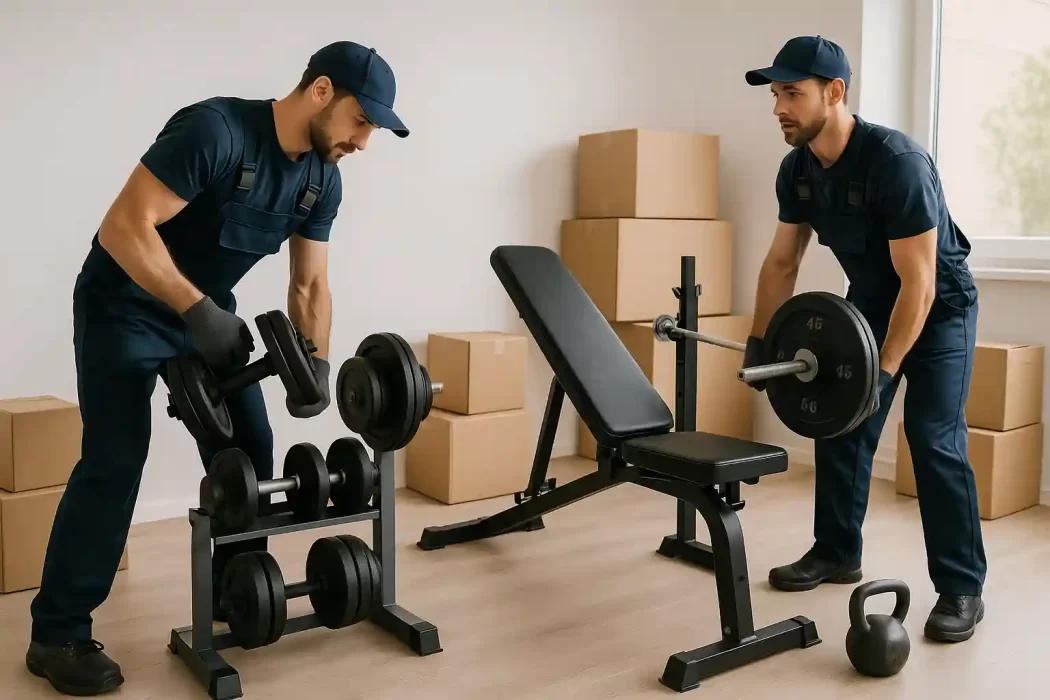
Benches and racks often disassemble more than you’d expect. Power racks usually break down into uprights, crossbars, and base pieces. Weight benches typically separate into seat, back, and frame sections. Disassembly makes items far more manageable, but photograph the assembly before you start taking things apart—bench adjustment mechanisms, in particular, can be confusing to reassemble.
Treadmills represent perhaps the most challenging common home gym item. Most fold, which helps with dimensions but doesn’t reduce weight. The belt and deck mechanisms are precisely aligned and can suffer if the unit experiences significant impacts. Motors and electronics need protection from moisture and extreme temperatures. Never tip a treadmill on its side for extended periods—hydraulic folding mechanisms can leak, and lubricant can migrate where it shouldn’t.
Cross-trainers and exercise bikes also fold in many cases, but the folding mechanisms themselves can be pinch points and damage risks. Remove pedals if possible, as these protrude and easily catch or bend. Protect the monitor and any electronic displays with padding.
Rowing machines vary enormously. Water rowers need draining before transport. Air resistance models are generally lighter and more manageable. The slide rails on any rower need protection from dents and scratches, as even minor damage can affect the smooth operation.
Multi-gyms and cable machines are the most complex items to move. If you’re confident with mechanics, partial disassembly helps—remove weight stacks, detach cables, take off peripheral attachments. However, getting cable routing wrong during reassembly can render the machine unusable or dangerous. Taking detailed photos or videos during disassembly is essential. Some people even label each cable and its corresponding point with matching tape before disconnecting.
Protecting Property and Equipment During the Move
Hard floors need protection when moving heavy equipment. Even with careful handling, a dropped weight plate or slipped treadmill can crack tiles or dent wooden flooring. Heavy-duty cardboard, hardboard sheets, or rubber matting create protective pathways for moving equipment across floors. These materials also improve grip and reduce noise.
Doorways and corners suffer particular abuse during equipment moves. Even without direct impacts, metal equipment can scrape paintwork and chip door frames. Pre-emptive protection using cardboard and tape around vulnerable areas takes minutes and prevents damage that takes hours to repair.
For the equipment itself, padding sharp corners and wrapping mechanisms helps prevent damage during transport. Moving blankets work well for larger items. Bubble wrap suits smaller pieces, though avoid using it directly against any surface where you don’t want pressure marks. For items with powder-coated finishes—most modern gym equipment—even superficial scratches can start rust if they penetrate to bare metal.
Vehicle Requirements and Loading Strategies
Standard cars rarely suffice for moving gym equipment. Even a large estate struggles with items like treadmills or multi-gyms. Van hire is often necessary, and it’s worth paying for a larger van than you think you need—having space to position items properly and pad them adequately is worth the extra cost.
Loading heavy equipment requires strategy. Weight distribution matters both for vehicle handling and for preventing items crushing each other. Heaviest items go on the floor, secured so they cannot slide. Never stack directly on top of equipment—use padding or separation. Items that can roll—weight plates, dumbbells, barbells—need secure restraint. Cable tie-down straps work well but shouldn’t over-tighten on anything with mechanical components or electronics.
For particularly heavy items like loaded weight racks or commercial-grade treadmills, consider whether one trip with proper transport is safer and more cost-effective than multiple trips with inadequate vehicles. A large item courier service that specialises in heavy goods can handle equipment that’s beyond reasonable DIY moving scope, providing both the vehicle capacity and lifting equipment necessary for safe transport.
Safety Considerations You Cannot Ignore
Moving gym equipment causes more injuries than people expect. Back strains from lifting items incorrectly, crushed fingers from dropped plates, and impact injuries from equipment shifting during transport are all common. Manual handling principles apply even more strictly with gym equipment than with ordinary furniture.
Always lift with your legs, not your back. For items over about 30kg, get help—don’t attempt to solo carry weights your body isn’t conditioned for. Use proper lifting equipment where possible. Sack trucks, trolleys, and furniture dollies make moving safer and easier, though ensure whatever you use is rated for the weight. A cheap trolley collapsing under a 100kg treadmill is dangerous.
Wear appropriate clothing and footwear. Steel-toed boots aren’t excessive when moving heavy weights. Gloves provide grip and protect hands, though ensure they’re not so bulky that they reduce dexterity. Clear pathways of trip hazards before you start carrying anything.
Reassembly and Setup Considerations
Getting equipment to its destination is only half the task. Reassembly needs as much care as disassembly. Work in good light with adequate space. Have all tools ready before you start. Refer constantly to your photos, videos, or the manufacturer’s instructions.
Don’t force anything during reassembly. If something doesn’t fit easily, work out why before applying pressure. Many gym equipment failures occur because reassembly wasn’t quite right, throwing off alignments or stressing components in ways they weren’t designed to handle.
Once reassembled, test thoroughly before serious use. Check that weights slide smoothly, cables route properly, and all adjustment mechanisms work. For equipment with electronic components, allow time for them to stabilise after transport, especially if there’s been a temperature change.
When to Consider Professional Help
Some equipment genuinely exceeds sensible DIY moving scope. Commercial-grade treadmills, large multi-gyms, and full plate-loaded equipment collections can weigh several hundred kilograms. Moving such items up or down stairs, through narrow hallways, or between properties separated by significant distance justifies professional assistance.
Professional movers experienced with gym equipment understand the specific challenges. They have appropriate lifting equipment, vehicles rated for the weight, and insurance covering the transport. For expensive equipment—particularly items still under warranty where damage might void coverage—professional moving can actually save money by protecting your investment.
Final Thoughts
Moving gym equipment successfully requires honest assessment of what you’re dealing with, proper planning, appropriate equipment and help, and patient execution. The temptation to rush or cut corners can result in injuries, damaged property, or broken equipment that costs far more than doing things properly in the first place.
Whether you’re moving a couple of dumbbells or an entire home gym, treating the task with appropriate respect for the weights, dimensions, and technical challenges involved makes the difference between a successful move and an expensive regret. Your fitness goals depend on having functioning equipment at the other end—make sure it arrives in condition to support those goals.