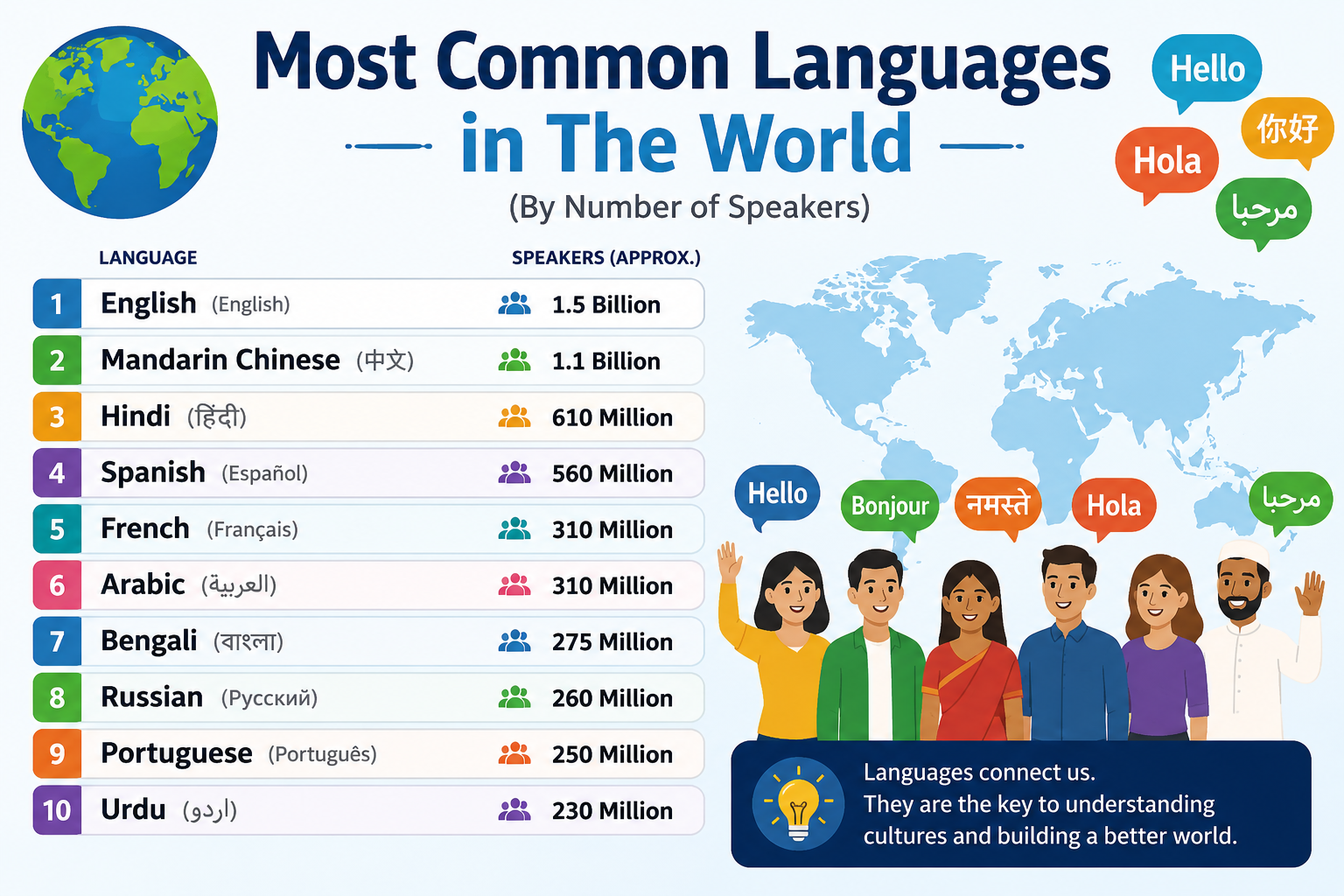
Introduction to Most Common Languages in The World
Language is more than just a tool for communication; it’s a gateway to understanding cultures, traditions, and histories. In our increasingly interconnected world, knowing the most common languages can open doors to new opportunities—whether for travel, business, or personal connections. With over 7,000 languages spoken globally, some have emerged as dominant forces in shaping international discourse. What are these languages? Why do they hold such significance? Let’s dive into the fascinating realm of linguistic diversity and explore the most common languages in the world today.
- Introduction to Most Common Languages in The World
- Why is it important to know the most common languages in the world?
- Top 5 Most Spoken Languages in the World
- The Influence of Colonialism and Globalization on Language Popularity
- Lesser-Known but Widely Spoken Languages
- How to Choose Which Language to Learn?
- Conclusion
Why is it important to know the most common languages in the world?
Understanding the most common languages in the world opens up a wealth of opportunities. Whether for travel, business, or cultural exchange, language serves as a bridge connecting diverse people.
Knowing popular languages enhances communication skills. It allows individuals to engage with others on deeper levels and fosters empathy across cultures.
In today’s global economy, multilingualism can be a significant asset. Employers often seek candidates who can navigate different linguistic landscapes. This skill can set you apart in competitive job markets.
Moreover, appreciating these languages enriches personal experiences. Engaging with literature, films, and traditions from various cultures becomes more meaningful when you understand the language behind them.
Awareness of widely spoken languages also encourages respect for linguistic diversity. It promotes inclusivity and understanding in an increasingly interconnected world.
Top 5 Most Spoken Languages in the World
Mandarin Chinese tops the list as the most spoken language globally. With over a billion native speakers, its influence stretches far beyond China. The intricate characters and tonal variations make it both fascinating and challenging.
Next up is Spanish, with approximately 460 million native speakers. It’s the primary language in numerous countries across Latin America and Spain. Its vibrant culture and easy adaptability enhance its global footprint.



English follows closely, boasting around 375 million native speakers but significantly more non-native ones. This widespread use makes it a lingua franca in business, science, and travel.
Hindi ranks fourth with about 340 million speakers primarily in India. As Bollywood continues to gain popularity worldwide, so does this melodic language.
Arabic claims around 310 million native speakers spread across various dialects in multiple countries. Its historical significance adds depth to its modern usage today.
The Influence of Colonialism and Globalization on Language Popularity
Colonialism has played a significant role in shaping the linguistic landscape of our world. As empires expanded, so too did their languages. English, Spanish, and French spread far beyond their native borders through conquest and colonization.
These dominant languages often replaced indigenous tongues. The result was a loss of cultural identity for many communities. In some cases, colonial languages were enforced as the medium of education and governance, marginalizing local dialects.
Globalization further accelerated this trend. The interconnectedness brought on by trade and communication allowed certain languages to flourish in international business and technology sectors. English emerged as the global lingua franca thanks to its prevalence in science, commerce, and popular culture.
As people navigate diverse societies today, they often prioritize learning these dominant languages for practical reasons—accessing opportunities or connecting with wider audiences—while lesser-known tongues struggle to find relevance amidst such overwhelming influence.
Lesser-Known but Widely Spoken Languages
While many people are familiar with major languages, several lesser-known tongues boast impressive speaker numbers.
Take Hausa, for example. Spoken by over 50 million in West Africa, it serves as a crucial lingua franca among various ethnic groups. Its rich cultural heritage is often overlooked yet immensely vibrant.
Another notable mention is Bengali, primarily spoken in Bangladesh and parts of India. With more than 230 million speakers, its poetic literature and history deserve recognition beyond its regional status.
Then there’s Punjabi. This language connects millions across Pakistan and India. The lively music and films produced in Punjabi have gained international appeal but still remain underappreciated linguistically.
Languages like these reveal the depth of human communication that transcends borders. They remind us that behind every word lies a world filled with stories waiting to be discovered.
How to Choose Which Language to Learn?
Choosing the right language to learn can feel overwhelming. Start by considering your interests. Are you drawn to a specific culture, literature, or cuisine? This connection can motivate you throughout your learning journey.
Next, think about practicality. Is there a language that could enhance your career opportunities? Languages like Mandarin and Spanish often open doors in various industries.
Don’t overlook the community aspect. Joining local groups or online forums for language exchange can make learning more enjoyable. You’ll have support from fellow learners and native speakers alike.
Assess resources available for each language. Some languages offer abundant materials—books, apps, and classes—that facilitate an easier learning process compared to others with limited options.
Your choice should resonate personally while also offering potential benefits in both social and professional realms.
Conclusion
Understanding the most common languages in the world opens up a realm of opportunities. Whether for travel, business, or cultural exchange, knowing these languages can significantly enhance your interactions and experiences. The dynamic nature of language reflects our evolving society influenced by history, migration, and technology.
Choosing which language to learn can be a personal journey. It depends on your interests, goals, and environment. Some may lean towards widely spoken tongues like Mandarin or Spanish due to their global reach. Others might find passion in exploring lesser-known languages that connect them with unique cultures.
Immersing yourself in another language enriches not just communication but also broadens perspectives—inviting you to understand people from diverse backgrounds better. Embracing this adventure could lead you down an enlightening path filled with new connections and insights into our shared human experience.