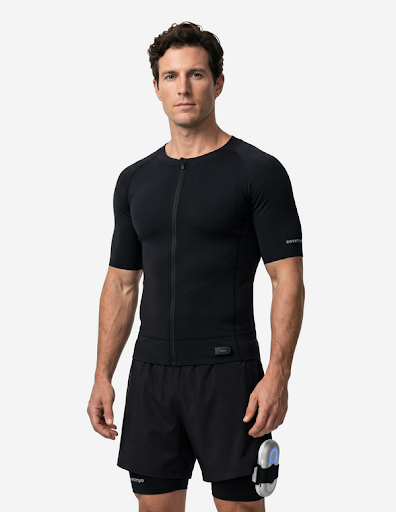
Electrical Muscle Stimulation units have surged from niche rehabilitation tools into mainstream home fitness essentials, with millions of users now strapping on electrodes alongside their regular workout gear. Yet a surprising number of these users operate their devices at default settings, never exploring the full spectrum of intensity controls available to them. Others push too hard, too fast, skipping safety protocols embedded in their companion apps. The result is a landscape where people either plateau with underwhelming muscle engagement or expose themselves to unnecessary discomfort and potential injury. This guide is built for the technically curious user who wants more than a basic understanding—someone ready to fine-tune every parameter of their EMS experience. We’ll walk through the mechanics of intensity control, decode the app compliance features that keep sessions safe, and provide a framework for integrating EMS technology into a smarter home training routine. So the question stands: is your EMS unit truly optimized for both intensity control and safety, or are you leaving performance and protection on the table?
- Understanding EMS Units: Core Technology and the Critical Role of Intensity Control
- Mastering Intensity Control: A Step-by-Step Guide for Customized Training
- Step 1: Assessing Your Fitness Level and Goals
- Step 2: Navigating Your EMS Device’s Intensity Settings
- Step 3: Progressive Overload and Session Planning
- Ensuring Safety and Efficacy Through App Compliance and Features
- Key App Features for Safe Intensity Management
- Understanding and Verifying App Compliance Standards
- Best Practices for Data Security and App Updates
- Optimizing Your Home Training Setup with EMS Technology
- Turn Your EMS Unit Into a Precision Training Instrument
Understanding EMS Units: Core Technology and the Critical Role of Intensity Control
An EMS unit sits at the intersection of advanced exercise equipment and consumer electronics, delivering controlled electrical impulses through skin-mounted electrodes to trigger involuntary muscle contractions. Unlike traditional resistance training, where your brain sends signals through the nervous system to activate muscle fibers, EMS bypasses that voluntary pathway entirely. An external current reaches the motor neurons directly, recruiting muscle fibers—including deep-lying ones that conventional exercises often miss—without requiring you to lift a single weight.
The electrical signal itself has three core characteristics that determine how your muscles respond: frequency (measured in hertz), pulse width (measured in microseconds), and amplitude (measured in milliamps). Frequency dictates the type of contraction—low frequencies produce individual twitches useful for recovery, while higher frequencies generate sustained, tetanic contractions suited for strength building. Pulse width controls how deeply the current penetrates tissue, and amplitude governs the raw strength of the signal. Together, these parameters form the intensity profile of every session you run.
This is precisely why intensity control isn’t a luxury feature—it’s the operational backbone of any effective EMS experience. Set the amplitude too low and you’ll feel a mild tingle that does little beyond superficial stimulation. Crank it too high without adequate conditioning and you risk muscle spasms, skin irritation, or in extreme cases, rhabdomyolysis from excessive fiber breakdown. Precise control allows you to match the stimulus to your current tolerance, target specific muscle groups with appropriate force, and progress safely over weeks of training. As EMS devices increasingly connect to smartphone apps and integrate with broader home training ecosystems—syncing with heart rate monitors, fitness trackers, and workout planners—the ability to fine-tune intensity through digital interfaces has become central to getting real, measurable results while staying within safe physiological boundaries.
Mastering Intensity Control: A Step-by-Step Guide for Customized Training
Getting meaningful results from an EMS unit demands more than pressing start and hoping for the best. The difference between a session that drives genuine muscle adaptation and one that barely registers lies in how deliberately you configure and progress your intensity settings. The following three-step framework gives you a repeatable process for dialing in your EMS training, whether you’re recovering from an injury, supplementing a strength program, or building muscular endurance from your living room.
Step 1: Assessing Your Fitness Level and Goals
Before touching a single setting on your device, establish an honest baseline. If you’re new to EMS or returning after a long break, your neuromuscular system needs time to adapt to externally driven contractions—even if you’re otherwise fit. Start by identifying your primary objective: rehabilitation and pain management call for lower frequencies in the 1–10 Hz range, endurance work sits comfortably between 20–50 Hz, and strength or hypertrophy goals typically require 50–85 Hz. Next, run an initial test session at the lowest amplitude your device offers, targeting a single muscle group. Note the point where you feel a clear, visible contraction without pain—this is your functional threshold. Record it in your companion app or a training journal. That number becomes the anchor for every session going forward, and it will shift upward as your tolerance develops over the first two to three weeks.
Step 2: Navigating Your EMS Device’s Intensity Settings
With your baseline established, it’s time to understand what each parameter actually does when you adjust it. Amplitude is the most immediately noticeable control—raising it increases the current flowing into the muscle, producing a stronger contraction. This is the dial most users gravitate toward, but it’s only one piece of the puzzle. Pulse width, often adjustable in increments of 50 to 100 microseconds, determines how many motor units the signal can reach; a wider pulse recruits more fibers, making the contraction fuller without necessarily increasing perceived intensity. Frequency controls contraction speed and type—bumping it up transitions the sensation from rhythmic twitching to a smooth, sustained squeeze. The practical move is to adjust one variable at a time per session. If you want deeper engagement, try widening the pulse before raising amplitude. If you want a stronger sustained hold, increase frequency first. This isolated approach lets you pinpoint exactly which parameter drives the response you’re after, rather than blindly escalating everything at once.
Step 3: Progressive Overload and Session Planning
Just as you’d add weight to a barbell over weeks of training, EMS intensity should follow a structured progression curve. A reliable approach is the ten-percent rule: increase your working amplitude by roughly ten percent every four to six sessions, provided you completed previous sessions without lingering soreness or skin irritation. Map out a weekly schedule that alternates between higher-intensity strength sessions and lower-intensity recovery or endurance sessions, giving targeted muscle groups at least 48 hours of rest between demanding protocols. Track every session’s parameters—amplitude, pulse width, frequency, duration, and the muscle groups targeted—so you can identify patterns. If progress stalls, the data will show you whether you’ve been neglecting pulse width adjustments or staying at the same frequency for too long. Periodically cycle back to a lighter “deload” week where you reduce amplitude by 20–30 percent, allowing tissue to recover fully before the next push. This disciplined, data-informed approach prevents the two most common pitfalls: plateauing from insufficient stimulus and overtraining from unchecked escalation.



Ensuring Safety and Efficacy Through App Compliance and Features
The companion app that ships with your EMS unit isn’t just a convenience layer—it’s a safety architecture designed to prevent the kinds of errors that manual-only devices can’t catch. As EMS technology has matured, the software controlling these devices has evolved from simple remote interfaces into sophisticated platforms that monitor, limit, and guide every aspect of your session. Understanding how to leverage these features, verify their compliance credentials, and maintain them properly is what separates informed users from those unknowingly operating outside safe parameters.
Key App Features for Safe Intensity Management
Modern EMS companion apps typically include several protective mechanisms that work in the background during every session. Preset programs are the first line of defense—these are pre-configured protocols designed by physiotherapists or sports scientists that cap intensity within tested ranges for specific goals like recovery, endurance, or strength. They prevent inexperienced users from accidentally programming dangerous combinations of high amplitude and wide pulse width. Real-time feedback is equally critical: many apps display live muscle response data, skin impedance readings, or session intensity curves that alert you when resistance at the electrode site changes—a sign of poor contact that could cause localized burns. The emergency stop function, usually accessible as a prominent on-screen button or triggered by a sharp device shake, cuts all current instantly. Beyond these, look for automatic ramp-up features that gradually increase amplitude at the start of each contraction phase rather than delivering full intensity immediately, and session timers that enforce mandatory rest periods between stimulation cycles. Apps that integrate with heart rate monitors add another safety dimension, pausing or reducing intensity if your cardiovascular response exceeds preset thresholds.
Understanding and Verifying App Compliance Standards
Not all EMS devices meet the same regulatory bar, and the certifications attached to your unit reveal how rigorously it was tested before reaching consumers. In the United States, look for FDA 510(k) clearance, which indicates the device has demonstrated substantial equivalence to a legally marketed predicate device in terms of safety and effectiveness. In Europe, CE marking confirms conformity with EU health and safety directives, while devices sold in other markets may carry certifications like TGA approval in Australia or Health Canada licensing. These aren’t just stickers on packaging—they represent documented testing of electrical output limits, material biocompatibility, and software reliability. To verify compliance, check the manufacturer’s website for clearance numbers, search regulatory databases directly (the FDA maintains a publicly searchable 510(k) database), and confirm that the specific model you own—not just the brand—holds current certification. Be cautious of devices sold through third-party marketplaces that display generic compliance logos without traceable documentation, as counterfeit or uncertified units may lack the current-limiting circuits that prevent dangerous output levels.
Best Practices for Data Security and App Updates
Because your EMS app collects biometric data, session histories, and potentially syncs with broader health platforms, treating it with the same security hygiene you’d apply to banking apps is warranted. Enable two-factor authentication if available, review the app’s data-sharing permissions in your phone’s privacy settings, and understand where your information is stored—local device storage carries different risk profiles than cloud-based systems. Firmware and software updates deserve particular attention because they frequently patch safety-critical bugs: a delayed update might mean running sessions with outdated intensity-limiting algorithms or unpatched Bluetooth vulnerabilities that could theoretically allow unauthorized access to device controls. Set your app to auto-update, but also check the manufacturer’s release notes periodically to understand what each update addresses. If an update specifically mentions changes to stimulation protocols or safety thresholds, run a recalibration session at reduced intensity to confirm the device behaves as expected under the new software before resuming your normal training parameters.
Optimizing Your Home Training Setup with EMS Technology
Integrating an EMS unit into your broader home training routine requires more thought than simply adding another gadget to the shelf. The most effective approach treats EMS as a complement to voluntary exercise rather than a replacement. Position your EMS sessions strategically within your weekly schedule—use them after compound lifts to exhaust remaining motor units in targeted muscles, or on dedicated recovery days with low-frequency protocols that promote blood flow without adding mechanical stress to joints. Pairing EMS with bodyweight movements like planks, squats, or lunges while the device is active can amplify recruitment patterns, effectively turning a moderate exercise into a high-engagement effort that bridges the gap between passive stimulation and traditional resistance work. Devices like the sweetmyo unit exemplify this integration-focused approach, offering granular intensity controls that make it straightforward to tailor sessions to complement your existing training split.
Your physical setup matters as well. Ensure electrode placement sites are clean and free of lotions or excessive hair, which degrade conductivity and force you to compensate with higher amplitude—introducing unnecessary skin stress. Store your unit and electrode pads according to manufacturer guidelines; dried-out gel pads increase impedance unevenly across their surface, creating hot spots that feel like pinpricks rather than smooth contractions. Replace pads on a regular cycle, typically every 20 to 30 uses, and inspect cables or wireless connectors for wear that could cause intermittent signal drops mid-session. Keep your training space organized so that your phone or tablet running the companion app remains visible and within reach throughout every session—you need instant access to intensity adjustments and the emergency stop function without fumbling. When you treat EMS as a precision instrument within a thoughtfully designed environment, it transitions from a novelty purchase into a durable, high-value component of your long-term fitness infrastructure.
Turn Your EMS Unit Into a Precision Training Instrument
Optimizing your EMS unit comes down to two non-negotiable priorities: deliberate intensity control and rigorous attention to the safety infrastructure built into your companion app. On the intensity side, that means establishing an honest baseline, understanding the distinct roles of amplitude, pulse width, and frequency, and progressing through a structured overload plan rather than guessing your way forward. On the safety side, it means actively using the protective features your app provides—preset protocols, real-time feedback, emergency stop functions—and verifying that your device carries legitimate regulatory certifications rather than assuming compliance based on branding alone. Keeping firmware updated and treating biometric data with appropriate security hygiene closes the remaining gaps most users leave wide open.
When you commit to both sides of this equation, your EMS unit stops being a passive gadget collecting dust between sporadic sessions. It becomes a precision training instrument integrated into a broader fitness strategy, delivering measurable adaptation while keeping you within safe physiological limits. The framework is here—now audit your current setup against it. Review your intensity logs, check your device’s certification status, update your app, and run your next session with every parameter intentionally configured. That single shift from passive use to active optimization is what separates users who plateau from those who progress.