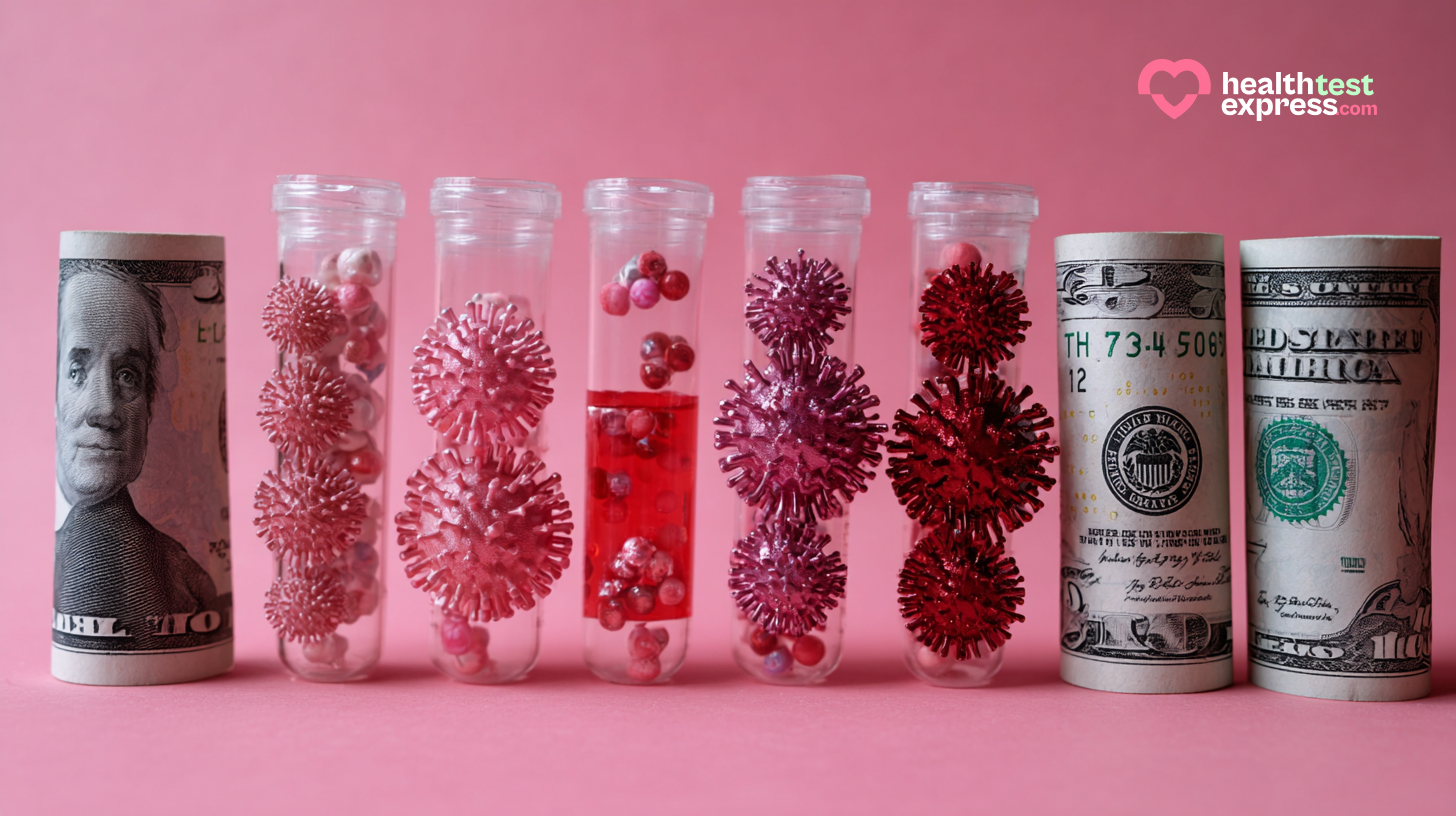
STD testing is one of those things people put off – not because they don’t care, but because they assume it’s expensive, complicated, or awkward to arrange. In reality, the cost of STD testing in the US varies enormously depending on where you go, what you’re testing for, and whether you have insurance. This guide breaks down what you can expect to pay, where to go, and how to get tested without overpaying.
- Why STD Testing Costs Vary So Much
- Average Cost of Common STD Tests Without Insurance
- What’s Covered by Insurance?
- Where to Get Tested: A Cost Comparison
- Your Primary Care Doctor
- Planned Parenthood
- Community Health Centers (FQHCs)
- Sexual Health Clinics
- Private STD Testing Services
- At-Home Test Kits
- How to Reduce the Cost of STD Testing
- How Often Should You Get Tested?
- What Happens If a Test Comes Back Positive?
- The Bottom Line
Why STD Testing Costs Vary So Much
There’s no single price for STD testing in the United States. Unlike a flu shot or a routine blood panel, STD testing is a fragmented market – costs depend on:
- Which tests you need. A single chlamydia test costs far less than a full panel covering 10+ infections.
- Where you go. Private clinics, Planned Parenthood, community health centers, your primary care doctor, and at-home test kits all charge differently.
- Whether you have insurance. The Affordable Care Act requires most insurance plans to cover STD screening for people at risk, often at no cost. But “at risk” is defined narrowly, and not everyone qualifies.
- Whether you’re symptomatic. Diagnostic testing (when you have symptoms) is often billed differently than preventive screening.
Understanding these variables is the first step to not overpaying.
Average Cost of Common STD Tests Without Insurance
If you’re paying out of pocket, here’s a general range for what individual tests cost:
| Test | Typical out-of-pocket cost |
| Chlamydia | $30–$80 |
| Gonorrhea | $30–$80 |
| Chlamydia + Gonorrhea (combined) | $50–$100 |
| Syphilis | $25–$60 |
| HIV (rapid test) | $20–$60 |
| HIV (lab-based) | $50–$150 |
| Herpes (HSV-1 and HSV-2) | $50–$150 |
| Hepatitis B | $30–$80 |
| Hepatitis C | $30–$100 |
| HPV (for women, as part of Pap smear) | Included in Pap cost |
| Trichomoniasis | $30–$70 |
| Full STD panel (8–10 tests) | $150–$500 |
Prices at the lower end typically reflect community health centers or online testing services. Prices at the higher end reflect private clinics or hospital-affiliated labs without insurance.
What’s Covered by Insurance?
The Affordable Care Act mandates free STD screening for people who fall into certain categories:
- Sexually active women under 25: Annual chlamydia and gonorrhea screening at no cost
- Pregnant women: Syphilis, HIV, hepatitis B, and chlamydia screening at no cost
- People at increased risk for HIV: HIV screening at no cost
- Men who have sex with men (MSM): Often covered for a broader panel, depending on plan
“At no cost” means no copay, no deductible — if your provider is in-network. Always call your insurer before booking to confirm what’s covered, because coverage varies between plans even within the same network.
If you have symptoms, the visit may be billed as diagnostic rather than preventive, which can trigger a copay or deductible. This catches a lot of people off guard.



Where to Get Tested: A Cost Comparison
Your Primary Care Doctor
Cost: Varies significantly – often $100-$300 without insurance, depending on what’s ordered.
Your GP can order STD tests, but may not be the most cost-effective option. Labs bill separately from the doctor visit, and if you’re paying out of pocket, the combined cost of visit + lab can add up quickly.
Planned Parenthood
Cost: Sliding scale based on income, often free or low-cost.
Planned Parenthood offers confidential STD testing at lower costs than most private clinics, with fees adjusted based on what you can pay. They test for all major STDs and can prescribe treatment on the spot for curable infections.
Community Health Centers (FQHCs)
Cost: Sliding scale, often the lowest-cost option.
Federally Qualified Health Centers are required to serve patients regardless of ability to pay, with fees on a sliding scale. If you’re uninsured or underinsured, this is often the most affordable option. Use the HRSA Health Center Finder to locate one near you.
Sexual Health Clinics
Cost: Often free or very low-cost, depending on the clinic.
Many city and county health departments run sexual health clinics that offer free or subsidized STD testing. These are particularly useful for HIV testing, which is often free at public health clinics regardless of insurance status.
Private STD Testing Services
Cost: $50–$500 depending on panel, no insurance needed.
Services like those found at Health Test Express let you order a test online, visit a local lab at your convenience (no appointment usually needed), and get results within 1-3 days – all without going through your GP. These services offer transparent pricing and privacy, which matters to a lot of people.
Private testing services are particularly useful if you want results quickly, don’t want the test on your insurance record, or simply prefer not to have the conversation with your regular doctor.
At-Home Test Kits
Cost: $50–$200 depending on the panel.
At-home kits (Everlywell, myLAB Box, LetsGetChecked, and others) let you collect a sample at home and mail it to a certified lab. Results come back via a secure online portal. Accuracy is generally good for the tests they include, but panels vary – always check what’s actually included before buying.
The main downsides: results take longer than in-person testing, and you’ll need to arrange treatment separately if a result comes back positive.
How to Reduce the Cost of STD Testing
Use your insurance preventive benefit. If you qualify for covered screening under the ACA, you pay nothing. Check with your insurer before your appointment and confirm your provider is in-network.
Go to a community health center. FQHCs operate on sliding-scale fees – if your income is low, your cost could be zero. They’re also confidential.
Ask about bundled panels. Testing for chlamydia and gonorrhea together is almost always cheaper than testing for each separately. Most clinics and online services offer panels at a discount over individual tests.
Compare lab pricing before you go. Sites like Healthcare Bluebook and MDsave list estimated prices for lab tests at facilities near you. Prices for the same test can vary by 3x or more between facilities in the same city.
Check for free HIV testing. The CDC’s GetTested tool and many local health departments offer free HIV testing year-round. HIV testing is heavily subsidized as a public health measure.
How Often Should You Get Tested?
The CDC recommends the following as a baseline – your own situation may warrant more frequent testing:
- Sexually active women under 25: Annual chlamydia and gonorrhea testing
- Women 25 and older with new or multiple partners: Annual chlamydia and gonorrhea testing
- Men who have sex with men: Syphilis, chlamydia, gonorrhea, and HIV at least annually; every 3-6 months if higher risk
- Anyone at risk for HIV: HIV test at least once, more frequently if ongoing risk
- Pregnant women: Early in pregnancy for syphilis, HIV, hepatitis B, chlamydia; third trimester repeat for some
For people with multiple partners or new partners, testing before each new relationship – or at least twice a year – is a reasonable approach even if the CDC minimums are lower.
What Happens If a Test Comes Back Positive?
A positive result is not the end of the world. Most STDs are either curable with antibiotics or manageable with treatment.
- Chlamydia and gonorrhea are cured with a single course of antibiotics in most cases.
- Syphilis is treated with penicillin and is completely curable in early stages.
- HIV is managed with antiretroviral therapy – people on treatment live normal lifespans and cannot transmit the virus to partners when undetectable.
- Herpes is managed with antiviral medication that reduces outbreak frequency and transmission risk.
- Hepatitis B and C have effective treatments; hepatitis C is now curable in most cases.
If you test positive, your provider will discuss treatment options. You’ll also want to notify recent partners so they can get tested – most sexual health clinics offer partner notification services if doing it yourself feels too difficult.
The Bottom Line
STD testing in the US doesn’t have to be expensive or complicated. The cost ranges from free (for those who qualify under the ACA or use public health resources) to several hundred dollars for a comprehensive private panel. The right choice depends on your insurance situation, how quickly you need results, and how much privacy matters to you.
If you want to understand your options and find testing locations near you, Health Test Express is a useful starting point – they offer clear pricing and a straightforward process without needing to go through a GP.
The most expensive STD test is the one you didn’t take.
For more on staying healthy and understanding your options, see our guide to preventive health screenings worth doing in your 20s and 30s.